
What circuit breaker is required for a refrigerated shipping container?
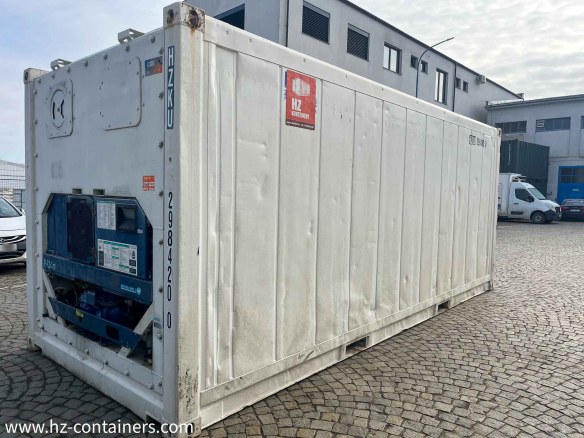
Refrigerated shipping container (often called a reefer, from English “refrigerated container”) is an extremely sophisticated piece of equipment that is essential for global logistics of temperature‑sensitive goods – from food and pharmaceuticals to chemicals. To operate safely and reliably, a reefer needs appropriate electrical protection. Selecting the correct circuit breaker is absolutely critical for protecting the expensive equipment, the cargo, and the safety of personnel.
This article provides a detailed, professionally sourced overview of the issues surrounding circuit‑breaker selection for refrigerated shipping containers, with an expanded glossary and a focus on current technical standards. Information is drawn from manufacturers’ installation manuals (Carrier, Thermo King, Daikin), international standards (e.g., ISO 1496‑2, IEC 60092‑507), and practical documentation from leading suppliers.
Circuit breaker for a refrigerated container: Definition and importance
What is a circuit breaker?
Circuit breaker is an automatic electrical switch that protects an electrical circuit from overload and short circuit. When a fault is detected, it instantly interrupts the flow of electric current, preventing catastrophic damage – from equipment destruction to fire.
Difference from a fuse: A fuse must be replaced after activation, whereas a circuit breaker can be reset (re‑energized) after the fault is cleared.
Why is the right circuit breaker essential?
A refrigerated container contains:
- A powerful three‑phase compressor (with high starting current)
- Fans, heating elements (defrost), sensors and an electronic control unit
- Sensitive micro‑processor modules that can be destroyed by over‑voltage or voltage fluctuations
A properly chosen circuit breaker:
- Provides reliable protection for all components
- Safeguards personnel and cargo
- Prevents unwanted tripping at each compressor start (so‑called “breaker drop”)
- Prevents cable fire in case of fault or overload
Risks of an incorrect breaker choice
- Undersized breaker: Will trip repeatedly at each compressor start, making operation impossible.
- Oversized breaker: In the event of a fault it will not trip in time → risk of fire, motor damage, electronics failure.
- Wrong characteristic: Characteristic B is too sensitive; C or D is appropriate for equipment with high starting currents.
Key technical parameters of circuit breakers
Overview of basic parameters
| Parameter | Typical value for reefer | Explanation and recommendation |
|---|---|---|
| Rated current (A) | 30 A (for 440/460 V) – minimum for 3‑phase 440/460 V | – |
| – | 50 A (for 208/230 V) – for lower voltage a stronger breaker is required | – |
| Voltage (V) | 380–460 V (3‑phase) – standard in EU, USA and Asia | – |
| – | 208/230 V (3‑phase) – some units with transformer (higher current) | – |
| Characteristic | C or D – per IEC 60898, C/D recommended for motors | – |
| Number of poles | 3P or 4P – 3 phases, with/without N depending on network | – |
| Surge protection | Yes – SPD (Surge Protection Device) is mandatory | – |
| Grounding | Yes – essential for safety and EMC | – |
Recommended breaker sizes by voltage
| Supply voltage | Recommended breaker | Note |
|---|---|---|
| 380–400/440–460 V (3‑phase) | min. 30 A, C/D | Standard sockets, CEE 32 A |
| 208–230 V (3‑phase) | min. 50 A, C/D | Higher current, size cables accordingly |
| 220 V (single‑phase, rare) | 45–60 A, C/D | Small units, always verify the label |
Note: Reefer units have internal breakers (e.g., CB1 29 A for 460 V), but these do not protect the supply cable – an external breaker is required.
Typical currents and starting spikes
- Normal operating current: 7–10 A (for a 40‑ft unit)
- Starting current: up to 18–25 A when the compressor starts
- Defrost current: briefly higher, but still considered when sizing the breaker
Characteristic C or D?
- Characteristic C: Recommended for most ordinary motor loads such as compressors and fans in reefer containers.
- Characteristic D: For extremely high starting currents (large transformer stations, welding equipment); can be used if the reefer’s starting current is exceptionally high.
Number of poles and configuration
- 3‑pole (3P): Standard for three‑phase systems without a separate neutral.
- 4‑pole (3P+N): When it is required to switch the neutral as well (according to local regulations).
Additional safety features
- Surge protection (SPD): Mandatory; protects the container’s sensitive micro‑processor electronics.
- Residual‑current device (RCD/RCBO): Recommended in some applications, especially in areas with higher shock risk.
Related terms and technologies (expanded glossary)
Refrigerated shipping container (Reefer container)
- Definition: Steel ISO container with an integrated cooling unit. Maintains temperatures from ‑40 °C to +30 °C.
- Uses: Food, pharmaceuticals, chemicals, flowers, live cultures.
Electrical requirements
- Includes: Voltage, current, number of phases, connector type (CEE 32 A 3‑phase), cable dimensions (minimum 4/5 × 6 mm² Cu for 30/50 A), type of protection.
- Location: On the container’s nameplate and in the manufacturer’s service manual.
Three‑phase electrical system
- Advantages: Higher efficiency, lower currents in individual conductors, better motor starting, more stable power.
Power supply
- Types: Shore power (grid connection), shipboard power, portable generator (genset).
- Note: Generator must be sized to at least 15 kVA per reefer unit.
Surge Protection Device (SPD)
- Requirement: Mandatory to protect sensitive electronics from voltage spikes.
- Placement: Always at the entry to the panel feeding the reefer.
Dual voltage and transformers
- Some units: Can operate on 380/460 V or 208/230 V via internal switching or a built‑in transformer.
- Caution: When using a transformer, size the breaker according to the side with the higher current load.
Plugs and sockets
- Standard: CEE 32 A 3P+E 400/440 V; IP67, water‑proof, resistant to salty mist and mechanical damage.
- Cable length: Typically 18 m; the reefer includes an ISO CEE connector.
Service manual
- Importance: The only official source for correct electrical parameters, maintenance procedures, and diagnostics.
- Examples: Carrier, Thermo King, Daikin – always request the latest version for the specific unit.
Controller unit
- Function: Micro‑processor‑controlled module that automatically manages cooling, heating, and defrost cycles.
- Protection emphasis: Extremely sensitive to over‑voltage and supply fluctuations.
Grounding
- Requirement: Every container must be grounded according to ČSN EN 60204‑1 / IEC 60364, especially when operating at 230 V.
- Reason: Protects personnel and electronics, reduces electromagnetic interference (EMC).
Practical installation and safety guide
Steps for correct installation
- Verify container specifications:
- Check the nameplate (voltage, phase, frequency, amp rating, socket type).
- Read the service manual.
- Ensure compatible power source:
- Measure voltage, confirm number of phases, verify sufficient source capacity.
- Select the proper circuit breaker:
- Use the table above; always include a margin for the compressor’s starting current.
- Choose characteristic C or D as appropriate.
- Install suitable cabling:
- For 30 A/400 V: minimum 5 × 6 mm² Cu.
- For 50 A/230 V: minimum 5 × 10 mm² Cu.
- Adjust according to length and installation method.
- Use correct sockets and connectors:
- Only certified CEE IP67 industrial sockets.
- Install surge protection:
- SPD class II for industrial panels.
- Connect and test:
- Visual inspection, then insulation resistance measurement, followed by energizing and a test start.
- Secure grounding:
- Measure ground resistance (max 2 Ω for standalone equipment).
Safety rules
- All work must be performed by a qualified electrician with a valid permit (according to local regulations).
- Never weld on the container structure while it is connected to power.
- Regularly inspect the breaker, cables, and connectors.
Tables and summaries
Recommended breaker values for different reefer types
| Unit type | Voltage (V) | Current (A) | Breaker (A) | Recommended cable (Cu) | CEE socket |
|---|---|---|---|---|---|
| 40‑ft, 3‑phase | 400/460 | 7–10 | 30 | 5 × 6 mm² | 32 A, 3P+E, IP67 |
| 20‑ft, 3‑phase | 400/460 | 7–10 | 30 | 5 × 6 mm² | 32 A, 3P+E, IP67 |
| 40‑ft, 3‑phase | 208/230 | 12–17 | 50 | 5 × 10 mm² | 63 A, 3P+E, IP67 |
| 10‑ft, single‑phase (special) | 220 | 15–20 | 45 | 3 × 10 mm² | 63 A, 2P+E, IP67 |
FAQ – Frequently asked questions
1. Can I use a single‑phase breaker for a standard reefer?
No, all standard containers require three‑phase power. Only special small units are exceptions.
2. What happens if I use an undersized breaker (e.g., 16 A)?
It will trip immediately at compressor start. The reefer will not be operable.
3. Is it safe to use an oversized breaker (e.g., 63 A instead of 30 A)?
No, this risks equipment damage or fire because the breaker will not disconnect in time during a fault.
4. Must I install surge protection even if the container has an internal breaker?
Yes, the internal breaker protects only part of the equipment. An external SPD is essential for protecting the electronics.
5. Can the container be powered from a generator?
Yes, but the generator must be sufficiently powerful (minimum 15 kVA), stable, and properly grounded.

 Czech Republic, Uherské Hradiště
  FREE SHIPPING

Other container news...

New sea shipping containers
If you are currently considering purchasing a new shipping container, you are not alone. While just twenty years ago containers were used almost exclusively for maritime transport, today they have found their way into construction, storage, business, and even housing. This growing popularity brings with it a host of questions: Which type should you choose? How much does it cost? How do you recognize quality? How can you avoid falling victim to scammers?
New shipping containers
If you are currently considering purchasing a new shipping container, you are not alone. While just twenty years ago containers were used almost exclusively for maritime transport, today they have found their way into construction, storage, business, and even housing. This growing popularity brings with it a host of questions: Which type should you choose? How much does it cost? How do you recognize quality? How can you avoid falling victim to scammers?

6m shipping container
Are you thinking about buying a 6-meter shipping container but aren’t sure what to look for? You are not alone—this 20-foot container is the best-selling size on the Czech market, and the differences between various types, conditions, and prices can be significant. In this guide, you will find everything you need to know: from exact dimensions and a comparison of categories (such as “one-way,” refurbished, and “Cargo Worthy”) to current prices and shipping advice.
Corner casting steel vs aluminum
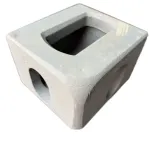
Every shipping container in the world — all 40 million of them — rests on eight critical components. Corner castings are the load-bearing blocks at each corner of an ISO shipping container, and they are the universal interface between the container and every crane, twistlock, spreader, and chassis on the planet. When you lift a container, stack it nine high on a ship, or lock it to a truck trailer, every ton of force flows through these fittings.