
Types of Container Doors: Side Door, Double Door, High Cube – Comparison and Use
In the field of transport, storage and modern construction solutions, shipping containers are among the most flexible and reliable modules on the market. A crucial parameter when selecting a suitable container is the type of door – it significantly affects loading options, handling, safety and modifications for non-standard use. This expert glossary focuses on three key variants: Double Door (doors on both ends), Side Door (side doors along the full length) and High Cube (increased height). Each of these types is suitable for a different logistics or construction scenario.
Double Door Container (pass-through, tunnel)
Construction Characteristics
- Doors on both ends: Openable double-leaf doors on both shorter sides (ends) of the container, often also referred to as tunnel or pass-through container.
- Material: Highly durable Corten A steel (Cor-Ten), which has excellent corrosion-resistant properties and long service life even without surface treatment.
- Floor: Marine plywood approximately 28–30 mm thick, laid on steel cross-beams, allowing high point loads.
- Locking: Each set of doors is equipped with two to three lockable bars with the option of lockbox (steel cover for padlock against prying).
- Sealing: The entire perimeter of the doors is fitted with industrial EPDM or PVC sealing, which ensures 100% water and dust tightness.
- Ventilation openings: Standard 4–8 ventilation openings that prevent condensation and mold formation.
Dimensions and Specifications (Typical Values)
| Type | External Dimensions (L/W/H) | Internal Dimensions (L/W/H) | Volume (m³) | Weight (Tare) | Max. Capacity (Payload) |
|---|---|---|---|---|---|
| 20ft DD | 6.06 × 2.44 × 2.59 m | 5.89 × 2.35 × 2.39 m | ~33 | ~2,300 kg | ~28,000 kg |
| 40ft DD | 12.19 × 2.44 × 2.59 m | 12.03 × 2.35 × 2.39 m | ~67 | ~3,800 kg | ~26,500 kg |
| 40ft HC DD | 12.19 × 2.44 × 2.89 m | 12.03 × 2.35 × 2.69 m | ~76 | ~4,200 kg | ~26,000 kg |
Note: Dimensions may vary slightly between different manufacturers. HC = High Cube (increased height).
Advantages of Double Door Container
- Pass-through loading and unloading: Optimizes material flow, allows loading/unloading goods from both sides, which is key in sequential processes.
- High flexibility: Suitable for divided storage, possibility to divide space with a partition, for example.
- Easy handling with forklift: The forklift can pass through the entire container.
- Maximum utilization in vehicle transport and long units: Ideal for automobiles, pipes, beams, construction materials.
Typical Uses
- International transport (ISO certification, CSC label)
- Self-storage warehouses
- Transport of automobiles, motorcycles, construction machinery
- Construction tunnels, temporary connecting modules
- Basis of modular buildings (e.g., cafes with two-way entrance, pop-up shops)
Side Door Container (side opening / full-side access)
Construction Characteristics
- Side doors along the full length: Folding (bi-fold) or segmented doors on one long side of the container, allowing full access to the entire length.
- Combination with end doors: Most models have classic double-leaf doors on the end + side openable doors.
- Reinforced construction: Due to the absence of corrugated steel wall, significant reinforcement of the frame, roof and floor is necessary (static load capacity remains preserved).
- Sealing: Robust industrial sealing around the entire perimeter of the side doors, ensuring water and dust tightness.
- Material: Corten A steel.
Dimensions and Specifications (Typical Values)
| Type | External Dimensions (L/W/H) | Internal Dimensions (L/W/H) | Side Opening (L/H) | Weight (Tare) | Max. Capacity |
|---|---|---|---|---|---|
| 20ft Side Door | 6.06 × 2.44 × 2.59 m | 5.89 × 2.35 × 2.39 m | approx. 5.8 m × 2.28 m | ~2,600 kg | ~28,000 kg |
| 40ft HC Side Door | 12.19 × 2.44 × 2.89 m | 12.03 × 2.35 × 2.69 m | approx. 11.7 m × 2.58 m | ~4,500 kg | ~26,000 kg |
Advantages of Side Door Container
- Maximum accessibility: Full opening of the long side allows loading heavy machinery, pallets, atypical or oversized cargo directly from the side with a forklift.
- Quick handling: No need to rearrange goods at the front, everything is immediately accessible.
- Ideal basis for modifications: Side doors can be replaced with a glazed wall, service counter, terrace, etc.
- Safety: Standard option for lockbox on side doors as well.
Typical Uses
- Transport of oversized machinery, equipment, pallets
- Mobile workshops, service containers, tool storage
- Pop-up shops, cafes, bars, food trucks
- Trade fairs, galleries, exhibition spaces
- Temporary event structures (cash desks, information centers, health stations)
High Cube Container
Construction Characteristics
- Height: 9’6″ (2.89 m), approximately 30 cm higher than standard container (8’6″ = 2.59 m).
- Internal clearance: Height from floor to ceiling up to 2.70 m for 40ft HC (suitable for stacking goods or taller machinery).
- Other parameters identical to standard: Width and length identical, possibility to combine with all door types (standard, Double Door, Side Door).
- Recognition marks: Distinctive yellow-black stripes on upper edges (warning of increased height).
Dimensions and Specifications
| Type | External Dimensions (L/W/H) | Internal Dimensions (L/W/H) | Volume (m³) | Weight (Tare) | Max. Capacity (Payload) |
|---|---|---|---|---|---|
| 40ft HC | 12.19 × 2.44 × 2.89 m | 12.03 × 2.35 × 2.69 m | ~76 | ~4,000–4,300 kg | ~26,000 kg |
| 20ft HC | 6.06 × 2.44 × 2.89 m | 5.89 × 2.35 × 2.69 m | ~37 | ~2,400–2,600 kg | ~28,000 kg |
Advantages of High Cube Container
- Increased volume: Up to 15% more space than standard container of the same length.
- Transport of taller machinery and equipment: Suitable for industrial equipment, oversized pallets, engineering components.
- Architectural use: Higher ceilings for more comfortable residential (shipping container homes) or commercial spaces, better insulation and technology installation.
- Possibility to combine with Double Door and Side Door: Available as pass-through or with side doors (absolute maximum accessibility and flexibility).
Direct Comparison: Double Door vs. Side Door vs. High Cube
| Feature | Double Door | Side Door | High Cube |
|---|---|---|---|
| Door Location | Both ends | Long side (or both) | Depending on combination, increased height |
| Primary Access | Pass-through | Side access | Higher internal volume |
| Advantage | Sequential goods flow | Full access along length | Enlarged space, higher load |
| Typical Use | Vehicles, long units, divided warehouse | Pop-up, engineering lines, galleries | Furniture, engineering components, modular buildings |
| Typical Sizes | 20ft, 40ft, 40ft HC | 20ft, 40ft, 40ft HC | 20ft HC, 40ft HC |
| Combination of Variants | Yes (e.g., 40ft HC DD) | Yes (e.g., 40ft HC Side) | Yes (HC can be combined with DD and Side) |
Other Types of Doors and Access
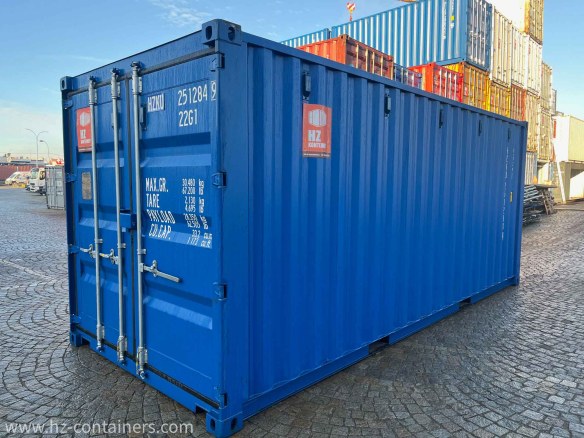
- Standard doors (Cargo Doors): Double-leaf doors on one end, basic variant.
- Rolling gates: Garage doors on request (ideal for frequent access).
- Personnel doors: Single-leaf for easy person entry, common in office and residential modules (such as shipping container homes).
- Open Top: Open container with removable tarpaulin, loading by crane from above.
- Custom doors: Custom manufacturing (e.g., combination of multiple door types, security features, special sealing).
Practical Tips for Selecting the Right Container Type
- Analyze the type of cargo and handling method: Long, heavy, bulky? Need for forklift entry? Do you need access from multiple sides?
- Consider the purpose and frequency of use: Long-term storage, one-time transport, regular unloading, creative modifications?
- Safety: Always prefer models with container lockbox, especially if the container will be placed in an easily accessible location.
- Combine variants: High Cube + Double Door or High Cube + Side Door offer maximum volume and access.
- Container condition: For long-term use, we recommend so-called “one-trip” or new containers; older units may have weaker sealing and surface corrosion.
Frequently Asked Questions (FAQ)
What is the capacity and service life of these containers?
All variants comply with ISO standards and CSC certification – capacity ranges from 26–28 tons, service life over 25 years with minimal maintenance (for new containers).
Is High Cube always the better choice?
For bulky, lighter or oversized goods, yes. In the case of transporting heavy but small items, standard height may be more economical (lower purchase price, lower transport costs).
Can a container with side doors be used for transport?
Yes, if it has a valid CSC certificate and meets ISO standards, the Side Door container is fully suitable for international transport.
What about sealing and moisture protection?
All new or “one-trip” containers have industrial EPDM/PVC sealing, which reliably protects cargo from weather and dust.
Can I have a container custom made?
Yes, reputable suppliers and specialized companies offer custom modifications: installation of additional doors, windows, insulation, utilities, security features, etc.
Illustrative Photos and Real-World Examples (Practical Use)
- 40ft High Cube Double Door container: Popular for warehouses, vehicle transport or as a basis for modular buildings.
- 40ft High Cube Side Door container: Maximum access and flexibility for conversion into cafes, pop-up shops, galleries.
- 20ft High Cube Double Door: Advantageous for smaller companies and local warehouses with pass-through space requirements.

 Czech Republic, Varnsdorf
  FREE SHIPPING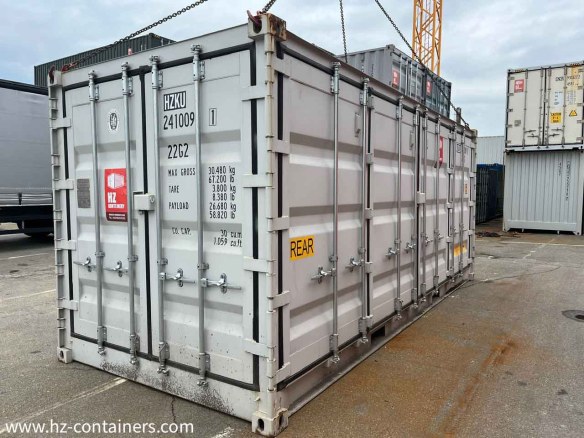

Other container news...
Corner casting steel vs aluminum
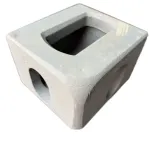
Every shipping container in the world — all 40 million of them — rests on eight critical components. Corner castings are the load-bearing blocks at each corner of an ISO shipping container, and they are the universal interface between the container and every crane, twistlock, spreader, and chassis on the planet. When you lift a container, stack it nine high on a ship, or lock it to a truck trailer, every ton of force flows through these fittings.

Construction cabin – selection, tips, dimensions and prices
Every construction project – whether a family house, a development project or a reconstruction – starts with the infrastructure. No construction manager, craftsman or investor who needs an on-site office, a changing room for workers or a safe storage for tools can do without a quality construction cell. But navigating the offer is not easy: residential containers, sanitary cells, storage modules, rental, purchase, refurbished pieces… This guide will give you answers to all the essential questions in one place.
Storage container
A storage container is a lockable steel box designed for the safe and dry storage of materials, tools, goods or equipment. Originally created as a shipping container for maritime transport, its durability and versatility have found their way onto construction sites, corporate premises and private land.
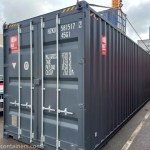
Shipping container 12m (40 ft)
A 12m shipping container is an investment that, if properly selected and cared for, will pay off in decades of trouble-free use. Whether you plan to use it as a warehouse, workshop, garage or the basis for a residential module — the key is careful selection of the condition, a thorough inspection before purchase and high-quality preparation of the base for placement. Take the time to compare offers, check the seller’s references and do not hesitate to personally inspect the container before buying. A properly selected 40-foot container will serve you reliably for many years.