
Transport container CW – with repairs – not defects
What does “Transport container CW with repairs” mean
Transport container Cargo Worthy (CW) is a used shipping container that has undergone professional repairs on the basic structural parts (roof, walls, floor, doors, corner elements) in order to maintain or restore its suitability for international transport in accordance with the standards CSC (Convention for Safe Containers) and other international standards (ISO, IICL, COA). Repairs are not a sign of inferiority; on the contrary, they testify to ongoing maintenance that guarantees structural integrity and container safety. In the following article you will find a detailed explanation of what the CW classification exactly means, typical repairs, and which standards and inspection procedures determine whether the container is still suitable for transport.
Why certification and inspection of containers is crucial
Importance and types of certifications
- CSC label (Container Safety Convention): Basic documentation confirming that the container meets all safety and construction requirements for participation in international transport. The label is placed on the left doors and contains information about the manufacturer, date of manufacture, maximum payload, date of the last inspection, and validity.
- ISO certification: Defines dimensions, construction, and basic strength and durability requirements for containers.
- CIC (Container Inspection Certificate): Inspection protocol confirming the container’s suitability for transport, often used in individual checks.
- IICL (Institute of International Container Lessors): IICL standards are among the strictest in the industry and are often used for containers intended for long‑term leasing and repeated use.
- COA Cargo‑Worthiness Criteria (CCW): Set of criteria from the Container Owners Association for assessing and repairing conditions that allow safe transport.
Key role of certification:
- Without a valid certification a container may not be loaded onto a ship, train, or truck in international transport.
- Certification protects both the owner and the carrier from legal and insurance consequences.
Classification of transport containers: practical comparison
| Category | Description | Repair level / condition | Use | CSC validity |
|---|---|---|---|---|
| New / One‑trip | New container, max. 1 trip | None/minimal | Maritime transport, storage | 5 years |
| Cargo Worthy (CW) | Used, professionally repaired | Professional, according to standards | Maritime transport, storage | 1–2 years (after inspection) |
| Wind & Watertight (WWT) | Older, watertight, without CSC | Basic, watertight | Storage, static structure | No |
| As Is | No condition guarantee | None | Conversion, scrap | No |
CW is the best compromise between price, functionality and safety for most users.
Anatomy and typical wear of a transport container
Main structural parts
- Roof: Corten steel, thickness 1.6–2 mm, exposed to water and UV radiation.
- Walls: Corrugated panels (wavy sheet) – increase strength, thickness 1.6 mm.
- Floor: 28 mm thick plywood made of tropical hardwood (e.g., keruing, apitong), impregnated.
- Crossbars: Load‑bearing steel profiles under the floor – essential for weight distribution.
- Doors: Double doors with four locking rods and sealing, steel frame.
- Corner castings: Massive castings with openings for twist‑locks, enabling stacking and handling.
Most common defects and wear
| Part of container | Typical damage | Consequences |
|---|---|---|
| Roof | Holes, pitting corrosion, dents | Leaking, weakening |
| Side walls | Dents, cracks, surface corrosion | Risk of structural defect |
| Floor | Rot, cracks, delamination | Reduced load capacity |
| Doors | Irregular operation, sealing issues, corrosion | Leaking, poor closure |
| Corner castings | Cracks, deformation, corrosion | Hazard during stacking |
Professional repairs: technical standards and practice
Main repair principles according to COA & IICL
- Every repair must be performed according to approved procedures by a trained technician.
- Only materials matching the original construction (e.g., Corten steel, plywood of the same thickness) may be used.
- Welded joints must be continuous, high‑quality, and tested for tightness.
- Repairs must not degrade the structural integrity or static stability of the container.
Types of repairs and recommended procedures
Roof
| Defect | Recommended COA procedure | Note |
|---|---|---|
| Holes < 10 mm | Weld (CO₂/MAG welding) | Test for tightness |
| Holes > 10 mm | Cut out and insert Corten patch | Weld around the perimeter, paint |
| Corrosion map | Clean, apply anti‑corrosion primer, paint | Prevent further damage |
| Dents | Repair only if they threaten tightness | Otherwise leave unchanged |
Walls
| Defect | Recommended action | Note |
|---|---|---|
| Dents | Repair only if they threaten strength | Surface defects may be left |
| Cracks | Weld, or replace panel | Must be watertight |
| Holes | Steel patch, weld around perimeter | Corten thickness must match |
Floor and crossbars
| Defect | Repair procedure | Note |
|---|---|---|
| Rot, cracks | Cut out damaged part, replace with plywood of same thickness | Overlap at least 3 crossbars |
| Chemical damage | Complete replacement of the floor section | Remove contamination |
| Bent/cracked crossbars | Repair or replace entire piece | Preserve load capacity |
Doors and seals
| Defect | Repair | Note |
|---|---|---|
| Softened seal | Complete replacement with new one | Match original profile |
| Mechanism faults | Repair/adjust for smooth operation | Locking rods and hinges |
| Frame corrosion | Clean, treat, paint | Prevent further damage |
Corner castings and frame
| Defect | Repair | Note |
|---|---|---|
| Cracks, deformation | Weld or replace | Critical part, must be flawless |
| Damaged openings | Weld, or replace casting | For safe stacking |
Special surface treatments
- After repairs a protective coating (e.g., polyurethane, epoxy) is usually applied, often in a layer of 80–120 µm.
- For roofs, reflective or waterproof coatings can be used to extend service life.
Inspection and certification criteria (COA, IICL, CSC)
Inspection procedures include:
- Visual inspection – overall condition, surface corrosion, cracks.
- Check of structural elements – frame, corner castings, crossbars (must be free of major deformation or cracks).
- Tightness test – closed doors, pressure test or “light test” (checking for light penetration).
- Door and seal functionality test.
- Verification that repairs comply with current standards (COA, IICL 6).
- Check of CSC label validity, and issue a new one if necessary.
Inspection output:
– Condition report, possibly an updated CSC label with the date of the next inspection.
Why repaired CW containers are a common and advantageous choice
Benefits
- Price: Repaired CW containers are significantly cheaper than new ones while remaining fully functional and safe.
- Reliability: Certification and inspection guarantee structural integrity and watertightness.
- Sustainability: Repairs and reuse dramatically reduce the environmental footprint compared with producing a new container.
- Versatility: Ideal not only for transport but also for storage and conversions (e.g., offices, workshops, shipping container homes, garages).
What to watch for when buying a CW container
- CSC label validity: Without it the container cannot be used in international transport.
- Repair quality: Professionally performed welds, flush patches, and absence of surface defects indicate good maintenance.
- Floor condition: Solid, free of rot or delamination.
- Doors and seals: Smooth operation, tight sealing, no corrosion or damage.
Synonyms and related terms
- Cargo Worthy (CW)
- CSC Certified / Container with CSC certification
- Repaired transport container
- IICL container
- COA Cargo‑Worthiness
- Structural integrity
- Container stacking
- Refurbished container
Cross‑references
- Corten steel – key material of container construction
- CSC label (Convention for Safe Containers) – basic certification
- WWT container (Wind and Watertight) – difference from CW
- Transport container maintenance – prevention and life‑extension
- IICL standards – highest level of repairs and inspections
Summary / Key points
- Repairs on CW containers are common and desirable – they ensure long‑term suitability for transport.
- Quality and professional execution of repairs are crucial for safety and longevity.
- CW containers are an economical, ecological, and reliable choice for transport, storage, and conversions such as into shipping container homes and container houses.
- Inspection according to COA/IICL and a valid CSC label are mandatory for legal and safe use in international transport.
- When purchasing, always thoroughly check repair condition, label validity, and the state of main structural parts.

 Czech Republic, Třebíč
  WITHOUT SHIPPING
Other container news...
Corner casting steel vs aluminum
Every shipping container in the world — all 40 million of them — rests on eight critical components. Corner castings are the load-bearing blocks at each corner of an ISO shipping container, and they are the universal interface between the container and every crane, twistlock, spreader, and chassis on the planet. When you lift a container, stack it nine high on a ship, or lock it to a truck trailer, every ton of force flows through these fittings.

Construction cabin – selection, tips, dimensions and prices
Every construction project – whether a family house, a development project or a reconstruction – starts with the infrastructure. No construction manager, craftsman or investor who needs an on-site office, a changing room for workers or a safe storage for tools can do without a quality construction cell. But navigating the offer is not easy: residential containers, sanitary cells, storage modules, rental, purchase, refurbished pieces… This guide will give you answers to all the essential questions in one place.
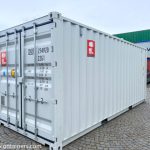
Storage container
A storage container is a lockable steel box designed for the safe and dry storage of materials, tools, goods or equipment. Originally created as a shipping container for maritime transport, its durability and versatility have found their way onto construction sites, corporate premises and private land.
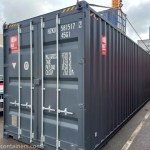
Shipping container 12m (40 ft)
A 12m shipping container is an investment that, if properly selected and cared for, will pay off in decades of trouble-free use. Whether you plan to use it as a warehouse, workshop, garage or the basis for a residential module — the key is careful selection of the condition, a thorough inspection before purchase and high-quality preparation of the base for placement. Take the time to compare offers, check the seller’s references and do not hesitate to personally inspect the container before buying. A properly selected 40-foot container will serve you reliably for many years.