
Sinking a shipping container into the ground
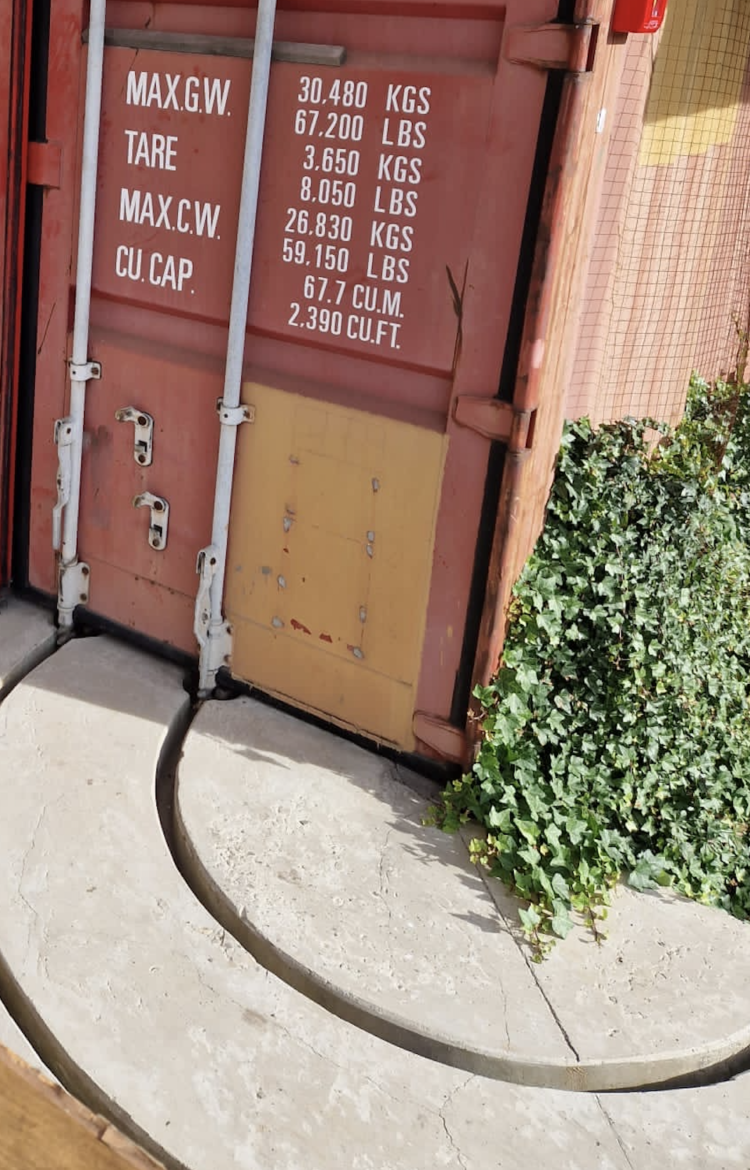
Can a container be recessed into the ground or will the door opening mechanism prevent it?
If you’re considering burying a container in the ground, there are several factors to consider, including the door opening mechanism. This article focuses on whether it is possible to recess the container into the ground and how to deal with potential door-opening issues. Please note that this article is for informational purposes only and is not an exact guide!
Advantages of recessing a container into the ground
Recessing a container into the ground offers several advantages. It can provide better insulation against temperature fluctuations, which is ideal for storing sensitive materials or food. Additionally, it can offer aesthetic benefits, as a recessed container is less conspicuous and can better fit into the landscape design.
Door opening mechanism
One of the main questions that often arises when considering recessing a container into the ground is the door opening mechanism. Containers are equipped with robust doors that open outward, which can be a problem if the container is partially or fully recessed into the ground.
Solutions to the door opening problem
There are several ways to deal with the door opening problem:
- Leave part of the container above ground: One of the simplest methods is to leave part of the container above ground, allowing the doors to open freely. However, this method may limit the aesthetic value and insulation offered by full recessing.
- Recess into the ground with a cutout for seamless door mechanism opening: This option allows the container to be recessed into the ground while maintaining functional door operation. It is necessary to leave free space in front of the container where the doors are located, ensuring full clearance. You will still need a ramp when loading heavy goods.
- Groove for the opening mechanism: This method is more labor-intensive but allows the container to be fully recessed to the floor without the need for a loading ramp.
Ensuring proper ventilation and drainage
When recessing a container into the ground, it is also important to ensure proper ventilation and drainage. Containers are not designed to be fully waterproof, and moisture and condensation can accumulate inside. Installing ventilation and drainage systems can help keep the interior of the container dry and prevent corrosion.
Stability and structural integrity
Another factor to consider is the stability and structural integrity of the container when it is recessed into the ground. Soil pressure can exert force on the walls of the container, potentially leading to deformations or damage. It is recommended to consult a construction expert to ensure the container is strong and stable enough for ground recessing.
Permits and legal regulations
Before recessing a container into the ground, it is also important to check local building regulations and obtain the necessary permits. Some areas may have specific requirements for underground structures that need to be followed.
Conclusion on recessing a container into the ground
Recessing a container into the ground can be a great solution for storage or aesthetic purposes, but it requires careful planning and consideration of several factors. The door opening mechanism can be a hurdle, but there are various ways to solve this problem. It is also important to ensure proper ventilation, drainage, and structural stability of the container.
Don’t forget to consult your plans with experts and check local building regulations to ensure your project is successful.
Other container news...

Current Situation in the Middle East
The situation in the Middle East and its impact on container shipping is one of the biggest logistics crises of the last decade. The closure of the Strait of Hormuz and conflicts in the Red Sea have caused shipping costs to increase by 250 percent, transit times to increase by 15-20 days, and goods to become more expensive.

Difference Between SOC, FOB and FCL in Maritime Transport: Complete Guide to Shipping Conditions
What is the difference between SOC, FOB and FCL terms in sea transport? In sea transport, these three terms are often confused because each describes something completely different – one deals with container ownership, the other with the sharing of costs and risks, and the third with the fullness of the container. More in the article…

How the Middle East Affects Shipping Container Prices
The Middle East crisis, which began in November 2023 and culminated in the closure of the Strait of Hormuz in March 2026, is one of the biggest logistics crises in recent years. Shipping container prices have quadrupled, impacting the prices of everything shipped from Asia.

Shipping Containers Bologna Italy
Shipping containers are the backbone of modern global trade. Every day, thousands of these standardized metal shipping units pass through Italian ports and logistics centers, including one of Europe’s most important intermodal hubs — Interporto Bologna. If you’re curious about how shipping works in Italy, what types of containers exist, or how goods get to and from Bologna, you’ve come to the right place. This guide will give you everything you need to know about shipping containers, Bologna, and its key role in European logistics.