
Shelves for shipping containers
A shipping container offers enormous storage space – a standard 20-foot container holds more than 33 m³. Without a suitable shelving system, however, most of this potential remains unused. Things pile up on top of each other, access to them is difficult, and chaos ensues in the middle. Properly chosen shelves for shipping containers transform an empty tin box into a clear, efficient warehouse – without the need for drilling, welding, or other structural modifications.
In this guide, you will find everything you need to know: from an overview of the individual types of shelves, through step-by-step installation, to specific price ranges and practical tips for selection.
What types of shelves for shipping containers exist
On the Czech market, you will encounter three main categories of shelving systems. Each has its strengths and is suitable for a different type of operation.
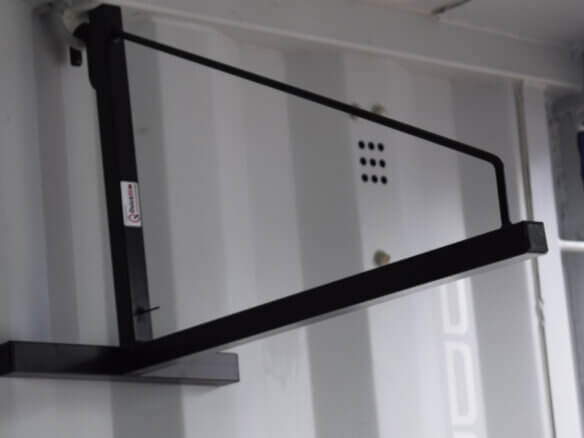
Hanging shelf racks
The most widespread and popular solution. Hanging shelves for shipping containers use the lashing eyes (D-rings) that are standardly welded in the upper part of every shipping container. The brackets are simply hung into these eyes and rest against the wall – without a single drill, screw, or weld.
Wooden planks or plywood boards are then placed on the arms. The shelves themselves are usually not part of the package, as the customer adapts them to their own needs – boards measuring 2×10 inches (approx. 5×25 cm) or classic construction planks are most commonly used.
Key parameters:
- Load capacity: 250 kg per arm, 500 kg per holder (pair of arms)
- Arm weight: approx. 5 kg
- Design: 1–3 shelves stacked
- Installation: 1 person, 5 minutes, no tools required
Tubular hanging shelves
A variant of the hanging system where classic shelves are replaced by a steel tubular structure. Tubular shelves for shipping containers are ideal for storing clothing, textiles, footwear, electronics, as well as long items such as profiles or rods. The inclined design of the shelves ensures better accessibility and clarity.
Parameters:
- Load capacity: high, comparable to shelf racks
- Number of levels: typically 4 shelves stacked in an inclined design
- Material: steel tubes and pins
- Lifespan: long, durable construction
Long shelving systems (6m)
For maximum use of the entire length of the container wall, there are specialized 6m shelving systems for containers. These cover the entire side wall of a 20-foot container and offer three rows of shelves stacked. Installation is again without welding – the system is hung on the eyes and stretched along the wall.
Freestanding shelves
Classic metal shelf racks that are placed in the container as a standalone unit. Unlike hanging systems, they do not use the container’s lashing eyes and can be placed anywhere. However, they must be connected to each other and ideally braced between the floor and ceiling so that they do not tip over during any movement of the container. They are suitable for extremely heavy loads where hanging systems reach their limits.
Ceiling shelves
A special category that uses the upper “dead” space of the container. They are hung into the upper eyes and are used for storing bulkier but lighter items. The advantage is that the floor remains completely free for handling or other equipment.
| Shelf type | Installation | Load capacity | Suitable for | Approximate price (without shelves) |
|---|---|---|---|---|
| Hanging shelf rack 2 shelves | Hung on eyes | 250 kg/arm | Boxes, tools, parts | from 1 875 CZK/arm |
| Hanging shelf rack 3 shelves | Hung on eyes | 250 kg/arm | Maximum wall utilization | from 2 075 CZK/arm |
| Tubular 4 shelves | Hung on eyes | 250 kg/arm | Clothing, textiles, profiles | from 2 238 CZK/arm |
| 6m shelving system | Hung on eyes | High | Entire wall of 20′ container | from 8 800 CZK/set |
| Ceiling shelf | Hung on upper eyes | Lighter items | Bulky light goods | from 2 590 CZK/pc |
| Freestanding | No installation on eyes | Very high | Heavy loads, pallets | Individual |
How to install hanging shelves in a container
One of the biggest advantages of hanging systems is their quick and easy installation. The whole process can be handled by one person within a few minutes.
Step 1: Preparing the container
Make sure that the inner eyes (D-rings) in the upper part of the container are undamaged and hold firmly. A standard shipping container has several on each longer side. The eyes originally serve to secure cargo during transport – for shelves, they represent ideal anchoring points.
Step 2: Hanging the arms
Take the first bracket arm (weighing approximately 5 kg) and hook it onto the eye at the desired height. The arm should rest against the container wall on its own. Repeat the same procedure for the second arm – usually at a distance corresponding to the width of your wooden shelves.
Tip: For one shelf section, you always need 2 arms. If you plan to have multiple sections side by side, 3 arms are enough for two sections (the outer arms are shared).
Step 3: Placing the shelves
Insert wooden planks or plywood boards into the prepared brackets. Boards with a thickness of 25–30 mm are standardly used. Adjust the length to the spacing of the arms. The shelves should fit firmly and not protrude beyond the brackets by more than a few centimeters.
Step 4: Checking stability
After installing all shelves, check that the arms are properly secured in the eyes and that the shelves do not wobble. The system is ready for immediate use.
Safety note: Although the load capacity is 250 kg per arm, we recommend distributing heavier items evenly and not exceeding the maximum load. When storing very heavy items, consider more arms with a shorter span.
Load capacity of shelves in a container: what to watch out for
The load capacity of shelves in a container is one of the most important parameters. Standard hanging shelf systems declare a load capacity of 250 kg per arm and 500 kg per holder (pair of arms). This means that one shelf level can hold up to half a ton – if the load is distributed evenly.
For tubular shelves, the load capacity is similar – the steel construction guarantees high strength and long lifespan.
Factors affecting actual load capacity
- Quality of eyes in the container – if the eyes are corroded or loose, load capacity decreases
- Material and thickness of shelves – thin plywood bends sooner than solid planks
- Load distribution – point loading in the middle of a shelf is more demanding than even loading
- Number of arms – more arms = better weight distribution
For heavy loads (machines, heavy tools, metal parts), we recommend choosing a shorter span between arms and thicker wooden infills – ideally planks with a thickness of at least 30 mm.
How to choose shelves for a shipping container
Choosing the right shelving system depends on several key factors. Let’s go through them systematically.
Container size
| Container type | Internal width | Internal length | Recommended shelving system |
|---|---|---|---|
| 10′ container | 2.35 m | 2.80 m | Hanging shelves 2–3 tiers |
| 20′ container | 2.35 m | 5.90 m | Hanging shelves + 6m system |
| 40′ container | 2.35 m | 12.03 m | Hanging shelves + 6m system (2×) |
| 40′ High Cube | 2.35 m | 12.03 m | Hanging + ceiling shelves |
The standard width of a container is 2.35 m. If you fit both longer walls with shelves of 50–60 cm depth, an aisle approximately 1.15–1.35 m wide remains in the middle, which is sufficient space for comfortable handling.
Type of stored goods
- Boxes, crates, parts → hanging shelf racks 2–3 shelves
- Tools, workshop equipment → hanging shelf racks 3 shelves, ideally with higher load capacity
- Clothing, textiles, footwear → tubular hanging shelves
- Long profiles, tubes, rods → tubular shelves in inclined design
- Heavy machines, pallets → freestanding shelves with bracing
- Bulky light goods → ceiling shelves
Price and budget
Prices for shelves in shipping containers vary by type, number of shelves, and manufacturer. Here is an indicative overview:
- Hanging shelf rack – 1 shelf: from 1 350 CZK/arm
- Hanging shelf rack – 2 shelves: from 1 550 CZK/arm
- Hanging shelf rack – 3 shelves: from 1 750 CZK/arm
- Tubular shelf – 4 shelves: from 1 850 CZK/arm
- 6m shelving system (set): from 8 800 CZK
- Ceiling shelf: from 2 590 CZK/pc
All prices shown are without VAT and without wooden shelves. Wooden infills are purchased separately at a hardware store or sawmill – expect a cost of approx. 200–500 CZK per shelf depending on the type and quality of wood. Prices may vary depending on availability and steel prices.
Planned use of the container
- Storage container – maximize the number of shelves, choose 3-tier hanging systems on both sides
- Workshop container – combine shelves with free space for a workbench, leave one wall free
- Mobile warehouse – choose lighter constructions, consider securing against shifting during transport
- Tool container – hanging shelves with higher load capacity, ideally with the option of adding tool holders
Hanging shelving system vs. freestanding shelves
When deciding between a hanging shelving system and freestanding shelves, consider the following:
| Criterion | Hanging shelving system | Freestanding shelves |
|---|---|---|
| Installation | No drilling, 5 minutes | Requires assembly, connection |
| Impact on container | None | May require anchoring |
| Flexibility | Can be moved anytime | Limited after assembly |
| Floor usage | Floor remains free | Takes up floor space too |
| Load capacity | 250–500 kg/level | Up to several tons |
| Price | Lower | Higher |
| Suitable for | Light to medium loads | Heavy loads, pallets |
For 90% of shipping container users, the hanging shelving system represents the optimal choice – it is quick to install, does not damage the container, and provides sufficient load capacity for ordinary storage.
Common mistakes in selection and installation
Undersizing load capacity
The most common mistake is underestimating the weight of stored goods. If you plan to store heavy tools or metal parts, calculate with a reserve and choose more arms with a shorter span.
Ignoring aisle width
When planning the layout of shelves, always allow for sufficient aisle width. The minimum recommended width for comfortable handling is 80 cm, ideally 1.2 m or more.
Wrong choice of wood for shelves
Not every wood is suitable. Avoid thin plywood and knotty boards. Ideally, planed planks of pine or spruce with a thickness of 25–30 mm, or quality plywood with a thickness of at least 18 mm.
Forgetting about ventilation
Shipping containers can suffer from moisture condensation. If you store moisture-sensitive material, consider installing ventilation grilles or use impregnated wood for shelves.
FAQ
What shelves for a shipping container are the best
For most users, the best choice is hanging shelf racks. They can be installed without drilling within a few minutes, offer load capacity up to 500 kg per holder, and can be moved anytime. They are available in variants with 1, 2, or 3 shelves stacked.
How to install hanging shelves in a container
Installation is very simple: the bracket arms are hung into the lashing eyes (D-rings) in the upper part of the container, rest against the wall, and wooden shelves are placed on them. The whole process takes approximately 5 minutes and requires no tools, drilling, or welding.
What is the load capacity of container shelves
The standard load capacity of hanging shelves is 250 kg per arm and 500 kg per holder (pair of arms). The actual load capacity depends on the quality of the eyes in the container, the thickness of the wooden shelves, and the evenness of the load distribution.
How much do shelves for a shipping container cost
Prices range from 1 350 CZK per arm (1-shelf) to 8 800 CZK for a complete 6m shelving system. The price usually does not include wooden shelves, which are purchased separately (approx. 200–500 CZK per shelf). Prices are shown without VAT.
What shelves for a container for tools and workshop equipment
For tools and workshop equipment, we recommend hanging shelf racks with 3 shelves and a load capacity of 250 kg per arm. They provide enough storage surfaces and allow clear arrangement of tools. For heavier equipment, consider a shorter spacing between arms.
Can container shelves be used for a 40-foot container too
Yes, hanging shelves are universal and work in all standard container sizes – 10′, 20′, and 40′. For 40′ containers, two 6m shelving systems are often used in succession, or individual hanging shelves are combined along the entire length of the wall.
What wood for shelves in container shelves
Planed planks of pine or spruce with a thickness of 25–30 mm and a width of approx. 25 cm (corresponding to 2×10 inches) are most commonly used. An alternative is quality plywood with a thickness of at least 18 mm. For humid environments, choose impregnated wood.
How to choose shelves for a shipping container
The choice depends on four factors: container size, type of stored goods, required load capacity, and budget. For ordinary storage of boxes and tools, hanging shelf racks are sufficient, for heavy loads choose freestanding shelves, for textiles choose tubular systems.

 Czech Republic
  WITHOUT SHIPPING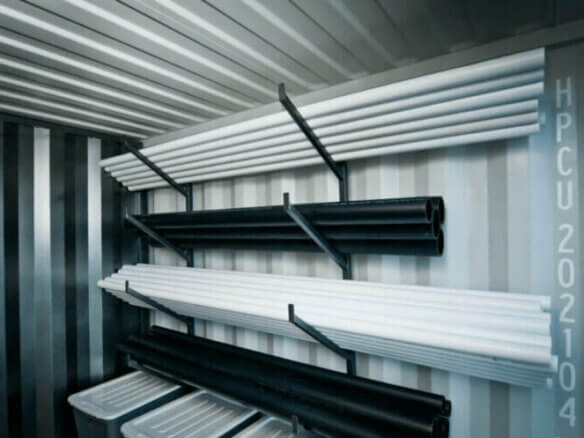
Other container news...
Corner casting steel vs aluminum
Every shipping container in the world — all 40 million of them — rests on eight critical components. Corner castings are the load-bearing blocks at each corner of an ISO shipping container, and they are the universal interface between the container and every crane, twistlock, spreader, and chassis on the planet. When you lift a container, stack it nine high on a ship, or lock it to a truck trailer, every ton of force flows through these fittings.

Construction cabin – selection, tips, dimensions and prices
Every construction project – whether a family house, a development project or a reconstruction – starts with the infrastructure. No construction manager, craftsman or investor who needs an on-site office, a changing room for workers or a safe storage for tools can do without a quality construction cell. But navigating the offer is not easy: residential containers, sanitary cells, storage modules, rental, purchase, refurbished pieces… This guide will give you answers to all the essential questions in one place.
Storage container
A storage container is a lockable steel box designed for the safe and dry storage of materials, tools, goods or equipment. Originally created as a shipping container for maritime transport, its durability and versatility have found their way onto construction sites, corporate premises and private land.
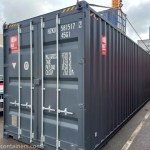
Shipping container 12m (40 ft)
A 12m shipping container is an investment that, if properly selected and cared for, will pay off in decades of trouble-free use. Whether you plan to use it as a warehouse, workshop, garage or the basis for a residential module — the key is careful selection of the condition, a thorough inspection before purchase and high-quality preparation of the base for placement. Take the time to compare offers, check the seller’s references and do not hesitate to personally inspect the container before buying. A properly selected 40-foot container will serve you reliably for many years.