
Segregation and Stacking of Hazardous Substances in Containers and on Ships
What is Segregation and Stacking of Hazardous Substances?
Segregation and stacking of hazardous substances represent a fundamental set of strict rules and technological measures designed to ensure that during transport – particularly in maritime containers and on ships – dangerous interactions between chemicals of various types do not occur. Risks include fires, explosions, toxic emissions, or corrosive effects on the container or ship itself. Thanks to segregation and stacking, millions of tons of chemicals, gases, flammable materials, and other hazardous substances can be safely transported worldwide.
Why is Proper Separation and Placement So Critical?
- Elimination of chemical reaction risk: Contact between incompatible substances (e.g., acids and cyanides) can lead to the formation of deadly toxic gases.
- Ensuring vessel stability: Improper distribution can compromise ship stability or damage container structure.
- Protection of health and environment: In case of a leak, segregation prevents large-scale accidents.
- Compliance with legal requirements: Non-compliance with regulations can result not only in enormous financial losses but also criminal liability.
Why is Segregation and Stacking Key?
Maritime transport is exposed to extreme conditions – storms, vibrations, temperature and humidity changes. Statistically, human error in insufficient separation is the most common cause of incidents with hazardous substances. Therefore, segregation is a key safety measure.
Typical Risks When Segregation Fails
| Risk | Example | Consequence |
|---|---|---|
| Fire/explosion | Gasoline + hydrogen peroxide | Extensive damage, life-threatening |
| Formation of toxic gases | Acid + cyanides | Fatal poisoning, evacuation |
| Formation of corrosive compounds | Chlorine + ammonia | Container/ship damage |
| Unstable compounds (explosive decomposition) | Organic peroxides + other oxidants | Explosion, cargo loss |
In the case of international transport, improper segregation can endanger the crew, environment, and values often worth billions of dollars.
Basic Regulatory Framework: Who Sets the Rules?
Who Determines Rules for Transport and Segregation?
| Organization / Code | Role and Significance |
|---|---|
| IMO (International Maritime Organization) | Establishes global standards, issues IMDG Code |
| IMDG Code | Binding code for maritime transport of dangerous goods |
| UN Model Regulations | “Orange Book” – basis for all types of transport |
| ADR | Road transport in Europe |
| RID | Rail transport in Europe |
Certification is essential – without it, it is impossible to load a container on a ship or other transport vehicles. Certification verifies technical condition, strength, tightness, durability, and proper marking of packages and containers. Non-compliance results in insurance invalidity and legal consequences.
Main Pillars of International Regulation – Detail
- Classification of substances: All hazardous substances are classified into one (or more) of 9 hazard classes according to primary risk.
- UN numbers: Unique four-digit number for each substance/group.
- Packing groups (PG): Determination of hazard level (I – high, II – medium, III – low).
- Testing and marking of packages: Mandatory tests of resistance, drop, tightness, hydrostatic, stacking, etc. according to ISO 1496-1 standard.
- Standardized labels and placards: Mandatory large warning signs (min. 25×25 cm) for outer surfaces of containers.
- Documentation: Mandatory data for each transport mode – including the so-called Container/Vehicle Packing Certificate.
Segregation Principles According to IMDG Code: Three-Level System
1. General Segregation Table
Segregation table (IMDG Code, chapter 7.2.4) is the basic tool. In the table, individual hazard classes are cross-compared. The table determines whether substances can be together in one container, or what minimum distances or separation must be maintained.
| Code | Meaning | Physical Implementation |
|---|---|---|
| 1 | “Away from” (min. 3 m) | Minimum container separation |
| 2 | “Separated from” (min. 6 m) | Greater distance between containers |
| 3 | “Separated by a complete compartment or hold from” | Separated by cargo space |
| 4 | “Separated longitudinally by an intervening complete compartment or hold from” | Highest separation – longitudinally |
| X | No conflict – substances can be loaded together | Without restrictions |
Rule: If the table shows a number (1-4), substances must not be in one container/CTU.
Practical example: Flammable gas class 2.1 (propane) and flammable liquid class 3 (gasoline) – the table will show “2”, they must be in separate containers.
2. Specific Requirements and Segregation Codes
IMDG Code contains so-called SG codes (Segregation Codes) and SGG codes (Segregation Group Codes) for specific substances:
- SG codes: Introduce additional or refined requirements for a specific UN number (e.g., SG7: “stow away from class 3”).
- SGG codes: Substances are classified into one of 18 segregation groups (e.g., SGG1 – acids, SGG6 – cyanides). If two substances have incompatible SGG, they must be segregated even with the same hazard class.
3. Knowledge and Responsibility of Shipper/Carrier
Even if regulations do not require segregation, the responsible person (shipper, carrier) must, based on professional knowledge, segregate substances where there is potential for dangerous reaction (e.g., matches and gasoline).
Classification of Hazardous Substances: Nine Classes and Their Significance
| Class | Name | Example Substance/Item | Key Risk |
|---|---|---|---|
| 1 | Explosives | Explosives, pyrotechnics | Explosion, detonation |
| 2 | Gases | Propane, acetylene, oxygen | Flammability, toxicity |
| 3 | Flammable liquids | Gasoline, ethanol, paints | Combustion, vapors |
| 4 | Flammable solids | Sulfur, white phosphorus | Self-ignition, gas evolution |
| 5 | Oxidizing substances, peroxides | Ammonium nitrate, peroxides | Oxidation, reaction |
| 6 | Toxic/infectious substances | Cyanides, pesticides, biological samples | Poisoning, infection |
| 7 | Radioactive materials | Medical isotopes, uranium | Radiation |
| 8 | Corrosives | Sulfuric acid, hydroxide | Etching, corrosion |
| 9 | Miscellaneous hazardous substances/items | Lithium batteries, asbestos | Various risks |
Each substance is additionally evaluated according to secondary hazards. The strictest segregation requirement applies.
Practical Implementation: How to Properly Stack and Secure Cargo in Containers
Types of Cargo Transport Units (CTU)
| CTU Type | Use | Specifics |
|---|---|---|
| Standard container | Dry goods, packaged substances | ISO 1496-1, CSC marking |
| ISO tank (tank container) | Liquids, gases | Pressurized, with valves, robust |
| Portable tank | Chemicals, gaseous fuels | High tightness, easy handling |
Cargo Securing
- Fixation: Cargo inside the container must be firmly secured against movement (use of wedges, straps, pallets).
- Condition check: Before loading, tightness, floor condition, and absence of previous cargo residue must be checked.
- Container/Vehicle Packing Certificate: Mandatory document confirming that everything was done according to IMDG Code.
Use of ISO Tanks
ISO tanks enable safe transport of liquid and gaseous hazardous substances with minimized risk of leakage and without the need for handling smaller packages.
Exceptions and Special Provisions in IMDG Code
When Does Segregation Not Need to Apply?
- Same chemical substance: Substances differing only in concentration/water (e.g., various solutions of the same type).
- Scientifically proven harmlessness of combination: If it is documented that they do not react together.
- Limited/negligible quantities: Limited Quantities (LQ) and Excepted Quantities (EQ) have exceptions from most segregation rules.
Challenges and Best Practices
Main Challenges
- Logistical limitations: Lack of space, complex planning.
- Cost: Higher number of containers = higher costs.
- Human errors: Insufficient training, documentation errors.
Best Practices
- Systematic training: All workers must be trained in IMDG Code and handling of hazardous substances.
- Use of Safety Data Sheets (SDS): Key sections – 7 (handling/storage), 10 (reactivity), 14 (transport).
- Sophisticated planning software: For compatibility validation and optimal loading.
- Double-check: Both documentation and physical cargo layout.
Glossary of Key Terms
| Term | Meaning |
|---|---|
| IMDG Code | International Maritime Code for the Transport of Dangerous Goods |
| CTU (Cargo Transport Unit) | Cargo transport unit (container, ISO tank, tank) |
| Segregation table | Table determining the need for separation of hazard classes |
| SG code | Specific segregation code for a particular UN number |
| SGG code | Segregation group – chemical family with similar reactive properties |
| IMO | International Maritime Organization, UN agency |
| UN number | Unique four-digit identifier for hazardous substance/item |
| Placard | Large warning sign on container (min. 250×250 mm) |
| Container/Vehicle Packing Certificate | Confirmation of proper loading/securing of CTU according to IMDG Code |
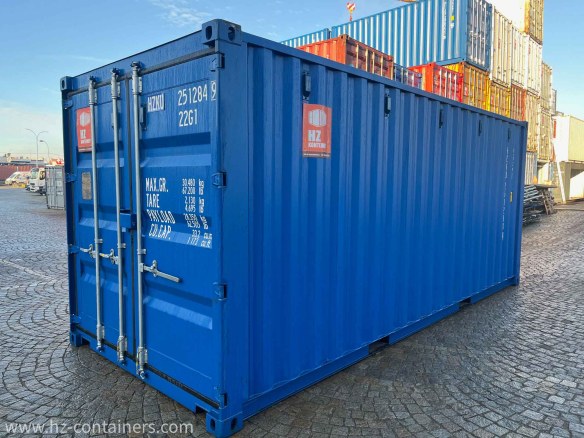
 Czech Republic, Havířov
  FREE SHIPPING

Other container news...

Corner casting steel vs aluminum
Every shipping container in the world — all 40 million of them — rests on eight critical components. Corner castings are the load-bearing blocks at each corner of an ISO shipping container, and they are the universal interface between the container and every crane, twistlock, spreader, and chassis on the planet. When you lift a container, stack it nine high on a ship, or lock it to a truck trailer, every ton of force flows through these fittings.

Construction cabin – selection, tips, dimensions and prices
Every construction project – whether a family house, a development project or a reconstruction – starts with the infrastructure. No construction manager, craftsman or investor who needs an on-site office, a changing room for workers or a safe storage for tools can do without a quality construction cell. But navigating the offer is not easy: residential containers, sanitary cells, storage modules, rental, purchase, refurbished pieces… This guide will give you answers to all the essential questions in one place.
Storage container
A storage container is a lockable steel box designed for the safe and dry storage of materials, tools, goods or equipment. Originally created as a shipping container for maritime transport, its durability and versatility have found their way onto construction sites, corporate premises and private land.
Shipping container 12m (40 ft)
A 12m shipping container is an investment that, if properly selected and cared for, will pay off in decades of trouble-free use. Whether you plan to use it as a warehouse, workshop, garage or the basis for a residential module — the key is careful selection of the condition, a thorough inspection before purchase and high-quality preparation of the base for placement. Take the time to compare offers, check the seller’s references and do not hesitate to personally inspect the container before buying. A properly selected 40-foot container will serve you reliably for many years.