
Organized Crime and Shipping Containers
Organized Crime and Shipping Containers denotes extensive and highly sophisticated criminal activity, in which international criminal networks exploit the global container shipping system for illegal activities on a massive scale. The most common manifestations are drug smuggling (especially cocaine, methamphetamine and heroin), cargo theft, weapons smuggling, counterfeit goods, electronics and other prohibited or high‑value commodities.
Key reasons why containers are an ideal target:
- Huge volume and anonymity: Annually over 750 million TEU (twenty‑foot equivalent units) are shipped worldwide, of which fewer than 2 % are physically inspected (EUDA, 2024). This statistic provides criminals with near‑perfect anonymity.
- Multi‑layered supply chain: Involvement of manufacturers, carriers, port workers, customs officers, warehouse staff and drivers creates many potential weak points that can be exploited through corruption or infiltration.
- Global reach: Container shipping connects production regions (Latin America, Asia) with major consumer markets (Europe, North America, Asia).
- Low risk of detection: Given the volume of shipments and limited inspection capabilities, the chance of detection is minimal.
Key aspects and risk factors
| Factor | Description | Technical details / Trends 2024 |
|---|---|---|
| Anonymity and volume | Thousands of containers flow daily through ports, most of which are automatically cleared. | In the EU, 70 % of drug seizures occur in ports; many containers lack GPS. |
| Global reach | Direct linkage of drug producers to European markets. | Most seizures occur in Rotterdam, Antwerp, Hamburg and Spain. |
| Profitability | One container can hold dozens of tons of contraband; profit often reaches tens of millions of euros per shipment. | Average seizure per container in the EU: 300–350 kg of cocaine (2024). |
| Supply chain vulnerability | Numerous “break points” – from manufacturer through port to warehouses and last‑mile. | Risk increases among subcontractors and agency workers. |
| Infiltration and corruption | “Insiders” have access to key information and physical manipulation of containers. | 68 % of uncovered cases in Europe involve a port employee. |
Historical development and current trends
- 1980–2000: Dominated by air routes, air couriers and smuggling by “mother ships”; volumes were limited.
- Since 2005: Exponential increase in container use – in 2006 only 10 % of seizures, by 2013 already 75 %.
- 2020–2024: Organized groups mainly use “rip‑on/rip‑off” methods, industrially produced counterfeit seals, smart GPS and increasingly refrigerated containers (reefers).
- Europe: Largest seizures in 2023/2024 in Antwerp (Belgium), Rotterdam (Netherlands), Hamburg (Germany), Algeciras and Valencia (Spain).
Modus Operandi: Most common smuggling and theft methods
1. Within the Load
- Description: Drugs are hidden directly in declared goods (bananas, coffee, pineapples, chemicals), sometimes chemically masked.
- Technical details: Criminals often own or control export firms, use specially designed boxes, double‑bottom pallets, vacuum packaging.
- Risk: Increased profiling of suspicious companies.
2. Rip‑on/Rip‑off
- Description: Illegal goods are placed into a container outside the standard logistics process (in a port, on a parking lot, in a trans‑warehouse), then resealed with a counterfeit seal.
- Technical details: Fake or cloned customs seals, hidden GPS for tracking the shipment, organized groups known as “clearers” in European ports.
- Trend: In 2024 this method accounts for approximately 60 % of cocaine seizures in the EU.
3. Drop‑off / Sea transfer
- Description: Transfer of drugs from smaller vessels on the open sea directly onto a container ship with the help of a corrupt crew.
- Example: MSC Gayane case – 20 tons of cocaine, crew involvement, combination of multiple methods (drop‑off + rutas frias).
- Technical details: Requires crew involvement and planning using tracking technologies.
4. Exploitation of container construction
- Description: Hidden modifications of containers – double walls, floors, ceilings, hideouts in refrigerated units.
- Technical details: Industrial modifications in specialized workshops, use of invisible screws, welded parts, etc.
- Detection: Non‑destructive inspection often fails, successful only upon suspicion and physical inspection.
5. Rutas Frias (Cold routes)
- Description: Choice of less‑monitored, “clean” ports as transit points (Chile, Uruguay instead of Colombia or Peru).
- Trend: In 2024 usage of Brazilian and Central American ports is increasing.
6. Cargo theft
- Description: Direct theft of a container, often carried out by the same networks including insiders.
- Statistics: In the USA in 2023 an increase of 9 %, forecast for 2024 +35 %. In the EU the number of cases is rising in Germany, France and the Benelux.
- Technical details: Use of GPS jammers, seal breach, immediate transfer of goods to another vehicle.
Geographic scope and current statistics (2024)
Source and transit regions:
- Latin America: Colombia, Peru, Bolivia (cocaine production), Ecuador, Panama, Brazil (transit).
- Brazil: In 2024 the main “bridge” of cocaine to Europe, key port Santos.
- Europe: Entry gates – Rotterdam, Antwerp, Hamburg, Algeciras, Valencia.
Seizure volumes:
- EU 2024: Over 300 tons of seized cocaine (trend still rising).
- Average shipment: 300–350 kg per container; exceptions up to 20 tons.
- 70 % of drug seizures in the EU occur in ports (EUDA, 2024).
Countermeasures and solutions
1. International cooperation
- Container Control Programme (CCP): UNODC + WCO initiative, strengthening profiling of high‑risk shipments.
- Information sharing: Platforms such as Europol, Interpol, Frontex; rapid data exchange on risky companies, routes and methods.
2. Technological solutions
| Technology | Description and use | Advantages and limitations |
|---|---|---|
| Scanners and X‑rays | Non‑destructive content inspection, use of AI to detect anomalies | Limited capacity |
| Smart containers | GPS, electronic seals, temperature, shock and opening sensors | High cost, slow adoption |
| Port automation | Tracking container and vehicle movement, biometric readers, camera systems with AI analysis | Reduces human factor |
| Weight control | Comparison of declared and actual weight, detection of hidden cargo | Works only upon suspicion |
3. Risk management and prevention
- Risk profiling: Automated systems evaluate sender, destination, type of goods, shipment history.
- Port security: Physical barriers, lighting, monitoring, strict access controls.
- Employee vetting: Regular security checks, rotation of staff in high‑risk positions.
Case study: MSC Gayane (2019/2020)
- Volume: 20 tons of cocaine aboard a container ship.
- Target: Europe, intercepted in the USA (Philadelphia).
- Modus operandi: Combination of sea “drop‑off” and use of “rutas frias” to reduce detection risk.
- Key role: Corrupt crew members, involvement of multiple countries and port workers.
Technical aspects of shipping containers in the context of crime
Container types most abused by organized crime:
- Standard 20′ and 40′ dry van: Most common, easy handling and anonymity.
- Reefer (refrigerated): Complex construction, many potential hideouts.
- Open Top, Flat Rack: Less used for drugs, more for theft.
- Tank container: Used to mask chemicals and precursors.
Security features:
- Customs seals: Original, duplicates (often abused).
- Electronic seals: Rapid notification of manipulation, but slow adoption in practice.
- GPS trackers: Movement tracking, often jammed or removed during theft.
Logistical measures:
- Chain of Custody tracking: Record of every handover/opening of the container.
- Random and targeted inspections: Based on risk profiling, insufficient capacity for widespread checks.

 Czech Republic, Třebíč
  FREE SHIPPING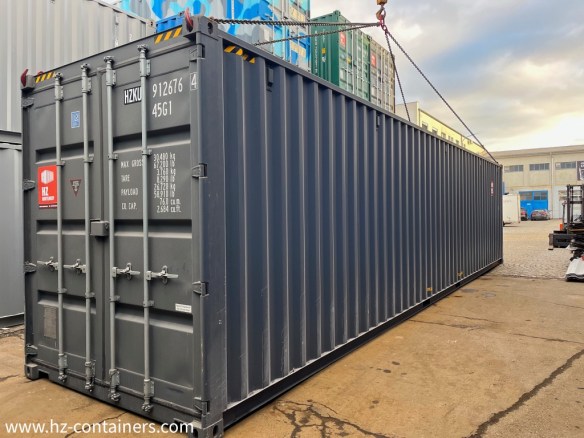
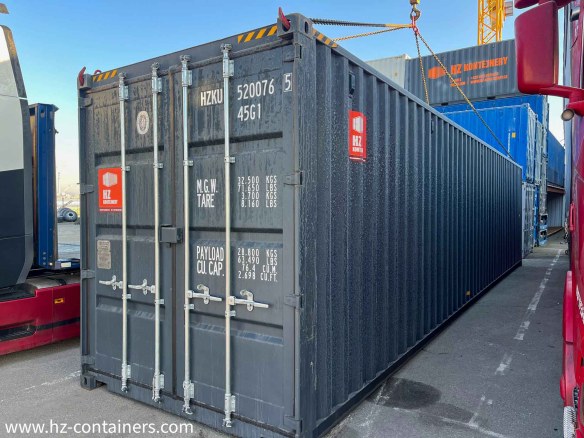

Other container news...
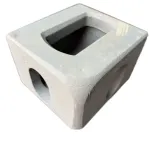
Corner casting steel vs aluminum
Every shipping container in the world — all 40 million of them — rests on eight critical components. Corner castings are the load-bearing blocks at each corner of an ISO shipping container, and they are the universal interface between the container and every crane, twistlock, spreader, and chassis on the planet. When you lift a container, stack it nine high on a ship, or lock it to a truck trailer, every ton of force flows through these fittings.

Construction cabin – selection, tips, dimensions and prices
Every construction project – whether a family house, a development project or a reconstruction – starts with the infrastructure. No construction manager, craftsman or investor who needs an on-site office, a changing room for workers or a safe storage for tools can do without a quality construction cell. But navigating the offer is not easy: residential containers, sanitary cells, storage modules, rental, purchase, refurbished pieces… This guide will give you answers to all the essential questions in one place.
Storage container
A storage container is a lockable steel box designed for the safe and dry storage of materials, tools, goods or equipment. Originally created as a shipping container for maritime transport, its durability and versatility have found their way onto construction sites, corporate premises and private land.
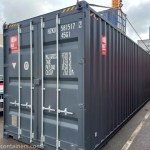
Shipping container 12m (40 ft)
A 12m shipping container is an investment that, if properly selected and cared for, will pay off in decades of trouble-free use. Whether you plan to use it as a warehouse, workshop, garage or the basis for a residential module — the key is careful selection of the condition, a thorough inspection before purchase and high-quality preparation of the base for placement. Take the time to compare offers, check the seller’s references and do not hesitate to personally inspect the container before buying. A properly selected 40-foot container will serve you reliably for many years.