
OOCL Shipping Line
OOCL Shipping Line refers to an internationally recognized maritime shipping company Orient Overseas Container Line (OOCL). Headquartered in Hong Kong, it ranks among the world’s leading shipping lines in container transport and logistics. OOCL operates as part of its parent company Orient Overseas (International) Limited (OOIL), which is a subsidiary of COSCO Shipping Holdings, one of the world’s largest shipping conglomerates.
OOCL plays a key role in the shipping and logistics industry and is known for its extensive fleet, reliable container services, and innovative IT solutions. It supports global trade by connecting major markets in Asia, North America, Europe, Australia, and the Middle East.
Key Features of OOCL
1. Founding and History
OOCL was founded in 1947 by entrepreneur C. Y. Tung originally as Orient Overseas Line. The company became a pioneer in container shipping when it introduced container transport in 1969, marking a significant advancement in maritime logistics. OOCL was also the first Asian shipping company to transport containerized cargo across the Pacific Ocean, setting the standard for innovation in the industry.
Over the decades, OOCL underwent significant development:
- 1947: Founded by C. Y. Tung with a vision of an international Chinese commercial fleet.
- 1969: Renamed to Orient Overseas Container Line to emphasize its focus on container shipping.
- 1970s: Diversification of activities, including the acquisition of the iconic ship RMS Queen Elizabeth, which was converted into “Seawise University” (a floating university).
- 1982: Following the founder’s death, leadership passed to C. H. Tung.
- 2003: Delivery of the OOCL Shenzhen, then the world’s largest container vessel with a capacity of 8,063 TEU.
- 2018: Acquisition by COSCO Shipping Holdings for $6.3 billion, further strengthening its position in the global shipping market.
Today, OOCL operates as a subsidiary of Orient Overseas (International) Limited and continues to expand its global reach and technological capabilities.
2. Global Fleet and Operations
OOCL operates a diverse fleet of 59 vessels, which includes some of the world’s largest container ships. Its vessels have capacities ranging from 2,992 TEU (equivalent to twenty-foot containers) to 24,188 TEU, enabling the company to handle a wide range of cargo from standard containers to oversized or refrigerated goods.
Notable OOCL Ship Classes:
- G-Class: Includes the OOCL Hong Kong, which was the first container ship to exceed 21,000 TEU capacity and is among the most fuel-efficient and environmentally friendly in the world.
- SX-Class: Innovative and efficient vessels with capacity exceeding 8,000 TEU, representing advances in ship design and cargo handling.
- Ice-Class Vessels: Specially designed for operation in extreme weather conditions, ensuring reliable services in challenging environments.
Key Container Terminals:
- Long Beach Container Terminal (California, USA): State-of-the-art facility for handling giant container ships.
- KAOCT Terminal (Kaohsiung, Taiwan): Key hub for Asian trade.
With an emphasis on fleet modernization and investment in technologically advanced ships, OOCL maintains a leading position in the global shipping industry.
3. Regions and Served Markets
OOCL is truly a global operator, connecting more than 70 countries through its logistics and container shipping services. The company’s weekly services cover key trade routes, including:
- Transpacific Routes: Connecting Asia with North America.
- Asia-Europe: Key for trade between East and West.
- Intra-Asia: Serving growing trade among Asian economies.
- Australia and New Zealand: Supporting Oceania’s export and import needs.
OOCL’s integrated logistics solutions enable businesses to efficiently transport goods across continents using intermodal transport, which combines maritime shipping with rail and road transport.
4. Technological Innovation
OOCL is a pioneer in leveraging advanced technologies to improve its operations:
- Integrated Regional Information System (IRIS-2): Implemented in 1993, this system integrates business processes, shipment tracking, and financial data for smooth operations.
- Collaboration with Microsoft on AI: In 2018, OOCL partnered with Microsoft to explore how artificial intelligence (AI) can increase the efficiency of shipping networks.
- Online e-Services Platform: Offers customers tools for booking, tracking, and managing shipments.
The company also uses predictive analytics and real-time updates to optimize cargo delivery and improve customer experience.
5. Sustainability and Environmental Commitment
OOCL is committed to reducing its environmental footprint through various initiatives:
- Fuel Efficiency Programs: Implemented in 2001, aimed at reducing greenhouse gas emissions by optimizing vessel routes, hull design, and fuel consumption.
- Green Terminal Operations: Participation in programs such as the Green Flag Program at Long Beach Port, which rewards environmentally friendly practices.
- Refrigerated Containers: Eliminated the use of CFCs (freon) in the 1990s in compliance with international environmental standards.
OOCL also explores alternative technologies, such as shore power and marine scrubbers, to minimize emissions during port operations.
6. Accidents and Incidents
Despite a strong commitment to safety, OOCL has faced challenges, including significant incidents:
- RMS Queen Elizabeth Fire (1972): The iconic ship, intended as a floating university, caught fire and sank in Victoria Harbour, Hong Kong.
- OOCL Finland Collision (2011): A tragic collision in the Kiel Canal claimed the lives of two sailors.
- Crane Collapse at Kaohsiung Port (2021): OOCL Durban struck an anchored vessel, causing significant damage to port infrastructure.
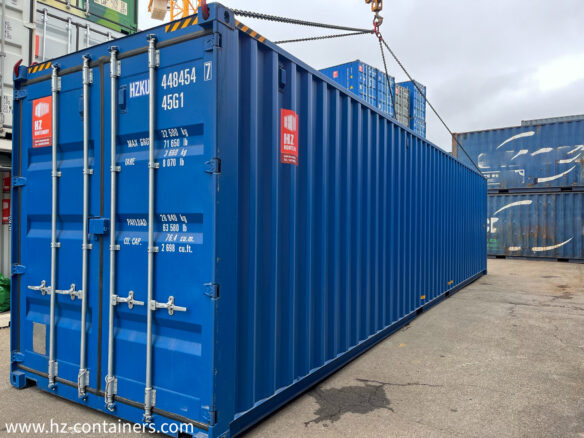
 Bangkok, Thailand
  WITHOUT SHIPPING


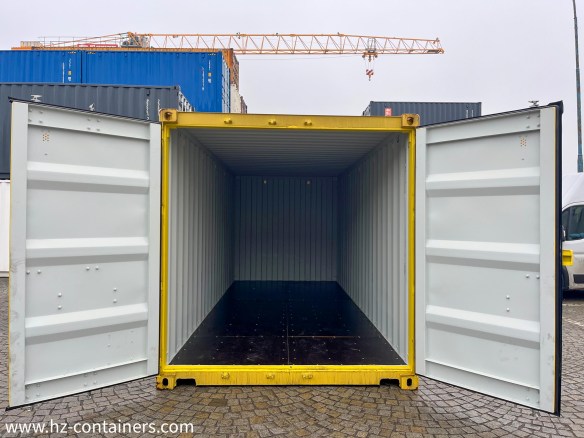
Other container news...

New shipping containers
If you are currently considering purchasing a new shipping container, you are not alone. While just twenty years ago containers were used almost exclusively for maritime transport, today they have found their way into construction, storage, business, and even housing. This growing popularity brings with it a host of questions: Which type should you choose? How much does it cost? How do you recognize quality? How can you avoid falling victim to scammers?
New sea shipping containers
If you are currently considering purchasing a new shipping container, you are not alone. While just twenty years ago containers were used almost exclusively for maritime transport, today they have found their way into construction, storage, business, and even housing. This growing popularity brings with it a host of questions: Which type should you choose? How much does it cost? How do you recognize quality? How can you avoid falling victim to scammers?

6m shipping container
Are you thinking about buying a 6-meter shipping container but aren’t sure what to look for? You are not alone—this 20-foot container is the best-selling size on the Czech market, and the differences between various types, conditions, and prices can be significant. In this guide, you will find everything you need to know: from exact dimensions and a comparison of categories (such as “one-way,” refurbished, and “Cargo Worthy”) to current prices and shipping advice.
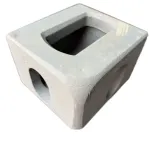
Corner casting steel vs aluminum
Every shipping container in the world — all 40 million of them — rests on eight critical components. Corner castings are the load-bearing blocks at each corner of an ISO shipping container, and they are the universal interface between the container and every crane, twistlock, spreader, and chassis on the planet. When you lift a container, stack it nine high on a ship, or lock it to a truck trailer, every ton of force flows through these fittings.