
Manufacturing and Testing Process of New Containers According to ISO and CSC
Why is this process key?
Human safety and cargo protection
- Containers are exposed to extreme forces – when stacking on ships up to 10 layers, crane handling, vibrations and shocks during transport.
- Poor quality or unapproved containers can cause serious accidents, cargo damage or endanger the lives of crew members and port workers.
- Certified containers protect goods from weather effects, water ingress, mechanical damage and theft.
Interoperability and legal compliance
- Strict compliance with ISO standards (e.g. ISO 668 for dimensions, ISO 1161 for corner fittings) ensures compatibility with any transport or handling equipment in the world.
- A container without a valid CSC plate can be detained at port, leading to high losses.
- Valid certification is a prerequisite for cargo and container insurability.
Main phases of manufacturing and certification process
The entire process is always supervised by an authorized classification society (for example Bureau Veritas, Lloyd’s Register, American Bureau of Shipping, DNV).

Phase 1: Design Assessment
- The manufacturer submits detailed technical documentation for approval. It contains:
- Technical drawings of the frame, walls, floor, roof, doors and corner fittings.
- Specification of all materials including certificates (most commonly CORTEN steel, pressure-impregnated marine plywood for the floor, rubber seals, etc.).
- Engineering calculations of load capacity, load simulation during stacking, handling and vibrations.
- Detailed description of welding procedures and quality controls.
- Quality Assurance Plan.
Materials and construction
- Walls are made of corrugated steel, which increases strength and resistance to deformation.
- Floors are made of marine plywood, pressure-impregnated with pesticides and fungicides according to FDA.
- Corner fittings (corner castings) must comply with ISO 1161 and allow safe stacking and handling.
Phase 2: Factory Approval
- The classification society conducts a factory audit:
- Checks the implementation of a quality management system according to ISO 9001.
- Verifies the qualifications of workers, especially welders.
- Monitors the calibration and maintenance of measuring equipment.
- Investigates material traceability – each part must have a traceable origin.
- Checks the development of technological procedures and proper application of surface treatments.
Phase 3: Prototype Testing
According to ISO 1496 standard, the prototype is subjected to a series of destructive and non-destructive tests. Key tests include:
| Test | Purpose | Parameters |
|---|---|---|
| Lifting | Verification of frame and corner fitting strength | Load = 2× maximum operating weight, lifting by upper/lower corners |
| Stacking | Simulation of multiple containers in the hold | Force corresponding to a stack of up to 192 tons |
| Concentrated Load | Floor and roof strength test | Roof: 300 kg per 600×300 mm, Floor: 5,460 kg per wheel area |
| Wall Strength | Resistance to cargo pressure during movement | Pressure 0.4× (front) and 0.6× (side) of maximum payload |
| Racking | Resistance to structural twisting | Forces simulating ship movement, train braking |
| Watertightness | Ensuring impermeability | Water jet spray, no moisture inside |
| Dimensional control | Ensuring interoperability | Careful measurement before and after tests, comparison with ISO 668 tolerances |
Additional tests
- Fire resistance, resistance to chemical effects (especially for specialized containers – tank containers, reefers).
- Checking proper door operation, seals and locks.
Phase 4: Production Inspection
- After prototype approval, an inspector regularly monitors production:
- Checks weld quality (X-ray/ultrasound).
- Monitors floor, door and seal assembly.
- Verifies dimensional tolerances and coating integrity.
- Each container is identified with a unique code (see marking below).
Phase 5: Certification and Marking
- After successful inspection, a CSC plate is attached to the door, which is the main document of compliance with standards.
- The manufacturer receives a Type Approval Certificate for the entire series.
- The container receives a unique identification code (e.g. HZKU1234567 – three letters for the owner, one character for type, six digits, check digit).
Detailed analysis of the safety approval plate (CSC Plate)
The safety approval plate is a permanent, non-corrosive plate – usually made of stainless steel or aluminum alloy – attached to the container door. It contains:
| Item | Description |
|---|---|
| “CSC SAFETY APPROVAL” | Confirmation of compliance with the CSC convention |
| Country of approval, reference number | Country code and number issued by the administration |
| Manufacturing date | Month and year of manufacture |
| Manufacturer identification number | Manufacturer serial number |
| Maximum gross weight | Permitted total weight in kg and lbs |
| Permitted stacking load | Maximum load during stacking (1.8 G) |
| Racking value | Loading force in the transverse direction (racking) |
| Date of first/subsequent inspection | Dates of periodic inspections, or ACEP code |
Main standards and regulatory bodies
| Abbreviation | Standard / Convention | Meaning |
|---|---|---|
| CSC | International Convention for Safe Containers | International safety convention for construction, testing, maintenance |
| ISO | International Organization for Standardization | Technical standards (construction, dimensions, tests) |
| ISO 668 | Series 1 Freight Containers | Dimensions, classification, maximum weights |
| ISO 1161 | Series 1 Freight Containers – Corner fittings | Specification of corner fittings |
| ISO 1496 | Series 1 Freight Containers – Specification and testing | Construction and testing requirements |
| IMDG Code | International Maritime Dangerous Goods Code | Standards for dangerous goods transport |
| Classification societies | ABS, BV, DNV, LR | Independent bodies for approval, testing, certification |
Processes after commissioning
The container’s life cycle continues with regular inspections and maintenance.
Periodic Examination Scheme (PES)
- First inspection within 5 years of manufacture.
- Further inspections every maximum 30 months.
- The inspection is carried out by a qualified inspector, checking the integrity of the frame, walls, floor, doors, seals and CSC plate.
Approved Continuous Examination Program (ACEP)
- Applies to large owners (shipping companies, leasing companies).
- Containers are inspected continuously as part of regular maintenance.
- On the CSC plate, instead of the inspection date, a unique ACEP code is shown.
Specific types of containers and their certification
- Offshore containers: Used in extreme conditions (e.g. oil platforms), meet DNV 2.7-1 and other stricter standards for strength, handling, corrosion and impact resistance.
- Tank containers: For liquids and gases, must undergo pressure and tightness tests, comply with IMDG Code.
- Refrigerated containers: Not only the construction is tested, but also the function of the cooling system and insulation properties.
Practical description of the manufacturing process (extended view)
1. Steel and profile preprocessing:
- Large steel sheets are cut and cleaned, then surface treated (blasting, primer coat) against corrosion.
- Walls are shaped into a corrugated profile, which significantly increases strength.
2. Manufacturing the base frame:
- Main load-bearing I-profiles and corner fittings are welded into a frame, smaller profiles reinforce the base.
3. Assembly of walls, doors and corner posts:
- Walls and doors are made of corrugated steel, mounted on the frame and welded together with corner posts.
- Corner fittings are key for stacking and handling.
4. Complete welding and assembly:
- All components are welded into a compact unit.
5. Surface treatment:
- The container is provided with several layers of primer and topcoat – protects against corrosion (especially sea salt).
- Doors receive rubber seals for 100% watertightness.
6. Floor installation:
- The floor is made of marine plywood, pressure-impregnated with pesticides and fungicides, bolted to the frame.
7. Marking and identification:
- Each container receives a unique code (e.g. HZKU1234567) and operator logos.
8. Output control and testing:
- Watertightness is checked, dimensions are verified, door functionality is confirmed, visual inspection of surfaces.
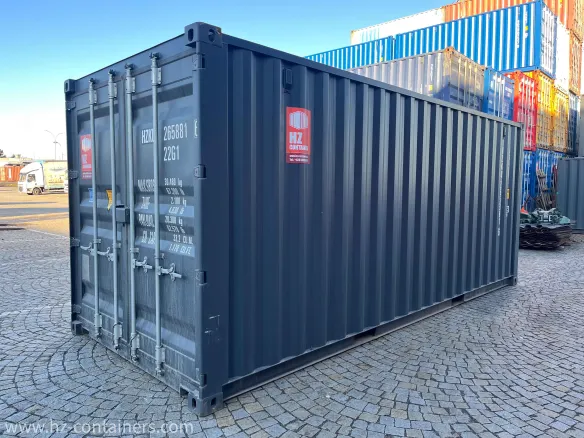
 Česká Lípa, Czech Republic
  FREE SHIPPING
Other container news...

New shipping containers
If you are currently considering purchasing a new shipping container, you are not alone. While just twenty years ago containers were used almost exclusively for maritime transport, today they have found their way into construction, storage, business, and even housing. This growing popularity brings with it a host of questions: Which type should you choose? How much does it cost? How do you recognize quality? How can you avoid falling victim to scammers?
New sea shipping containers
If you are currently considering purchasing a new shipping container, you are not alone. While just twenty years ago containers were used almost exclusively for maritime transport, today they have found their way into construction, storage, business, and even housing. This growing popularity brings with it a host of questions: Which type should you choose? How much does it cost? How do you recognize quality? How can you avoid falling victim to scammers?

6m shipping container
Are you thinking about buying a 6-meter shipping container but aren’t sure what to look for? You are not alone—this 20-foot container is the best-selling size on the Czech market, and the differences between various types, conditions, and prices can be significant. In this guide, you will find everything you need to know: from exact dimensions and a comparison of categories (such as “one-way,” refurbished, and “Cargo Worthy”) to current prices and shipping advice.
Corner casting steel vs aluminum
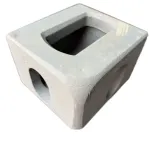
Every shipping container in the world — all 40 million of them — rests on eight critical components. Corner castings are the load-bearing blocks at each corner of an ISO shipping container, and they are the universal interface between the container and every crane, twistlock, spreader, and chassis on the planet. When you lift a container, stack it nine high on a ship, or lock it to a truck trailer, every ton of force flows through these fittings.