
Lock for shipping container
Shipping containers are no longer used just for transporting goods across oceans. We encounter them increasingly often on construction sites as mobile tool storage, in gardens as workshops, in industrial premises as secure storage, or even as a foundation for modern housing. Regardless of what your container is used for, one thing is common: if it is not properly secured, it represents an easy target for thieves. Precisely the lock for a shipping container is the first — and often the only — line of defense between your property and unauthorized access.
However, choosing the right lock for a shipping container is not as simple as it may seem at first glance. There are many types, materials, and security classes on the market. From basic padlocks for a few hundred crowns to certified latch systems costing thousands. This guide will help you navigate all the options and choose the solution that exactly matches your needs — whether it concerns securing a shipping container on a construction site, in a warehouse, or during transport.
Why a quality lock for a shipping container is an absolute necessity
Statistics from insurance companies and logistics firms speak clearly — thefts of goods from containers are growing. Thieves specifically target containers because they know many owners rely on the original locking mechanism, which is often easy to overcome. The standard doors of a shipping container are sturdy, but their locking system consists of a relatively thin lever that can be cut, pried open, or broken off.
Therefore, a quality lock for a shipping container is not just an accessory — it is a fundamental investment in protecting your property. A properly chosen lock:
- Deters opportunistic thieves — they look for easy prey, and if they encounter a resistant lock, they prefer to move on.
- Delays professional burglars — no lock is one hundred percent unbreakable, but every extra minute increases the chance that the burglar will reconsider continuing or that someone will interrupt them.
- Meets insurance company requirements — many insurance policies require a certified security lock, otherwise they may not pay out in case of theft.
Key insight: The most vulnerable part of every shipping container is the doors — and specifically their locking mechanism. The protection you invest in should correspond to the value of the contents it protects.
Types of locks for shipping containers: complete overview
There are several basic types of locks for shipping containers on the market. Each offers a different level of protection, a different installation method, and naturally a different price range. Let us introduce them in detail.
Padlock for lock-box
The most common and simplest solution. The majority of shipping containers (estimated over 95% of commonly used pieces) are equipped with a so-called lock-box — a steel pocket welded onto the doors, into which a padlock is inserted. The padlock is then protected against direct attack with bolt cutters, a hammer, or a crowbar.
Advantages:
- Quick installation — simply click the lock into the pocket
- No drilling or welding required
- Affordable price
Disadvantages:
- Level of protection depends on the quality of the lock itself
- The lock-box can be bypassed if it is not sufficiently robust
Price range: 350–1,500 CZK
Security padlock with protected shackle
A more advanced version of a classic padlock. The shackle (arch) is covered by a massive steel construction that prevents it from being cut. This type of lock for a shipping container is used either on its own or in combination with a latch.
Most often you will encounter locks that meet higher security classes and are certified for use on containers. These locks are made from hardened steel, boron alloy, or brass, which makes them resistant to cutting, sawing, and prying.
Price range: 800–2,500 CZK
Latch lock (Security Lock)
A latch lock for a shipping container represents a significant leap in the level of security. It is a massive steel construction that is fitted over the existing locking mechanism of the doors and covers it. The lock is completely hidden behind the solid steel part, so direct access to it is not possible — it cannot be pried open, cut, or broken off.
A typical example is the HZK004 lock, which consists of a robust steel latch and an integrated padlock. The latch is made of structural steel with a surface treatment against corrosion, and the lock is certified for a high security class.
Advantages:
- High resistance to mechanical attack
- No drilling or welding required
- Quick assembly and disassembly
Disadvantages:
- Higher purchase price
- Greater weight
Price range: 2,000–5,000 CZK
Container bar lock (rod lock)
One of the most robust mobile solutions for securing a shipping container. A container bar lock is an adjustable steel arm lock that firmly connects both vertical locking rods of the doors together. This makes it impossible to open the doors even if the standard lock is overcome.
The principle of operation is simple but exceptionally effective: the steel arm wraps around both locking rods and locks them in one position. The lock is integrated into a massive steel body, so it is protected against being pried open, drilled out, and other forms of attack.
Advantages:
- Extremely high resistance
- No drilling or welding required
- Mounted within seconds
- Also suitable for transport
Disadvantages:
- Higher price
- Greater weight (usually 3–5 kg)
Price range: 2,500–4,000 CZK
Welded lock cover (Lock Box / Security Box)
The highest level of passive protection. It is a steel box that is permanently welded onto the container door and completely covers the entire lock. This prevents any access to the lock from the outside — a burglar simply cannot reach it.
The welded cover is used in combination with a quality padlock and is ideal for containers that stand in one place for a long time — for example as storage on a construction site, in an industrial area, or in a garden.
Advantages:
- Maximum protection of the lock against direct attack
- Long-term and permanent solution
Disadvantages:
- Requires welding (professional installation necessary)
- Permanent modification of the container
Price range: 850–2,000 CZK (cover only, without lock)
Comparison of types of locks for shipping containers
| Lock type | Security level | Installation | Price (indicative) | Mobility | Ideal use |
|---|---|---|---|---|---|
| Padlock for lock-box | ⭐⭐ | No installation | 350–1,500 CZK | High | Light storage, fenced areas |
| Security padlock | ⭐⭐⭐ | No installation | 800–2,500 CZK | High | Standard security, construction sites, warehouses |
| Latch lock | ⭐⭐⭐⭐ | Mounted | 2,000–5,000 CZK | High | Construction sites, valuable contents, transport |
| Container bar lock | ⭐⭐⭐⭐⭐ | Mounted | 2,500–4,000 CZK | High | Maximum protection, transport, remote locations |
| Welded cover + lock | ⭐⭐⭐⭐⭐ | Welding | 1,500–4,000 CZK | None | Long-term storage, permanent installation |
Materials and durability: what is a lock for a shipping container made of
The material construction of the lock directly affects its lifespan and resistance to attack as well as weather conditions. Here are the main materials you will encounter:
Hardened steel
The most commonly used material for security locks. Hardened steel undergoes a heat treatment that significantly increases its hardness and resistance to cutting and sawing. The majority of quality padlocks and latch locks for shipping containers use hardened steel for both the shackle and the lock body.
Boron alloy
A modern material with excellent resistance to mechanical damage. Boron alloy is lighter than classic steel but at the same time extremely hard — it withstands repeated attacks with a crowbar. It is used primarily in premium padlocks.
Stainless steel
A stainless steel lock for a shipping container is an ideal choice for containers located in environments with high humidity, salt water, or chemical influences. Stainless steel does not corrode, so the lock remains functional even after years in demanding conditions — for example in ports, on the coast, or in chemical operations.
Brass
Used primarily for cylindrical inserts and internal lock mechanisms because it is corrosion-resistant and at the same time allows precise machining. The lock body itself is made of brass only exceptionally.
Practical advice: If your container stands outdoors, invest in a lock with a corrosion-resistant surface treatment — galvanization, stainless steel construction, or powder coating. A lock that rusts and seizes will be useless to you in a critical moment.
How to choose the right lock for a shipping container
Choosing the ideal lock is not about buying the most expensive one. It is about finding the optimal balance between level of protection, practicality, and price. When choosing, consider the following five criteria:
1. Value of the protected contents
The more valuable the contents of the container, the higher the investment in security should be. If you store tools worth hundreds of thousands in the container, a latch lock for 3,000 CZK is perfectly adequate. If you only have empty packaging inside, a basic padlock will suffice.
2. Location of the container
A container in a freely accessible location (for example on a remote construction site) needs a higher level of protection than a container in a fenced area with a camera system. Similarly, a container by the sea requires a stainless steel construction.
3. Frequency of access
If you go into the container several times a day, you will appreciate the speed and simplicity of handling. A padlock for a lock-box is more practical in this case than a complicated container bar lock.
4. Mobility
Will the container travel, or will it stand in one place? For transport, mobile locks are suitable (padlock, latch lock, container bar lock). For permanent placement, you can also choose a welded cover.
5. Insurance company requirements
If you have the contents of the container insured, check what security class of lock your insurance company requires. Some policies specify minimum certification — for example security class 3 or 4.
Overview of brands and manufacturers of locks for shipping containers
On the Czech market, you will encounter several proven brands that specialize in security locks for containers:
| Brand | Country of origin | Specialization | Price range | Security class |
|---|---|---|---|---|
| ABUS | Germany | Premium padlocks, latches | Higher | 3–5 |
| TIFON | Czech Republic | Latch sets, padlocks | Medium | 3–4 |
| Tokoz | Czech Republic | Padlocks, container locks | Medium | 3–4 |
| Mul-T-Lock | Israel | High-security cylindrical inserts | Higher | 4–5 |
| Normex | Germany | Padlocks for lock-boxes | Medium | 3–4 |
| Abloy | Finland | Extremely durable locks for heavy conditions | High | 4–5 |
ABUS and TIFON are the most widespread and most frequently recommended brands for securing shipping containers on the Czech market. Tokoz builds on domestic tradition and offers a good price-performance ratio. Mul-T-Lock and Abloy represent the premium segment for those who require absolute top-level resistance to lock-picking and destructive methods.
How to install a lock on a shipping container: step by step
The installation method differs according to the type of lock. Here are the basic procedures for individual variants:
Padlock for lock-box
- Open the container doors and locate the lock-box — a steel pocket on the inside of the right door wing.
- Open the padlock.
- Thread the shackle of the lock through the hole in the lock-box.
- Click the lock shut. Done — the entire operation takes less than 10 seconds.
Latch lock
- Close the container doors and secure them with the standard mechanism.
- Fit the latch over the locking mechanism so that it covers the handle and the seat.
- Insert the padlock into the prepared holes in the latch.
- Lock the padlock. The latch now prevents any manipulation with the original mechanism.
Container bar lock
- Close the container doors.
- Open the arms of the bar and adjust them to the width between both locking rods.
- Fit the arms onto the rods so that they firmly embrace them.
- Lock the integrated lock. The rods are now blocked and the doors cannot be opened.
Welded lock cover
- Determine the optimal position of the cover on the doors — it must cover the entire lock-box including the lock.
- Clean the surface of rust and dirt.
- Using a welding machine, weld the cover onto the container doors at all contact points.
- After cooling, insert the lock into the lock-box and close the cover.
Safety warning: Welding should only be performed by a qualified welder. A poorly made weld can compromise the integrity of the doors and actually reduce security.
Price ranges: how much does a lock for a shipping container cost
The price of a lock for a shipping container varies in a wide range — from several hundred to several thousand crowns. Here is an indicative overview by type:
| Lock type | Price excl. VAT | Price incl. VAT |
|---|---|---|
| Basic padlock for lock-box | 290–400 CZK | 350–480 CZK |
| Security padlock (Normex, ABUS) | 650–1,200 CZK | 790–1,450 CZK |
| Stainless steel padlock | 1,200–2,000 CZK | 1,450–2,420 CZK |
| Latch lock (Security Lock Set) | 2,000–3,700 CZK | 2,420–4,480 CZK |
| Container bar lock | 2,200–3,200 CZK | 2,660–3,870 CZK |
| Welded lock cover (without lock) | 700–1,700 CZK | 850–2,060 CZK |
The listed prices are indicative and are based on the current offer of Czech sellers (2026). The final price depends on the specific model, brand, and seller.
Most common mistakes when choosing a lock for a shipping container
1. Using a common padlock from a hardware store
A classic construction padlock for 150 CZK has no business on container doors. Its shackle can be cut within seconds.
2. Underestimating the influence of weather
An ordinary steel lock without surface treatment will rust during the first winter and seize up. Then there is nothing left to do but cut it off — which is exactly what you wanted to prevent.
3. Ignoring compatibility
Not every lock fits every container. Before purchasing, check whether your container has a lock-box, what its dimensions are, and whether the chosen lock matches the door construction.
4. Saving in the wrong place
If you store tools worth 100,000 CZK in the container, saving 1,500 CZK on a lock is false economy. A thief who overcomes a cheap lock will cause you many times more damage.
FAQ
How to choose a lock for a shipping container?
When choosing, consider five key factors: the value of the protected contents, the location of the container, the frequency of access, the mobility of the container, and the insurance company requirements. For standard storage in a fenced area, a quality padlock for a lock-box is sufficient. For remote construction sites and valuable contents, choose a latch lock or container bar lock. In environments with high humidity and salt water, opt for a stainless steel construction.
Which lock for a shipping container is the most secure?
The highest level of security is offered by the combination of a container bar lock (or welded cover) with a certified security lock from brands such as ABUS, Mul-T-Lock, or Abloy in security class 4–5. For maximum protection, it is ideal to combine mechanical security with electronic elements, such as an alarm or GPS tracking.
How to install a lock on a shipping container?
Most locks for shipping containers do not require any professional installation. You simply click a padlock into the lock-box, fit a latch lock over the locking mechanism, and attach a container bar lock to the locking rods. The exception is the welded cover, which requires welding work and should be installed by a professional.
What is a container bar lock?
A container bar lock (also called a rod lock) is a robust steel mechanism that firmly connects both vertical locking rods of the container doors together. This makes it impossible to open the doors even if the standard lock is overcome. It is one of the most effective mobile solutions for securing a shipping container.
How to secure a shipping container against theft?
Effective security of a shipping container stands on three pillars: (1) a quality mechanical lock matching the value of the contents, (2) suitable placement of the container — ideally in a fenced and lit area, (3) supplementary measures such as an alarm, GPS tracker, or camera system. The most effective is a combination of all three layers of protection.
How much does a lock for a shipping container cost?
Prices range from 350 CZK for a basic padlock for a lock-box up to 5,000 CZK for a premium latch set. Most quality solutions for common use are in the range of 800–2,500 CZK incl. VAT.
What is the difference between a latch and a lock-box?
A lock-box is a steel pocket welded directly onto the container doors during manufacture — it serves as a protective casing for a padlock. A latch (Security Lock) is an additional device that is fitted over the entire locking mechanism and creates another layer of protection. You can purchase a latch additionally for any container, whereas a lock-box is part of the door construction.
Which container lock is better — Mul-T-Lock or Tokoz?
Both brands have their place on the market. Tokoz is a Czech classic with a good price-performance ratio — ideal for standard security of construction containers and warehouses. Mul-T-Lock represents the premium segment with an emphasis on the highest security class and resistance to lock-picking. If you want maximum protection and are willing to invest, Mul-T-Lock is the better choice. For common use, however, Tokoz offers excellent value for a reasonable price.
Does the same lock fit both a 20′ and 40′ container?
Yes, the locking mechanisms and lock-boxes on standard 20-foot and 40-foot containers are identical. A lock that fits on a 20′ container will also work on a 40′ variant. A difference can only occur with special container types (for example with side opening), where it is advisable to verify compatibility in advance.
Can a stainless steel lock be used on a shipping container by the sea?
Yes, a stainless steel lock is the best choice for containers near the sea or in industrial operations with an aggressive environment. Stainless steel resists salt water, humidity, and chemicals and does not corrode. The investment in a stainless steel construction pays off many times over in these conditions.

 Czech Republic
  WITHOUT SHIPPING
Other container news...
Corner casting steel vs aluminum
Every shipping container in the world — all 40 million of them — rests on eight critical components. Corner castings are the load-bearing blocks at each corner of an ISO shipping container, and they are the universal interface between the container and every crane, twistlock, spreader, and chassis on the planet. When you lift a container, stack it nine high on a ship, or lock it to a truck trailer, every ton of force flows through these fittings.

Construction cabin – selection, tips, dimensions and prices
Every construction project – whether a family house, a development project or a reconstruction – starts with the infrastructure. No construction manager, craftsman or investor who needs an on-site office, a changing room for workers or a safe storage for tools can do without a quality construction cell. But navigating the offer is not easy: residential containers, sanitary cells, storage modules, rental, purchase, refurbished pieces… This guide will give you answers to all the essential questions in one place.
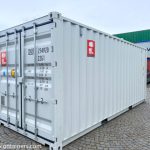
Storage container
A storage container is a lockable steel box designed for the safe and dry storage of materials, tools, goods or equipment. Originally created as a shipping container for maritime transport, its durability and versatility have found their way onto construction sites, corporate premises and private land.
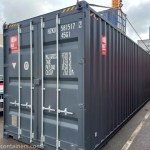
Shipping container 12m (40 ft)
A 12m shipping container is an investment that, if properly selected and cared for, will pay off in decades of trouble-free use. Whether you plan to use it as a warehouse, workshop, garage or the basis for a residential module — the key is careful selection of the condition, a thorough inspection before purchase and high-quality preparation of the base for placement. Take the time to compare offers, check the seller’s references and do not hesitate to personally inspect the container before buying. A properly selected 40-foot container will serve you reliably for many years.