
How to Weld a Shipping Container?
Welding shipping containers is a complex discipline that lies at the intersection of industrial manufacturing, construction, repair, and increasingly, architectural and DIY projects. Any intervention in the container’s structure (repair, joining, modifications for residential purposes such as shipping container homes) requires not only knowledge of techniques but also adherence to standards, correct material selection, and strict observance of safety rules.
Modern containers are almost always made of weather-resistant Corten steel and are designed to withstand extreme loads. This is reflected in the welding requirements – the resulting weld must not only be strong but also corrosion-resistant, watertight, and capable of transferring dynamic and static stresses. Therefore, familiarity with standards is crucial, especially the American standard AWS D1.1, which is considered the gold standard in this segment.
Practical experience shows that quality container welding is the result of a combination of thorough surface preparation, correct technology selection (SMAW, FCAW, GMAW), careful weld inspection, and above all, the practical skills of the welder.
AWS (American Welding Society) – Standards and Certifications for Container Welding
What is it?
The American Welding Society (AWS) is the largest and most respected organization that defines global standards for welding. For containers, the AWS D1.1 Structural Welding Code – Steel standard is absolutely essential, setting requirements for:
- Types of weld joints (butt, fillet, corner),
- Welding positions (horizontal, vertical, overhead, longitudinal),
- Correct welding procedures (preheating, filler material selection, number of weld passes),
- Welder qualification (Certified Welder – CW),
- Weld inspection and testing (non-destructive testing NDT – magnetic particle method, ultrasound, visual inspection),
- Welding documentation and records.
Practical Significance:
Adherence to AWS D1.1 is particularly required when constructing residential modules (shipping container houses), offices, schools, or other structures where safety and long lifespan are a priority. Customers and authorities often demand proof of welder qualification and inspection according to this standard.
Practical Tip:
Poor weld preparation or incorrect procedure means automatic failure during inspection. AWS D1.1 is very strict – inspectors check not only the weld quality but also the complete documentation of preheating, type of wire/electrode used, equipment maintenance records, etc.
Safety in Container Welding
What is it?
Safety is a set of principles, PPE (Personal Protective Equipment), and work procedures aimed at minimizing risks – burns, fire, eye damage from UV/IR radiation, inhalation of toxic fumes (especially from paints and Corten steel), electric shock.
Key Measures:
- Always use a P3 filter respirator or PAPR (Powered Air Purifying Respirator), especially when welding over old paint.
- Weld only in well-ventilated areas or outdoors, ideally with extraction.
- Wear flame-retardant clothing, a welding helmet with a quality filter, gloves, and sturdy footwear.
- Remove flammable materials from the vicinity before welding.
- After welding, check that no hot particles have ignited in the container’s insulation or floor.
Practical Tip:
When working inside a container, the concentration of toxic fumes can rise quickly – it is necessary to ensure ventilation (open doors, use a fan), otherwise, acute poisoning is a risk!
Corten Steel – Welding Specifics
What is it?
Corten steel (ASTM A588 designation, sometimes also “weathering steel”) is an alloy steel containing copper, chromium, and nickel. It forms a protective patina that significantly slows down further corrosion, making it ideal for shipping containers.
Welding Specifics:
- Preheating: It is recommended to preheat to 100–200 °C (especially for thicknesses over 10 mm) to prevent cracking.
- Filler Material Selection: Use wires/electrodes with increased nickel and chromium content (e.g., Lincoln Cor-Met, Böhler Union K 52 Mn, or stainless steel wire type 309 for Corten × common steel joints).
- Cooling: The weld must not cool too quickly – ideally, cover with an asbestos blanket.
- Corner blocks: These are made of cast steel and are easier to weld than Corten, but the correct filler material must be used.
Practical Tip:
If you join Corten with common steel, always use filler material for the “weaker” material, i.e., usually for common steel. The weld will not have the same resistance as Corten, but it will be safer.
Dual Shield – Dual Weld Protection (FCAW-G)
What is it?
Flux Cored Arc Welding with dual protection (FCAW-G): welding with a tubular wire containing flux inside PLUS external shielding gas. Most commonly CO2 or an Argon/CO2 mixture.
Advantages:
- High penetration, strength, and welding speed (up to 10× faster than SMAW).
- Suitable for thick frame walls, corner profiles, joining containers into larger units.
- High tolerance to surface impurities (oil, rust, paint).
Limitations:
- Shielding gas can be blown away by wind – a windbreak is necessary.
- Requires more expensive equipment (semi-automatic welding machine, gas cylinder).
Practical Tip:
For tack welds on walls, self-shielded flux-cored wire (FCAW-S) is sufficient; for main structural joints, FCAW-G (Dual Shield) is ideal.
Electrode Welding (SMAW/Stick) – When and How to Use It
What is it?
Classic manual arc welding with a coated electrode (SMAW). A very versatile method, suitable for outdoor repairs, thick profiles, and less accessible areas.
Which Electrodes to Use?
- E7018 (low hydrogen): structural joints, frames, corner blocks.
- E6010/E6011: for welding on not entirely clean surfaces, in various positions.
Advantages:
- No shielding gas required.
- Resistant to wind, dust, impurities.
- Low-cost equipment (inverter, cables, electrodes).
Practical Tip:
When welding container walls, choose electrodes of smaller diameter (2.5–3.2 mm) to avoid burning through the thin sheet metal.
FCAW (Flux Cored Arc Welding) – The Choice for Containers
What is it?
Semi-automatic welding with a tubular wire that contains flux inside. There are two variants:
- FCAW-S (Self-Shielded): does not require external gas, ideal for outdoor use.
- FCAW-G (Dual Shield): with additional gas, higher strength, faster work.
Recommended Wires:
- Hobart Fabshield 21B, Lincoln NR-211 (for thin walls).
- Wire diameter .030″/.035″ depending on material thickness.
Advantages:
- Works excellently even on remnants of paint or rust.
- High productivity, minimal need for weld cleaning.
Practical Tip:
Self-shielded flux-core is a “lifesaver” for welders in the field – you don’t need a gas cylinder and can weld even in windy weather.
GMAW (Gas Metal Arc Welding/MIG/MAG) – Speed and Cleanliness
What is it?
Semi-automatic welding in a shielding atmosphere of inert (MIG) or active (MAG) gas.
Usage:
- Ideal for workshops and wind-free locations.
- For precise jobs on windows, doors, frame reinforcements.
Limitations:
- Highly sensitive to wind (gas blow-away = porous weld).
- Requires perfect surface cleaning.
Practical Tip:
MIG is not suitable for outdoor work! Use only in enclosed, well-ventilated areas.
Voltage Drop
What is it?
A drop in voltage when using long or thin extension cords. A significant problem especially when working in the field, where the welding machine is far from the power source.
How to Minimize It:
- Use the shortest and thickest cables possible (min. 2.5–4 mm² for 230 V).
- If a long cable (sometimes up to 100 m) must be used, choose an inverter welding machine with voltage compensation.
Practical Tip:
A large voltage drop leads to an unstable arc and weak welds. Always check the voltage on the welding machine before welding!
Surface Preparation
What is it?
Thorough cleaning of weld surfaces from paint, rust, grease, and other impurities. For containers, this is extra important due to the thick epoxy coating!
Tools and Methods:
- Angle grinder with flap disc
- Wire brush
- Sandblasting (for demanding jobs)
- Degreasing (technical gasoline, acetone)
Practical Tip:
Welding over paint = weak, porous weld! Always clean down to shiny metal over a width of at least 2–3 cm around the weld.
Welding Wire – Selection According to Material and Conditions
Types and Usage:
- Corten steel: Wires with higher nickel/chromium content (e.g., Lincoln Cor-Met, Böhler Union K 52 Mn, type 309 for combinations with common steel).
- Common steel: Standard ER70S-6 (for GMAW/MIG).
- Outdoor work: Self-shielded flux-cored wires (e.g., Hobart 21B, Lincoln NR-211).
- Wire diameter: .030″ for thin walls, .035″ for thicker profiles.
Practical Tip:
The choice of the correct wire fundamentally affects the strength and durability of the weld – always use products with clearly declared chemical composition and certification!
Practical Experience, Forum Advice, and Real-World Projects
Analysis of discussion forums and YouTube videos shows that the most common mistakes are:
- Insufficient surface cleaning (paint remains under the weld bead).
- Incorrect welding method selection (MIG outdoors, unsuitable penetration/burn-through of the wall).
- Failure to preheat thick Corten profiles.
- Incorrect welding machine parameter settings (low penetration, high spatter).
Practical Tips:
- When welding thick profiles, always use multi-pass welds (root pass, filler pass, cover pass).
- Adjust inductance according to the weld phase – high for the root, lower for the final bead.
- Always check fit-up (precise alignment) – large gaps mean weak welds that will not pass inspection!
- After welding, perform a visual inspection (short cracks, porosity, undercut), or an NDT test (magnetic particle method, ultrasound).
Conclusion of Discussions:
- Flux-cored is unequivocally recommended for outdoor work.
- For precise workshop work and aesthetic welds, MIG is best, but only in wind-free conditions.
- Electrode (SMAW) remains a universal “lifesaver” for emergency repairs.
 Czech Republic, Příbram
  FREE SHIPPING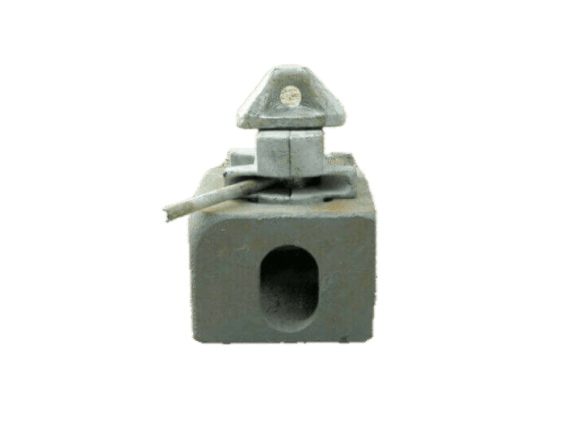

Other container news...

20 Foot shipping container cost
If you are researching the cost of a 20 foot shipping container, you have likely already encountered wildly different prices — from $999 listings online to quotes exceeding $5,500. That range is not a sign of inconsistency. It reflects real differences in container condition, location, delivery logistics, and the seller you are dealing with.
Side Opening container
A side opening container is an ISO-compliant intermodal shipping container engineered with full-length bi-fold doors along one of its long side walls, in addition to the standard cargo doors at one end. Unlike conventional containers that restrict access to a single set of rear doors, a side opening container — also widely called an open side container, open-sided shipping container, or side door container — provides unobstructed lateral access across the entire 20-foot or 40-foot length of the unit. This design transforms the container from a narrow tunnel into a wide-open space that forklifts can enter from the side, multiple workers can load simultaneously, and oversized cargo that would never fit through standard end doors can be placed without struggle.
40 Foot High Cube container cost
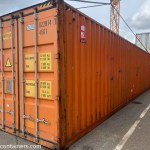
A 40 foot high cube container — often abbreviated as 40ft HC, 40′ HC, or 40-foot high cube — is one of the most common shipping container sizes sold on the secondary market. But if you are researching what a 40 foot high cube container costs, you have almost certainly noticed that prices are all over the map. One seller quotes $1,500. Another quotes $7,000. Both could be legitimate.
20 Foot container cost
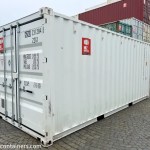
If you have ever searched for a shipping container, you have almost certainly asked one question first: how much does a 20 foot container cost? The answer is not a single number. It is a range that spans from under $1,000 for a weathered, as-is unit to over $5,000 for a pristine, one-trip container — and that is before delivery, site preparation, or modifications enter the picture.