
How to level a shipping container?
Why is container leveling key?
Shipping container, whether you use it as a warehouse, workshop, mobile office or a base for modular construction, must stand on a perfectly flat and stable foundation. It is not only about aesthetics but primarily about structural integrity, lifespan, safety and functionality. Shipping container leveling is a process without which frame deformations, door closing problems, accelerated corrosion, settling or even overturning can occur.
Modern technologies, such as HZ CONTAINERS leveling feet, allow precise, fast and safe leveling even on significantly uneven terrain. This article will guide you through all aspects of this issue – from basic sub‑base preparation, through choosing the right support systems, to procedures recommended by worldwide and Czech companies.
Basic terms and principles of container leveling
What does “level the container” mean?
Container leveling is the process where all four lower corner castings are placed in one horizontal plane. This is essential for:
- Weight distribution – all load passes through the corner castings to the ground
- Preventing torsional twisting – uneven support leads to frame twisting, weld cracking and compromised statics
- Door functionality – even minimal twist will cause doors to rub, seal poorly or fail to close
- Corrosion protection – unevenness causes poor drainage and water accumulation, accelerating rust
Practical problems with poor leveling
- Doors won’t open/close – door frame twists under pressure, locks cannot engage, seals stop working
- Permanent frame damage – weld cracking, profile deformation, statics of the whole structure compromised
- Loss of stability – on soft ground the container can “sink” or overturn
- Reduced lifespan – corrosion of the floor and lower wall sections and loss of investment value
Overview of leveling systems and their comparison
| System | Capacity (4 points) | Adjustment range | Material | Suitable for | Lifespan | Approx. price |
|---|---|---|---|---|---|---|
| HZ CONTAINERS leveling feet | 12 000 kg | up to 260 mm | Galvanised steel | All types | 20+ years | approx. 300 EUR/set |
| Concrete footings | > 20 000 kg | 0 mm | Concrete | Permanent structures | 30+ years | 120 EUR (DIY) |
| Gravel bed | 15 000 kg | up to 50 mm | Gravel | Warehouse, workshop | 5–10 years | 100 EUR |
| Wooden sub‑bases | 10 000 kg | 0–50 mm | Treated wood | Temporary solution | 2–5 years | 30 EUR |
Note: For all systems it is crucial that the support points are always under the corner castings!
HZ CONTAINERS leveling feet – detailed technical description
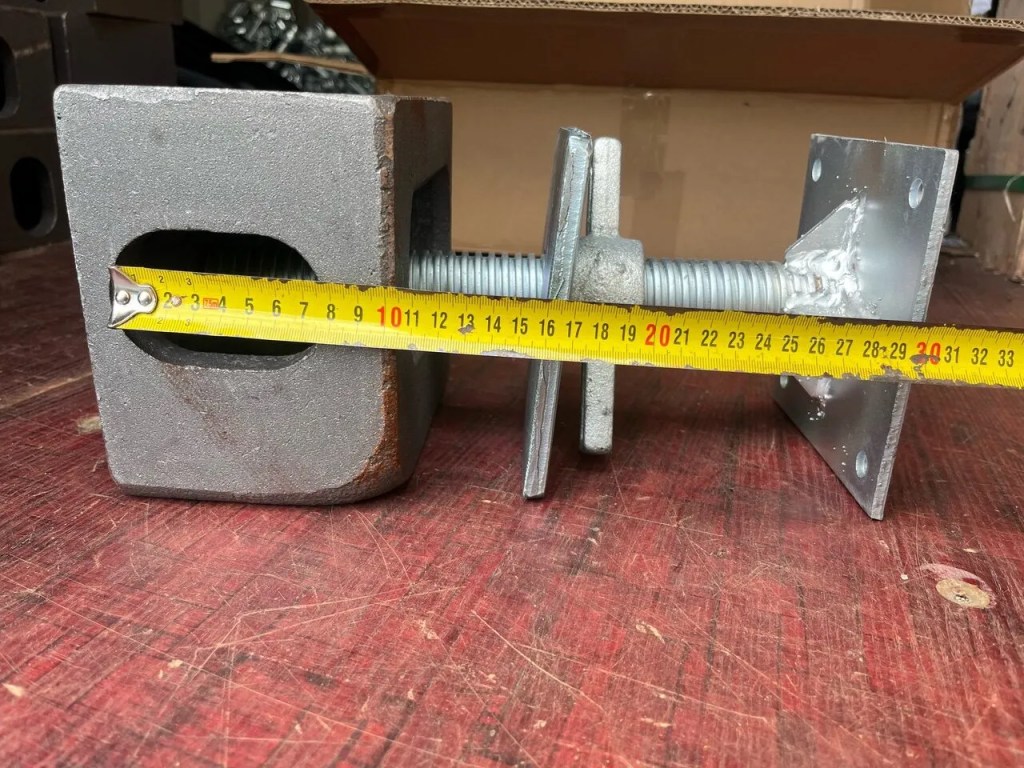
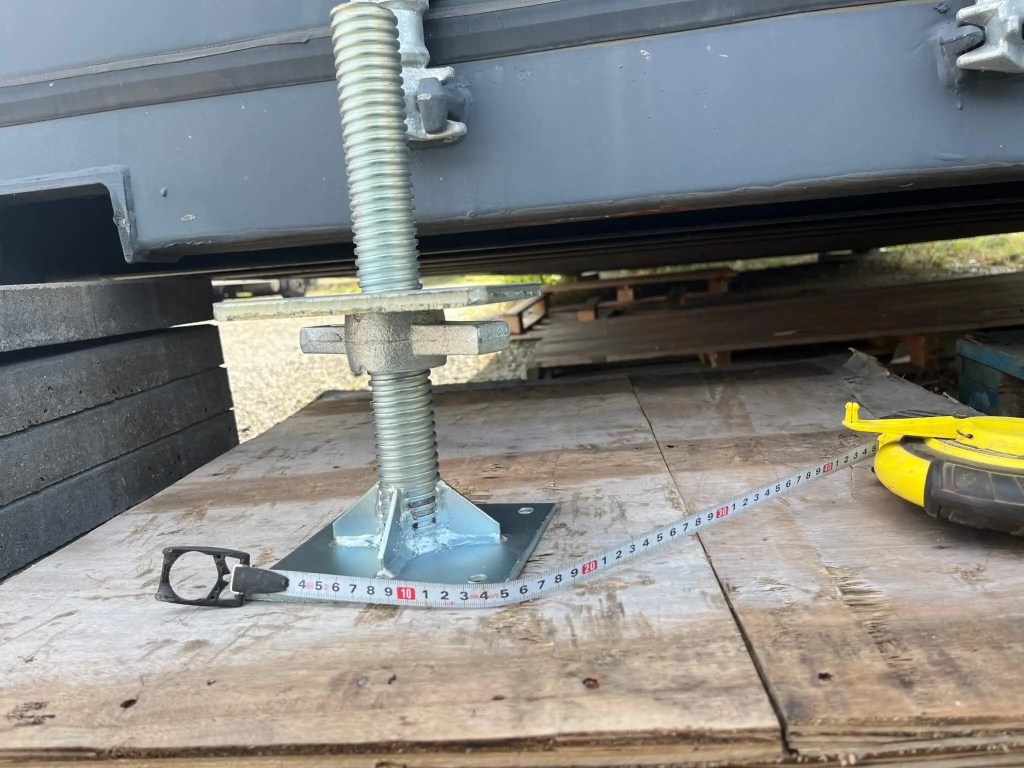
Leveling feet for a shipping container are an innovative solution for precise leveling without wet construction processes. They consist of:
- Base plate – a wide foundation plate that spreads pressure over a larger area, preventing sinking into soft soil
- Threaded rod – allows fine height adjustment by turning the nut
- Tube shank – inserts into the lower ISO corner casting of the container
Technical specifications
- Capacity – 12 000 kg per set (4 pcs)
- Adjustability – up to 260 mm height range
- Weight – 4.5 kg each
- Surface treatment – hot‑dip zinc (corrosion protection)
- Compatibility – all ISO containers 10′, 20′, 40′
Types of leveling feet
- Without lock – for leveling only, not a permanent part and does not prevent movement (additional anchoring required)
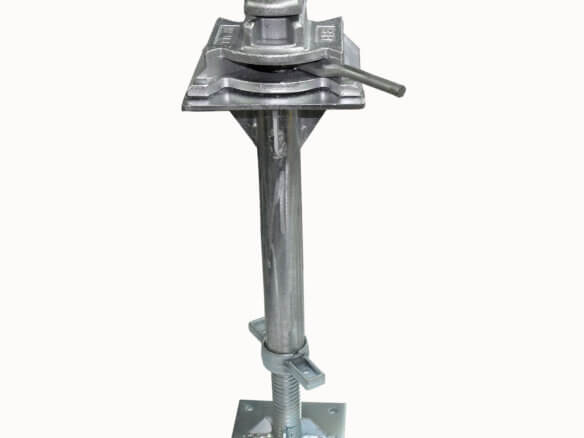
- With lock (twist‑lock) – provides both leveling and fixation of the container against movement (suitable for stacking, high winds, modifications)
Installation recommendations
- Lift the container corner with a hydraulic or farm jack (only at the corner casting)
- Insert the leveling foot into the corner casting
- Turn the nut to set the height
- Check with a level that all corners are parallel
- Cut off the excess tube (recommended to leave 80–90 mm in the corner casting so the base plate bears the main load)
- For safety – if leveling feet are not locked, secure the container against shifting (straps, anchors)
Advantages over traditional methods
- Fast installation – one person can level a container in about 30 minutes
- Precision – millimetre adjustment even on steep terrain
- Reusability – feet can be removed and used again
- Durability – galvanised coating protects against corrosion, 20+ years outdoors
- Minimal ground intervention – no need for concrete foundations or deep footings
Types of foundations for containers and their comparison
Concrete slab
- Most stable and durable solution
- Suitable for permanent buildings, heavy loads, container homes
- High cost and time‑intensive (requires reinforcement, moisture insulation)
- Provides ideal flatness and easy installation of leveling feet
Concrete footings / blocks
- Placed directly under corner castings
- Cheaper and faster than a full slab
- Requires precise measurement and compaction of the ground
- Not suitable for extremely soft or sloping ground without additional anchoring
Gravel bed
- Layer of compacted gravel (minimum 20 cm) spreads weight and ensures drainage
- Excellent for warehouses, temporary structures
- Combined with leveling feet it is ideal for regular use
Wooden sub‑bases (Dunnage)
- Quick and inexpensive for short‑term applications
- Use only pressure‑treated beams (prevent rot)
- Not suitable for permanent buildings or wet ground
Step‑by‑step container leveling procedure
- Site preparation
- Remove vegetation, stones, level major irregularities
- For soft soil, compact and add a gravel layer
- Lift the container
- Use a hydraulic jack (bottle jack) under the corner casting
- Raise only one corner at a time and never place any part of your body under an unsecured container
- Install leveling feet
- Insert a foot into the corner casting, turn the nut to the desired height
- Repeat the same procedure on all corners
- Check the plane
- Use a long spirit level (minimum 120 cm) or a laser level for maximum accuracy
- First set two opposite corners, then the remaining two
- Final adjustments
- Cut off any excess tube (see manufacturer’s recommendation)
- Verify door operation and fine‑tune height if needed
- Secure against shifting
- For non‑locked feet, use anchoring straps, ground anchors, etc., especially for taller structures or windy locations
Common mistakes and their solutions
| Mistake | Risk / Symptom | Solution |
|---|---|---|
| Support not under corner casting | Frame twisting, cracking | Always support only the corner castings |
| Uneven load distribution | Twisting, doors won’t close | Evenly distribute cargo, regular checks |
| Wrong foundation choice | Settlement, moisture | Always use gravel, concrete or quality pads |
| Missing wind anchoring | Shifting, overturning | Anchor to ground, use twist‑lock, straps |
| Inappropriate materials | Rot, settling | Use pressure‑treated wood, concrete, galvanised feet |
Structural aspects of the container
Corner castings
- Standardised steel blocks at the container corners
- The only correct points for support, lifting and stacking as well as leveling
- Capacity of one corner: up to 30 000 kg (ISO standard)
- Each container has 8 corner castings (4 bottom, 4 top)
Weight distribution
- Empty 20′ container: approx. 2 200 kg; 40′: approx. 3 700 kg
- Load must be spread over all four corners – never place the container on a single point or the middle of its length!
- Uneven loading (e.g., building material on one side) requires more frequent leveling checks
Structural integrity
- The steel frame is designed for vertical forces at the corners, not for side pressure or twisting
- Prolonged twisting leads to loss of statics and irreversible damage
Safety and practical recommendations
- Regular inspection – at least twice a year, especially after heavy rain or snow
- Drainage – under the container there must be airflow and water runoff (ideal to have a slight slope away from the doors)
- Corrosion prevention – galvanised feet, gravel base, removal of vegetation
- Door functionality – regularly lubricate hinges, ropes and locks; if doors are hard to open, first check the leveling
Related terms
| Term | Meaning |
|---|---|
| ISO container | Container complying with international ISO 668 standards (dimensions, strength, corners) |
| Leveling pads | Base plates under leveling feet, spreading pressure over a larger area |
| Twist lock | Lock that secures the container to the chassis or foundation via the corner castings |
| Dunnage | Wooden or plastic pads under a container |
| Hydraulic jack | Fluid‑powered lifting device (e.g., “bottle jack”) for raising a container |
| Farm jack | Mechanical lever jack with higher lift capacity |
Frequently asked questions (FAQ)
How often should the container’s level be checked?
- We recommend at least twice a year, always after extreme rain, frost or any change in loading.
What is the best foundation for a permanent installation?
- A quality concrete slab or a combination of a gravel bed with leveling feet. Wooden sub‑bases are only for temporary use.
Can the leveling feet be reused?
- Yes, they are fully detachable and can be reused multiple times.
What to do if the doors won’t open?
- First check the level/flatness of the corners. Often a small adjustment of the leveling feet resolves the issue.
Image gallery and practical demonstrations

 Czech Republic
  WITHOUT SHIPPING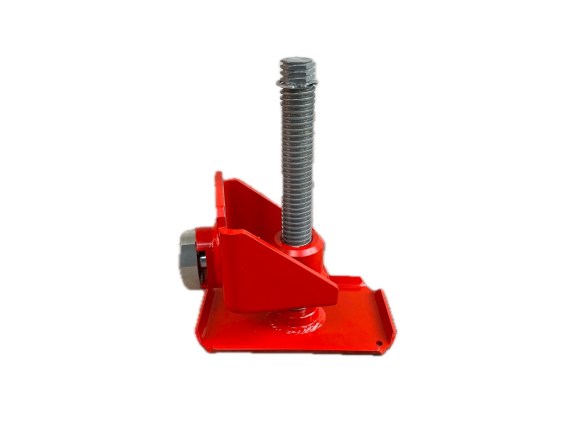

Other container news...
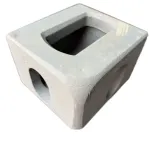
Corner casting steel vs aluminum
Every shipping container in the world — all 40 million of them — rests on eight critical components. Corner castings are the load-bearing blocks at each corner of an ISO shipping container, and they are the universal interface between the container and every crane, twistlock, spreader, and chassis on the planet. When you lift a container, stack it nine high on a ship, or lock it to a truck trailer, every ton of force flows through these fittings.

Construction cabin – selection, tips, dimensions and prices
Every construction project – whether a family house, a development project or a reconstruction – starts with the infrastructure. No construction manager, craftsman or investor who needs an on-site office, a changing room for workers or a safe storage for tools can do without a quality construction cell. But navigating the offer is not easy: residential containers, sanitary cells, storage modules, rental, purchase, refurbished pieces… This guide will give you answers to all the essential questions in one place.
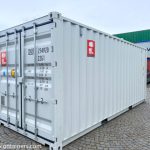
Storage container
A storage container is a lockable steel box designed for the safe and dry storage of materials, tools, goods or equipment. Originally created as a shipping container for maritime transport, its durability and versatility have found their way onto construction sites, corporate premises and private land.
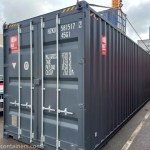
Shipping container 12m (40 ft)
A 12m shipping container is an investment that, if properly selected and cared for, will pay off in decades of trouble-free use. Whether you plan to use it as a warehouse, workshop, garage or the basis for a residential module — the key is careful selection of the condition, a thorough inspection before purchase and high-quality preparation of the base for placement. Take the time to compare offers, check the seller’s references and do not hesitate to personally inspect the container before buying. A properly selected 40-foot container will serve you reliably for many years.