
Customs Debt and its Creation
What is Customs Debt? – Introduction to the Issue
Customs debt is a financial obligation of a person (natural or legal) to pay the appropriate amount of import or export duties in connection with the movement of goods across the borders of the customs territory of the European Union. In addition to basic import duties, it may also include other fees (antidumping, countervailing, safeguard, and other special duties).
Legal Framework:
- Regulation (EU) No. 952/2013 of the European Parliament and of the Council (Union Customs Code, UCC)
- Implementing and supplementary regulations (e.g., 2015/2446, 2015/2447)
- National laws and methodologies of member states
Significance of Customs Debt:
- Ensures the collection of customs duties as one of the key sources of the EU budget
- Protects the European market from unfair competition (e.g., antidumping duties)
- Serves as a tool for regulating international trade (e.g., quotas, sanctions)
What Can Be Included in Customs Debt:
| Type of Fee | Example | Legal Basis |
|---|---|---|
| Import Duty | Electronics from China | TARIC, UCC |
| Export Duty | Raw materials, grain | TARIC, UCC |
| Antidumping Duty | Steel from Russia | EC Regulation |
| Countervailing Duty | Subsidized goods | EC Regulation |
| Safeguard Duty | Agricultural products | EC Regulation |
Creation of Customs Debt – Legal and Practical Aspects
Customs debt can arise in two basic ways:
1. Standard Creation of Customs Debt (in compliance with regulations)
The so-called compliance customs debt arises within the framework of proper customs proceedings, where all legal conditions are met.
Main Situations of Creation:
| Situation | Moment of Creation | Calculation of Duty Amount | Legal Basis |
|---|---|---|---|
| Release of goods for free circulation | Acceptance of customs declaration | Customs value x rate | Art. 77 UCC |
| Temporary use with partial exemption | Each month in the regime | 3% of regular duty/month | Art. 252 UCC |
| Export regime (exceptionally) | Acceptance of export declaration | Rate according to TARIC | Art. 78 UCC |
Example of detailed calculation:
A company imports a machine from the USA for EUR 50,000. The duty rate is 4%. The customs value is EUR 50,000, the duty is EUR 2,000. VAT is calculated from the sum of the value, duty, and other costs.
Temporary Use – Calculation Table:
| Time in Regime | Rate per Month | Total Paid (%) |
|---|---|---|
| 1 month | 3% | 3% |
| 5 months | 3% | 15% |
| 12 months | 3% | 36% |
2. Creation Due to Breach of Obligations (non-compliance)
The so-called non-compliance customs debt arises if customs regulations are violated. This creation is always undesirable and associated with the risk of sanctions.
Typical Cases:
- Illegal import (smuggling) – debt arises at the moment of bringing the goods in
- Removal of goods from customs supervision – e.g., unauthorized unloading of goods during transit
- Non-compliance with customs regimes – failure to comply with the conditions of special regimes (e.g., inward processing, temporary storage)
- Fraudulent or incorrect data in the customs declaration – e.g., false certificate of origin, incorrect rate
Practical Example:
A company declares goods as originating from Vietnam for the purpose of zero duty, but after inspection, it turns out that the origin is from China – the debtor must pay the duty + possibly a fine.
Who is Responsible for Customs Debt? – Overview of Obligated Persons
The debtor (person obligated to pay) according to the UCC can be one or more persons jointly and severally.
| Role | Responsibility | Note |
|---|---|---|
| Declarant | Always | Submits the customs declaration |
| Direct representative | Exceptionally | If they knew/should have known about the incorrectness of the data |
| Indirect representative | Jointly with the represented | Acts in their own name on behalf of the importer |
| Permit holder | For special regimes | E.g., customs warehouse operator |
| Participating person | According to the degree of participation | E.g., organizer of smuggling |
| Buyer of goods | If they knew (should have known) | With knowledge of the violation of customs regulations |
Legal Support:
- Articles 77–80 UCC
Prevention of Customs Debt – How to Minimize Risks
Consistent prevention is the most effective way to avoid additional costs, sanctions, and disruption of the supply chain.
Key Preventive Steps:
- Correct tariff classification of goods
- Always use the current TARIC and combined nomenclature
- Consult with experts, and in case of doubt, request a binding tariff information (BTI)
- Accurate determination of customs value
- Customs value = price paid + freight + insurance and other costs to the place of entry into the EU
- Problems often arise from incorrectly stated rebates, discounts, or incomplete invoices
- Consistent preparation of documentation
- Clear invoicing, transport documents, certificates of origin, contracts
- Use digital archiving for easy traceability
- Monitoring legislation and interpretative documents
- Regularly check changes in the UCC and implementing regulations
- Follow the guidelines of the European Commission (e.g., “Guidance on Customs Debt”)
- Cooperation with a verified customs representative
- Clearly contractually defined responsibilities and type of representation (direct/indirect)
- Management of special regimes
- Maintaining accurate records, monitoring deadlines, proper termination of regimes
- AEO Status (Authorized Economic Operator)
- Significant simplification of procedures, lower frequency of controls
Resolution of Customs Debt – Procedure in Case of Debt Creation
If customs debt arises, it is essential to proceed correctly and in a timely manner.
1. Notification and Assessment of Debt
- The customs authority informs the debtor of the creation of the debt (payment order)
- The debtor has the right to be heard (usually 30 days to respond)
- After the deadline, the authority issues a final decision on the assessment of the debt
2. Payment and Deadlines
| Type of Payment | Standard Deadline | Possibility of Deferral | Sanctions for Delay |
|---|---|---|---|
| Immediate payment | 10 days | No | Default interest |
| Deferral of payment (permit) | Up to 30 days | Yes | Security required |
| Payment plan | Individual | Yes | Security required |
3. Securing Customs Debt
Guarantee (customs guarantee):
- Bank guarantee
- Cash deposit
- Guarantee insurance
Common situations where a guarantee is mandatory:
- Deferral of payment of duty
- Use of special regimes (transit, storage, temporary use)
- Risky entities
4. Voluntary Disclosure and Self-Reporting
- If you discover an error yourself, it is recommended to actively notify the authority
- May lead to a reduction or waiver of sanctions (so-called “voluntary disclosure”)
- All documents must be submitted and good faith must be proven
5. Remedies
- Appeal against the payment order to the superior authority
- Judicial review within the framework of administrative justice
6. Remission and Refund of Duty
| Reason for Remission/Refund | Legal Basis | Example Situation |
|---|---|---|
| Overpayment of duty | Art. 117 UCC | Incorrect rate in the declaration |
| Defective or returned goods | Art. 118 UCC | Goods returned outside the EU, destroyed |
| Error of the customs authority | Art. 119 UCC | Official error, debtor acted in good faith |
| Equity | Art. 120 UCC | Exceptional circumstances |
Practical Tips and Technical Details
- Always archive all communication with customs authorities and the customs representative
- Use electronic submissions and process tracking in the e-Customs system
- In case of doubt, use binding information from customs authorities (BTI, BOI)
- If you trade in goods with the risk of antidumping, monitor EC regulations in real-time
- In the case of complex regimes (e.g., inward processing), we recommend consulting with a customs specialist
 Czech Republic, Třebíč
  FREE SHIPPING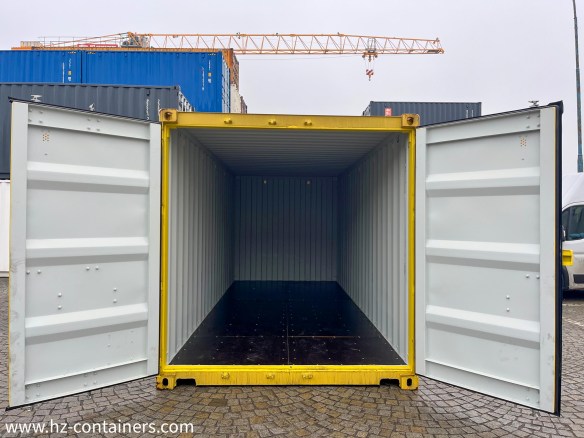

Other container news...

Obligation to Check Tightness When Selling a Reefer Container
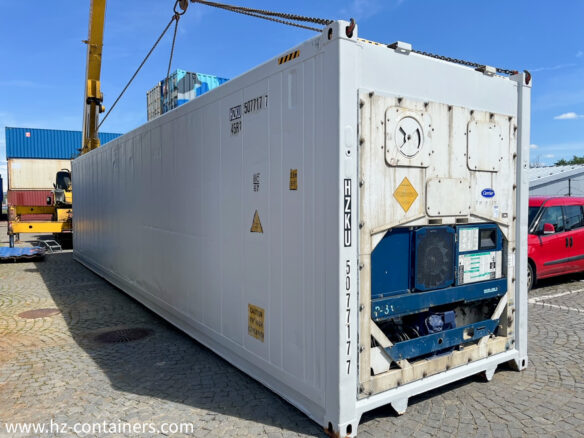
Who is responsible for the refrigerant leak check when selling a refrigerated container? Find out what obligations the seller has at the time of handover and why they must provide a PTI report along with the technical data plate. Learn which regulatory requirements and F-gas record-keeping duties become the sole responsibility of the new owner.

New sea shipping containers
If you are currently considering purchasing a new shipping container, you are not alone. While just twenty years ago containers were used almost exclusively for maritime transport, today they have found their way into construction, storage, business, and even housing. This growing popularity brings with it a host of questions: Which type should you choose? How much does it cost? How do you recognize quality? How can you avoid falling victim to scammers?
New shipping containers
If you are currently considering purchasing a new shipping container, you are not alone. While just twenty years ago containers were used almost exclusively for maritime transport, today they have found their way into construction, storage, business, and even housing. This growing popularity brings with it a host of questions: Which type should you choose? How much does it cost? How do you recognize quality? How can you avoid falling victim to scammers?

6m shipping container
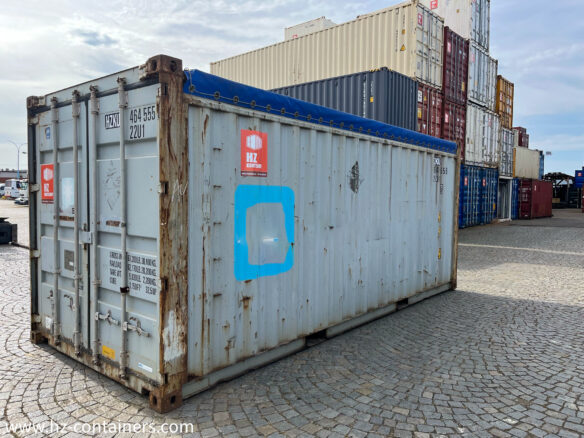
Are you thinking about buying a 6-meter shipping container but aren’t sure what to look for? You are not alone—this 20-foot container is the best-selling size on the Czech market, and the differences between various types, conditions, and prices can be significant. In this guide, you will find everything you need to know: from exact dimensions and a comparison of categories (such as “one-way,” refurbished, and “Cargo Worthy”) to current prices and shipping advice.