
Container
In the constantly evolving world of logistics and transportation, the term “container” holds great significance. Modern containers are more than just large boxes; they are key elements in global trade and logistics, facilitating seamless movement of goods across continents and oceans. This glossary article explores the complexities of containers, examining their definition, history, types, uses, and their transformative impact on global trade.
Container is a cornerstone of modern logistics, embodying principles of efficiency, safety, and standardization that drive global trade today. Its evolution from a simple shipping box to a versatile tool for transport and construction underscores its significance in an interconnected world. As industries continue to innovate and adapt, the role of containers will likely expand, offering new opportunities for sustainable development and international trade. The widespread adoption of standardized containers has paved the way for economic globalization, driving industries forward and enabling them to prosper in new, innovative ways.

What is a Container?
Container is a robust, standardized, and reusable metal box specially designed for efficient and secure transportation of goods across various transport modes—by sea, rail, and road—without the need to unload and reload cargo inside. The concept of a container is an integral part of the intermodal freight transport system, where containers are seamlessly transferred between ships, trains, and trucks. Primarily made from high-strength steel, these containers are built to withstand the strains of global transport, including harsh weather and rough handling.
Key Features of Containers
- Standardization: Containers comply with international standards, particularly those established by the International Organization for Standardization (ISO). This includes standard sizes, most commonly 20 feet (TEU – Twenty-foot Equivalent Unit) and 40 feet (FEU – Forty-foot Equivalent Unit), ensuring compatibility across various transport systems worldwide.
- Durability: Made from Corten steel, containers are corrosion-resistant and capable of withstanding extreme conditions, ensuring safe transport of goods over long distances and time periods.
- Security: Equipped with robust locking mechanisms, containers ensure the security of goods against theft and unauthorized access during transport.
- Versatility: Available in various types and configurations, containers can be adapted for a wide range of cargo, including perishable goods, heavy machinery, and even liquid bulk materials.
- Efficiency: Container design facilitates quick loading and unloading, significantly reducing turnaround times at ports and terminals.
History of Containers
The journey of the modern container began in the mid-20th century, when it revolutionized the logistics industry. A key moment in the history of containers occurred in 1956, when American entrepreneur Malcom McLean introduced the concept of standardized shipping containers by launching the vessel Ideal X. This innovation significantly improved the efficiency and cost-effectiveness of global trade by standardizing the dimensions of shipping containers, allowing them to be easily transferred between various transport modes without the need to unpack and repack cargo.
Before this, goods were transported in sacks, barrels, and crates, an inefficient method that could take weeks to load and unload ships. McLean, originally the owner of a trucking company, recognized this inefficiency and collaborated with engineer Keith Tantlinger to create a standard container. This breakthrough significantly reduced loading costs and time, leading to widespread adoption. In the 1960s, ISO established standards for containers, ensuring global compatibility and facilitating international trade on an unprecedented scale. Today, millions of containers are in circulation, forming the backbone of the global supply chain.
Types of Containers
Containers come in various types, each designed to meet specific transport needs:
Dry Storage Containers: The most common type, used for transporting general cargo that does not require temperature control.

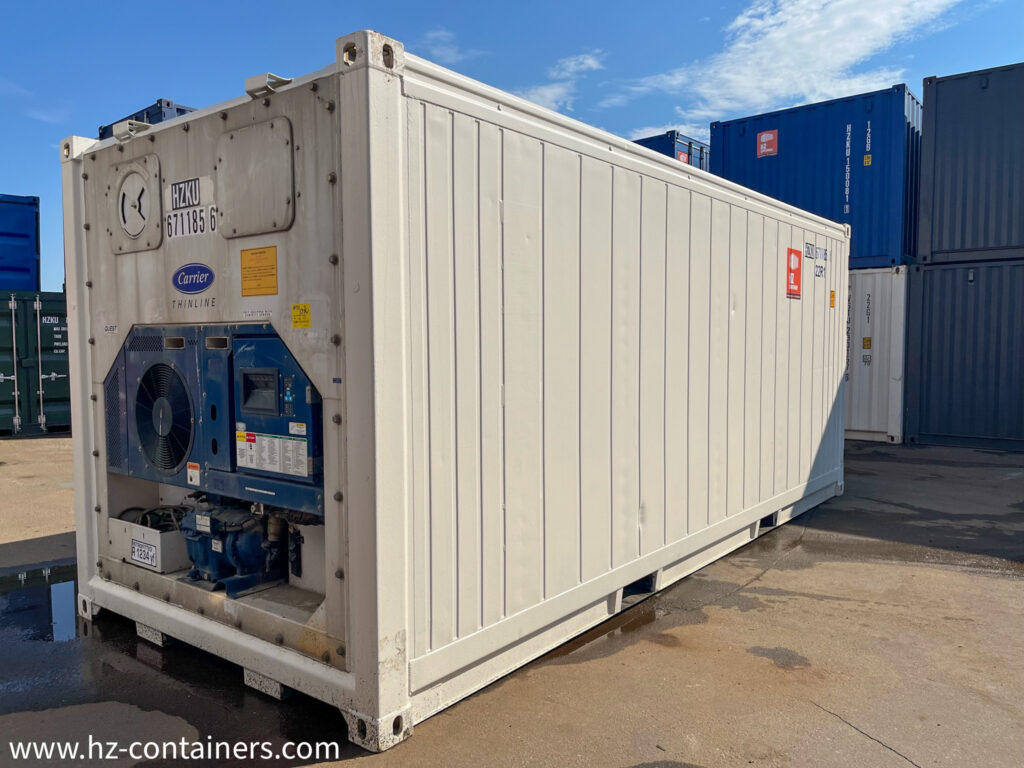
Refrigerated Containers (Reefers): Equipped with temperature control systems, used for transporting perishable goods, such as food and pharmaceuticals.
Open Top Containers: Ideal for oversized cargo that cannot be easily loaded through standard doors, these containers have a removable top section.

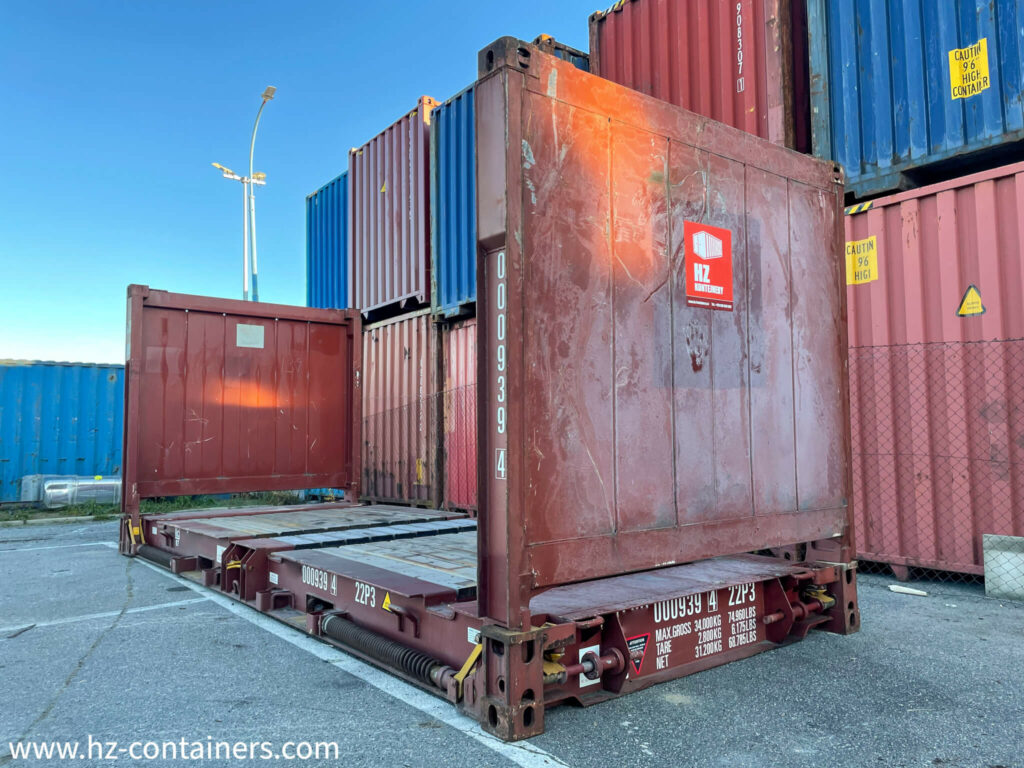
Flat Rack Containers: With collapsible sides, used for transporting large machinery and equipment.
Tank Containers: Designed for transporting liquid or gaseous substances, these containers are equipped with reinforced tanks.

High Cube Containers: Offering an additional foot of height, these containers are ideal for bulky but lightweight cargo.

Uses of Containers
Beyond their primary role in transporting goods, containers have found various innovative uses:
- Storage Solutions: Due to their durability and security, containers are often repurposed as storage units on construction sites and in other industries.

- Modular Construction: Increasingly, containers are being used as building blocks for modular shipping container homes, offices, and even pop-up shops, offering a cost-effective and environmentally friendly alternative to traditional construction methods.

- Emergency Shelters: Their quick deployability makes containers suitable for use as emergency shelters or medical facilities in disaster-affected areas.
In the dynamic environment of modern construction, efficient management of space, resources, and operations is essential. A new and innovative solution gaining prominence is the adoption of construction office containers. These adaptable and robust structures, originally designed as shipping containers, are being transformed into fully functional office spaces, ideal for deployment on construction sites. This glossary entry explores the complexities of what construction office containers are, examines their benefits, diverse applications, and highlights the differences between similar structures, such as office trailers.
What is a Construction Office Container?
Construction office container is essentially a shipping container that has been ingeniously converted into office space specifically for use on construction sites. These containers provide mobile, durable, and cost-effective solutions for temporary office needs. Made from high-quality Corten steel, they offer resistance to adverse weather conditions and potential physical damage. Internally, these containers mimic traditional office environments, often with insulation, electrical systems, and even sanitary facilities, adapted to replicate a conventional office setting.

Key Features:
- Durability: Made from Corten steel, known for its weather-resistant properties, these containers are designed to handle extreme weather conditions, offering a safe and durable environment.
- Mobility: Their design facilitates easy transport to various locations, making them ideal for mobile construction projects.
- Customization: Interiors can be customized with office furniture, HVAC systems, and other equipment as needed, ensuring they meet specific user requirements.
- Security: Equipped with advanced locking mechanisms to protect equipment and confidential documents from potential threats.
Benefits of Construction Office Containers
1. Cost-Effectiveness
Construction office containers represent significant cost savings compared to traditional office buildings. They are less expensive to install and maintain, making them attractive for construction companies working with limited budgets.
2. Quick Installation
Unlike traditional construction, these containers can be quickly installed on-site. This rapid deployment is key in a construction environment, allowing projects to proceed without delays and providing the necessary office space for management and administrative purposes.
3. Flexibility and Customization
These containers can be extensively customized to meet specific requirements, from partitions and HVAC installations to fully equipped workstations. The flexibility in design makes them versatile for many uses across various industries.
4. Environmental Friendliness
Repurposing shipping containers significantly contributes to recycling efforts and waste reduction. Additionally, they have a smaller carbon footprint compared to traditional buildings, aligning with sustainable construction goals.
5. Enhanced Security
The robust steel construction of these containers provides a highly secure environment for valuable equipment and sensitive information, supported by high-security locks and reinforced doors, offering better protection against theft and vandalism.
Applications of Construction Office Containers
Construction Sites
These containers are most commonly utilized as mobile offices on construction sites, serving as a command center for project managers, engineers, and administrative staff, ensuring smooth operations and communication.
Remote Workplaces
In locations where traditional office spaces are impractical or financially unfeasible, these containers provide a viable alternative offering comfortable and functional workspace in remote environments.
Storage Solutions
In addition to office functions, these containers also serve as secure storage units for tools, equipment, and materials, ensuring protection from environmental elements and unauthorized access.
Combined Units
Some designs combine office space and storage capabilities in one unit, maximizing versatility, particularly for construction projects with limited on-site space.
Construction office containers represent a modern, pragmatic solution to the persistent problem of providing customizable office spaces in dynamic and often challenging environments. With numerous benefits, including cost-effectiveness, durability, and flexibility, these containers are transforming the way construction sites are managed and operated. Whether utilized as standalone offices, integrated combined units, or as part of a modular construction arrangement, construction office containers are invaluable tools for enhancing efficiency and effectiveness in the construction industry.
Container Dimensions
Standard Dimensions
The most common container sizes are 20 and 40 feet (known as TEU and FEU). These standardized measurements enable efficient handling and transport of goods.
Dimensions in Millimeters and Feet
- 20ft Container
- External Dimensions:
- Length: 6,058 mm (20 ft)
- Width: 2,438 mm (8 ft)
- Height: 2,591 mm (8.5 ft)
- Internal Dimensions:
- Length: 5,898 mm (19.4 ft)
- Width: 2,352 mm (7.7 ft)
- Height: 2,390 mm (7.9 ft)
- External Dimensions:
- 40ft Container
- External Dimensions:
- Length: 12,192 mm (40 ft)
- Width: 2,438 mm (8 ft)
- Height: 2,591 mm (8.5 ft)
- Internal Dimensions:
- Length: 12,032 mm (39.5 ft)
- Width: 2,352 mm (7.7 ft)
- Height: 2,393 mm (7.9 ft)
- External Dimensions:
High Cube Containers
High Cube containers are one foot taller than standard containers, allowing for transport of bulkier or taller cargo.
- 40ft High Cube Container
- External Dimensions:
- Length: 12,192 mm (40 ft)
- Width: 2,438 mm (8 ft)
- Height: 2,896 mm (9.5 ft)
- Internal Dimensions:
- Length: 12,032 mm (39.5 ft)
- Width: 2,352 mm (7.7 ft)
- Height: 2,695 mm (8.9 ft)
- External Dimensions:
Impact on Global Trade
The introduction of the container had a profound impact on global trade, contributing to a process known as containerization. This system simplified the logistics process, reduced transportation costs, and increased the speed and efficiency of global trade. By standardizing container sizes, the logistics industry significantly minimized loading costs—from $5.86 per ton in the 1950s to mere cents—and shortened shipping times, thereby transforming geographic market boundaries.
Containerization enabled companies to expand their markets and supply chains to international levels, supporting economic globalization and connecting manufacturers and consumers worldwide. This logistics innovation is essential to today’s economy, where vast quantities of goods are constantly in transit, supporting a global market worth 14 trillion USD.

 Czech Republic, Třebíč
  FREE SHIPPING


