
Bulk Shipping Container
Shipping container of the Bulk type has been an important pillar of modern logistics and global trade in bulk materials over the past decades. Thanks to its construction and standardization, it enables efficient, safe and economical transport of loose cargo across continents, whether it is agricultural commodities, building materials, chemicals or other bulk products. This article provides a detailed overview of the construction, dimensions, types, advantages, uses and safety aspects of bulk containers based on the latest knowledge and practice in the global markets.
What is a Bulk Shipping Container?
Bulk container (also referred to as “container for bulk materials”) is a special type of ISO transport container, whose key purpose is the transport and storage of bulk, loose materials in international and domestic transport. Unlike the standard container type Dry Van (DV), the bulk container is equipped with structural elements enabling rapid filling from the top and controlled emptying from the bottom or front, often completely without manual cargo handling.
Main characteristics of bulk containers:
- Enables efficient transport of bulk materials (grain, sugar, coffee, cement, sand, granules, etc.)
- Ensures cargo protection against weather, contamination and losses
- Enables easy transshipment between different types of transport (ship, train, truck)
- Is manufactured according to international ISO standards, which guarantees compatibility in the logistics chain
Detailed Technical Definition and Regulations
From the perspective of technical standards and international regulations, the bulk container is defined as a large-volume container intended for the transport of bulk goods, which meets the requirements for strength, tightness and safety given by ISO standards (in particular ISO 668, ISO 1496) and often also ADR, RID and IMDG depending on the nature of the transported material. Typical capacities of bulk containers are:
| Container Type | Volume (m³) | Max. Payload (kg) | Internal Length (mm) | Internal Width (mm) | Internal Height (mm) |
|---|---|---|---|---|---|
| 20′ Bulk | 32–36 | 28,000–30,500 | 5,898 | 2,352 | 2,393 |
| 30′ Bulk | 44–50 | 26,000–28,000 | 9,120 | 2,352 | 2,393 |
| 40′ Bulk | 62–70 | 26,000–28,000 | 12,032 | 2,352 | 2,393 |
Bulk containers are thus dimensioned for both high payload capacity and large volume, enabling them to transport a wide range of materials with different specific weights.
Construction and Key Features of Bulk Containers
Every element of the bulk container is designed with regard to maximum functionality, safety and service life when transporting demanding bulk materials.
Materials and Frame Construction
- Corten Steel Construction: Thanks to the use of durable Corten steel, the container is protected against corrosion and weather effects. Reinforcements and reinforced walls ensure stability even under extreme dynamic loading during loading and unloading.
- ISO Frame: Standardized frame construction enables safe handling by cranes, stackers and forklifts and ensures compatibility with transport systems worldwide.
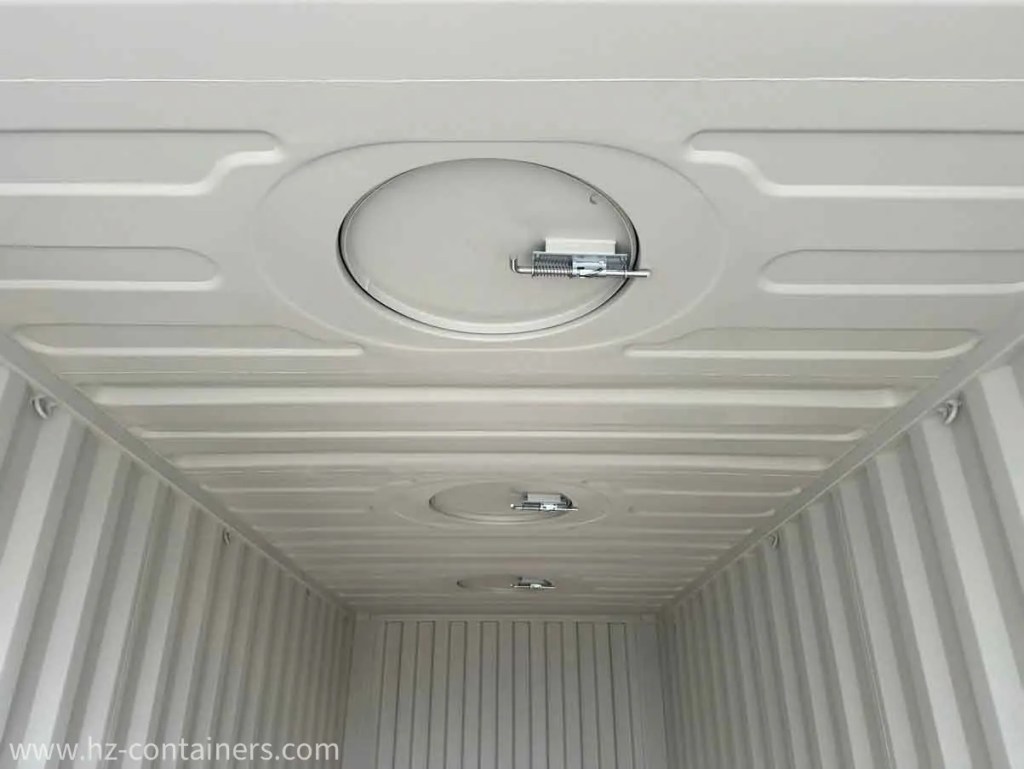
Filling Openings (Hatches) on the Roof
- Usually 2–3 large circular openings (diameter typically 450–500 mm) evenly distributed along the roof of the container.
- Closable and watertight covers protect the cargo from moisture and contamination.
- Allow filling by gravity, screw conveyor, conveyor belt or pneumatically.
Discharge Openings (Discharge Hatches)
- A large discharge opening is usually located in the lower part of the front wall or doors.
- System of safety locks for controlled opening and minimization of dust and risks to operators.
- Some models have multiple smaller discharge openings for batch emptying.
Sampling and Ventilation Openings
- Allow safe sample collection, inspection of cargo condition and pressure equalization during rapid emptying.
Internal Liners
- To increase hygiene and cargo protection, disposable or reusable internal bags (liners) made of polyethylene or other plastics can be installed.
- Prevent contact of cargo with container walls, minimize contamination and facilitate cleaning.
Other Structural Elements
- Integrated Ladder: For safe access to the roof for inspections and filling.
- Pallet Wide Profile: Wider internal profile allows transport of two euro pallets side by side when returning loaded.
- High Cube Variant: Increased height (internal height up to 2,690 mm) for bulky, light materials.
Types of Bulk Containers by Use and Construction
Standard Bulk Containers (20′, 30′, 40′)
The most common variants correspond to lengths of 20′, 30′ and 40′. Each type has specific applications:
- 20′ Bulk: Ideal for heavy materials where the payload limit is reached before the volume limit (cement, minerals).
- 30′ Bulk: Used mainly in rail and combined transport, optimized for some European routes.
- 40′ Bulk (including High Cube): Suitable for bulky, lighter materials (grain, coffee, pellets).
Special Bulk Containers
- Silo Containers: Adapted for pressure (pneumatic) unloading of powdered materials.
- Stainless Steel Bulk Containers: For chemicals, food and materials with high hygiene or corrosion requirements.
- Flexible FIBC Containers (Big Bags): Used in combination with standard containers for smaller volumes or special applications.
Overview of Dimensions and Parameters
| Container Type | External Dimensions (L × W × H, mm) | Internal Dimensions (L × W × H, mm) | Volume (m³) | Max. Payload (kg) |
|---|---|---|---|---|
| 20′ Bulk | 6,058 × 2,438 × 2,591 | 5,898 × 2,352 × 2,393 | 32–36 | 28,000–30,500 |
| 30′ Bulk | 9,120 × 2,438 × 2,591 | 9,050 × 2,352 × 2,393 | 44–50 | 26,000–28,000 |
| 40′ Bulk | 12,192 × 2,438 × 2,591 | 12,032 × 2,352 × 2,393 | 62–70 | 26,000–28,000 |
| 40′ High Cube Bulk | 12,192 × 2,438 × 2,896 | 12,032 × 2,352 × 2,690 | 68–76 | 26,000–28,000 |
Use of Bulk Containers in Various Industries
Agriculture and Food Industry
- Grain, corn, barley, rice, coffee and cocoa beans
- Sugar, salt, legumes, animal feed
- For food transport, the use of food-grade liners and strict hygiene is essential
Construction
- Cement, lime, plaster, granulated building mixtures
- Sand, gravel, aggregate (increased container resistance to abrasive materials required)
Chemical Industry
- Plastic granules (PE, PP, PVC)
- Powdered chemicals and fertilizers
- Industrial minerals (kaolin, mastic, titanium oxide)
Storage (Storage Containers)
- After the end of their transport life, bulk containers are often used as robust storage spaces for materials (fuel, pellets, building raw materials)
- Roof filling openings can be adapted to ventilation or skylights
Advantages of Using Bulk Containers
| Advantage | Detailed Explanation |
|---|---|
| Efficiency and Cost Savings | Fast filling and unloading, minimization of manual work, lower logistics costs |
| Product Protection | Closed system protects cargo from weather, pests and contamination |
| Safety | Reduction of dust and operator exposure during loading/unloading |
| Intermodal Transport | Easy transshipment between ship, train and truck without the need for further cargo handling |
| Flexibility and Reuse | Long service life, possibility of secondary use, recycling |
| Standardization | Compatibility with worldwide handling equipment and transport systems |
Safety Aspects, Maintenance and Handling
- Even Filling: Unbalanced loading can cause tipping or damage during transport.
- Safe Unloading: Use of tipping chassis; safety zones must be observed.
- Regular Cleaning: After each transport (especially when switching between different types of goods), thorough container cleaning, inspection of seals and discharge opening functionality is necessary.
- Marking and Documentation: For transport of hazardous materials, special certification, marking and compliance with all ADR, RID, IMDG regulations, etc. is required.
Practical Examples and Tips for Selecting the Right Bulk Container
Tips for Customers:
- Always consider the specific weight of the transported material – for heavy materials, 20′ is more suitable, for bulky and light materials rather 40′ or 40’HC.
- For food and chemical transport, always insist on the use of clean, approved liners.
- If you plan secondary use as a warehouse, verify the condition of the floor and discharge opening seals.
- For some materials (cement, flour), it is advantageous to use a silo container with pneumatic unloading capability.
Frequently Asked Questions (FAQ)
1. What is the difference between a bulk and dry van container?
- Bulk has filling and discharge openings for bulk materials, dry van is intended for palletized/packaged goods.
2. Is it possible to transport hazardous materials in a bulk container?
- Yes, but only after compliance with applicable safety regulations, certification and appropriate container modification.
3. What are the common dimensions of bulk containers?
- 20′, 30′ and 40′ – see tables above.
4. How does unloading of bulk material proceed?
- The container is tilted using a tipping chassis, the discharge opening is opened and the material flows out by gravity.
5. Can a bulk container be used for storage?
- Yes, after the end of its transport life, this is a common secondary use.
The Bulk shipping container is an irreplaceable standard for the transport and storage of bulk materials worldwide. Its structural features, high level of safety, flexibility in transport and wide range of uses make it a key component of modern logistics and industry. Without the right type of bulk container, it would not be possible to ensure fast, safe and economical transport of millions of tons of goods annually. The selection of an appropriate container, expert handling and compliance with regulations are the basis of successful logistics in the field of bulk materials.

 Czech Republic, Třebíč
  FREE SHIPPING

