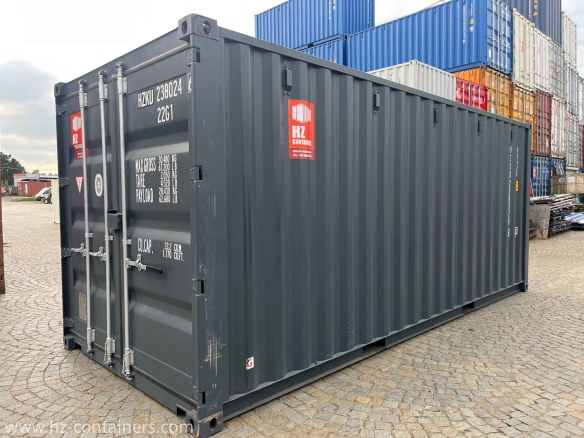
Ventilation – Shipping Container Vent
Shipping container vent (also called: ventilation grille) is a structural component that enables controlled air exchange between the interior of a shipping container and the surrounding environment. It is commonly installed in the walls or doors of a container and consists of several parts – a frame, lamels (to prevent water penetration), inner mesh (to prevent insects/rodents), and mounting points.
Modern containers according to ISO standards (e.g., ISO 1496/1) typically have small built-in passive valves, whose primary function is to prevent pressure buildup and ensure basic air circulation. However, for longer storage, conversions to residential (such as shipping container homes), office, or workshop purposes, their capacity is insufficient – which is why more and larger ventilation grilles are commonly installed.
Synonyms and Related Terminology
English:
- Shipping container vent, ventilation grille, air vent, louvered vent, air duct, passive vent
Why Is Proper Container Ventilation Essential?
Shipping containers are constructed as nearly hermetically sealed steel boxes (meeting waterproofing and safety requirements). This is advantageous during transport, but poses a risk during long-term storage or other uses, because the absence of air circulation means:
Prevention of Condensation and “Container Rain”

Condensation (also called “container rain”) is one of the largest problems affecting containers during significant temperature fluctuations. Air with high humidity (from cargo, pallets, or surroundings during loading) condenses on the cold walls and ceiling of the container during daily temperature changes. The result is the formation of droplets that drip onto goods and cause mold, corrosion, paper decay, electronics, and food spoilage.
Ventilation grilles enable passive air circulation and moisture removal. Circulation reduces the risk of exceeding the dew point and condensate formation. Technical recommendations indicate that for storing organic goods (coffee, cocoa, wood, textiles), quality ventilation is absolutely essential.
Temperature Regulation and Protection Against Overheating
In summer months, the temperature in a closed container in direct sunlight can exceed 70 °C. This leads to devaluation of electronics, deformation of plastics, degradation of chemicals or medicines. Ventilation grilles – especially with so-called cross ventilation (opposite walls, different heights) – allow natural escape of hot air and intake of cooler air.
Pressure Equalization
During transport and storage, pressure changes occur (thermal expansion, changes in altitude). Without ventilation, overpressure or underpressure develops in the container, which can damage door seals and complicate opening. Valves enable smooth pressure equalization.
Ensuring Air Quality and Odor Removal
In an enclosed space, odors accumulate from cargo, chemicals, and mold. Especially when used as a residential or working space, ensuring fresh air and removal of harmful substances is key to health and comfort.
Technical Specification and Types of Ventilation Grilles
Ventilation grilles differ in material, construction, dimensions, and hole pattern – each parameter affects lifespan, efficiency, and safety.
Materials
- ABS plastic: Most common for new and replacement ventilation grilles, resistant to corrosion, UV radiation, easy to install, has long lifespan.
- Steel: Usually galvanized or painted, used for higher resistance to mechanical damage and vandalism. Requires quality surface treatment against corrosion.
- Stainless steel: Premium solution with extreme lifespan, but higher purchase price.
- Aluminum: Lightweight and non-corroding, suitable where low weight is important.
Material Comparison
| Material | Lifespan | Corrosion Resistance | Price | Weight |
|---|---|---|---|---|
| ABS plastic | 10+ years | Excellent | Low | Low |
| Steel (galv.) | 10 years | Good | Medium | Higher |
| Stainless steel | 20+ years | Excellent | High | Higher |
| Aluminum | 15+ years | Excellent | Medium | Low |
Construction and Design
- Grille body: Frame for installation into wall/door.
- Lamels (louvers): Angled baffles that protect against water, snow, and sun penetration. Can be simply straight or multi-chamber for better protection.
- Mesh: Metal or plastic, protects against insects and rodents.
- Mounting holes: For screws, rivets, or adhesive (for plastic variants).
Dimensions and Placement
- Standard dimensions: Most commonly 20×6 cm (narrow), 30×30 cm (square), diameter of round openings 10–15 cm.
- Number and placement: For a 20′ container 2–4 grilles, for 40′ 4–6 grilles. For maximum effect, they are placed diagonally (bottom and top, on opposite walls).
- ISO containers: 2–4 small valves from factory, for long-term storage it is recommended to add larger grilles.
- Wide grilles: For rapid air exchange, usually 30×30 cm, suitable for residential conversions such as container homes, or warehouses of sensitive goods.
- Narrow grilles: For basic ventilation (20×6 cm), suitable for standard storage.
Types of Ventilation Systems for Shipping Containers
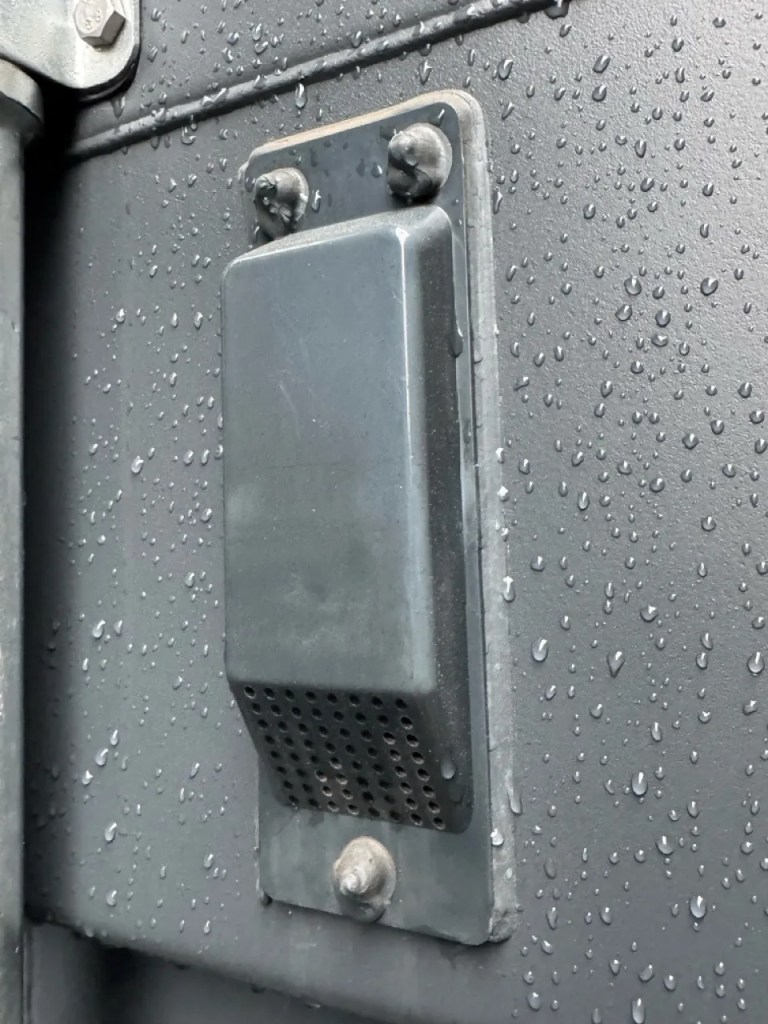
Passive Ventilation (without electricity)
- Original valves (ISO): Small plastic/steel valves (2–4 per container), prevent overpressure and basic moisture accumulation.
- Additional ventilation grilles: Significantly improve air circulation, recommended especially for sensitive goods and all residential conversions.
- Roof turbines (Whirlybird): Rotating heads on the roof, use wind to extract hot air, maintenance-free and very effective.
Active (Mechanical) Ventilation
- Exhaust fans: Electric fans installed in wall/roof, power is selected according to container volume (commonly from 100 to 500 m³/h).
- Air conditioning/HVAC: For residential, office, or laboratory containers, ensure controlled air exchange, cooling, heating, and dehumidification.
- Air filtration: For sensitive applications (IT, pharmacy), filtration systems for dust, powder, bacteria must be used.
Applications and Recommended Solutions
| Type of Use | Recommended Ventilation System | Key Aspects |
|---|---|---|
| Standard storage | 2-4 passive grilles + original valves | Condensation prevention, basic heat removal |
| Sensitive storage (textiles) | 4-6 grilles, possibility of roof turbine | Maximum moisture removal, mold protection |
| Workshop, garage | Combination of passive grilles and active ventilation | Vapor, heat, and dust removal |
| Residential/office container | HVAC system + passive grilles | Air quality, thermal comfort, hygiene |
| Data center/laboratory | Industrial air conditioning, mechanical ventilation | Climate stability, filtration, monitoring |
Installation and Maintenance of Ventilation Grille
Installation Procedure
- Choice of location: According to recommendations (opposite walls, different height).
- Marking the opening: Using a template or the grille itself.
- Cutting the opening: Angle grinder with metal disc; always use PPE.
- Treatment of cut: Sand and paint with anti-corrosion coating (galvanized, enamel), prevent rust formation.
- Insertion of grille and fastening: Using self-tapping screws, rivets, or adhesive (for plastic variants).
- Sealing: Quality polyurethane/silicone sealant around the entire grille.
Maintenance
- Passive grilles: Regular visual inspection and cleaning of leaves, cobwebs, dust.
- Roof turbines: Maintenance-free, occasional bearing inspection recommended.
- Active systems: Checking fan function, regular filter replacement/cleaning, professional service.
Repairs
- Replacement of mechanically damaged grilles.
- Repair of corrosion around openings – always thoroughly sand and repaint.
- Tighten loose screws/rivets, if necessary replace sealant.
Frequently Asked Questions (FAQ)
Are factory ventilation valves sufficient?
For transport yes, for long-term storage or conversions it is advisable to add more and larger grilles.
Can water leak through the grille?
Quality ventilation grilles have lamels and internal baffles protecting against water, the problem is usually in incorrect installation.
How many grilles do I need?
20′ container: ideally 4 grilles; 40′ container: 4–6, for residential (shipping container houses) and workshop conversions combine with active ventilation.
What is better – passive or active ventilation?
For standard storage, a passive system is sufficient. For residential spaces (container homes), workshops, chemical warehouses, active ventilation is necessary.
What are common dimensions and patterns?
Wide (30×30 cm), narrow (20×6 cm), round openings (10–15 cm); hole pattern depends on manufacturer, always with inner mesh.
Shipping container ventilation grille is a key element for protecting cargo, the container itself, and human health. The correct selection of type, number, and placement of grilles, as well as quality installation and maintenance, are the basic prerequisites for preventing condensation, corrosion, mold, and overheating. Investment in quality ventilation means higher safety, longer lifespan, and lower risk of losses.

 Czech Republic
  WITHOUT SHIPPING