Reefer Shipping Container – DEFROSTING
What is a refrigerated shipping container (reefer)?
Reefer shipping container (from “refrigerated container”) is a specialized type of shipping container designed for transporting and storing temperature-sensitive goods within the global logistics chain. These containers are equipped with integrated cooling systems capable of maintaining precisely set temperatures, typically in the range of -25 °C to +25 °C, with some special variants, called “super freezer,” reaching as low as -70 °C.
Typical uses include transporting food (meat, fish, fruit, vegetables, dairy products), pharmaceuticals, chemicals, flowers, and other commodities that require stable temperature conditions. Modern reefer containers are available in standard sizes 20′ RF, 40′ RF, and 40′ High Cube (increased height for greater cargo volume).
Construction and Technology
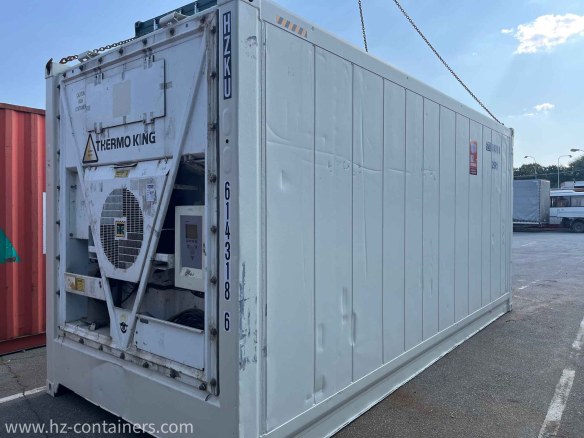
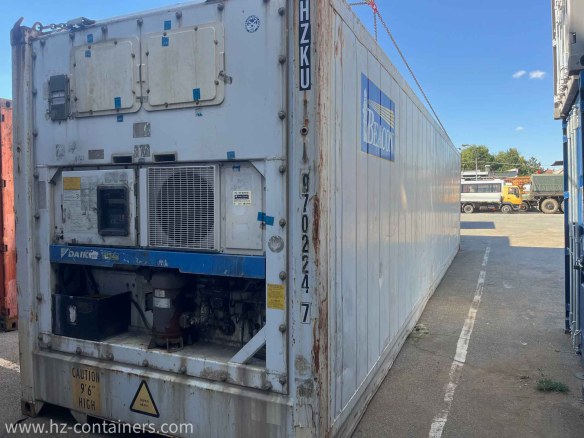
Containers are equipped with a cooling unit typically located on one of the shorter sides. This unit combines a compressor, evaporator, condenser, and fans, which distribute cold air along the cargo using so-called T-floor or side channels. The cooling system can be powered from an external electrical grid (at the port, on the ship), or on the road using a diesel generator (genset).
Modern cooling systems utilize digital microprocessor control with advanced sensors and data loggers. These technologies continuously monitor and record:
- Set and current temperature (supply/return air)
- Humidity status
- Defrost cycle history
- Alerts and alarms (e.g., power failures, limit exceedances)
Remote monitoring access to this data is possible, often via satellite or GSM networks, which is crucial for controlling transport conditions during long-term and international shipments.
Why is defrosting important in Reefer containers?
Significance and Consequences of Defrosting
Defrosting is a critical maintenance process for the cooling system in a Reefer container. During standard operation, frost (ice) forms due to moisture in the air and frequent door openings, particularly on the evaporator coil. This ice forms through condensation and subsequent freezing of water vapor that enters the evaporator space.
If defrosting is not performed regularly and correctly, several negative effects occur:
- Evaporator surface insulation: Ice formation insulates the evaporator surface and significantly reduces its ability to absorb and remove heat from the container’s interior.
- Restricted air flow: Frost limits air passage, causing uneven temperature distribution (creating “hot spots” and “cold spots”).
- Increased energy consumption: The compressor and fans must work at higher capacity, increasing energy consumption and potentially causing compressor failure in extreme cases.
- Risk of cargo damage: Sensitive goods, such as pharmaceuticals or food products, are threatened by temperature fluctuations or complete cooling failure.
- Technology damage: Long-term neglect of defrosting can lead to floor flooding with water that subsequently freezes and damages both the floor and the cooling unit itself.
Regular defrosting is therefore critically important not only for protecting cargo quality but also for optimizing operating costs and ensuring long service life of the cooling technology.
How does a Reefer shipping container and its defrosting work?
Principles of Cooling and Temperature Control
The cooling unit in a Reefer container operates on the principle of a closed cooling circuit. The compressor compresses refrigerant, which absorbs heat from the container’s interior in the evaporator. The cooled air is distributed by the ventilation system, typically using T-floor (ensuring air flow under and along the cargo) and side channels.
Temperature regulation is controlled by a microprocessor that evaluates data from temperature and humidity sensors. It also records the progress of defrosting, alarms, and other operating parameters that can be analyzed retrospectively in case of disputes or complaints.
Defrosting Process (DEFROST)
Automatic Defrosting
Most modern reefer containers (particularly Carrier and Thermo King brands) are equipped with an automatic defrost cycle controlled either by a timer or based on need according to sensor data.
Time-controlled defrosting:
- Activates regularly, typically every 6, 8, 12, or 24 hours depending on settings and operating conditions (humidity, ambient temperature, frequency of door openings).
- In some situations, the defrost interval may be shortened to as little as 3 hours, for example during high humidity or intensive operation (e.g., in tropical regions or during frequent loading/unloading).
Sensor-controlled defrosting:
- Modern units can initiate defrosting if they detect that the required air temperature has not been reached for a certain period, or if the difference between “supply air” and “return air” exceeds a set limit (indicating restricted air flow due to frost).
Automatic defrosting process:
- The system shuts off the compressor and fans to prevent further cooling and heat distribution.
- Electric heating coils located on the evaporator and in the drain pan are activated.
- Ice slowly melts and drains through special channels and drain openings outside the container.
- Once a predefined end temperature (measured by a sensor near the evaporator) is reached or the maximum time (“timeout”) expires, the cycle ends and the system returns to normal cooling mode.
Manual Defrosting
In addition to automatic cycles, manual defrosting can be performed. This is particularly useful during unusual frost accumulation, automatic program failure, or before planned container shutdown. Manual defrosting is activated by a button on the control panel. The operator monitors the cycle progress and checks that water drainage is unobstructed.
Warning: If defrosting is not performed regularly or correctly, massive ice accumulation, drain blockage, and serious operational complications can occur!
Key Concepts and Principles
Temperature Maintenance
Reefer containers maintain a set temperature, they do not actively cool cargo from a higher temperature to a lower one. Therefore, it is crucial to perform pre-cooling – cooling the cargo to the required temperature before loading it into the container. The cooling unit then only compensates for heat losses occurring during transport.
Air Flow and Humidity
- Proper air flow is essential for uniform temperature maintenance throughout the container’s volume. Frost significantly restricts air passage and creates dangerous temperature differences.
- Humidity originates from outside air during frequent door openings or poorly wrapped cargo. Excessive humidity accelerates frost formation.
- Ventilation openings allow for the removal of gases produced by the cargo (e.g., CO₂, ethylene from fruit and vegetables) and fresh air supply.
Energy Consumption and Defrosting
- Frost increases energy requirements: The compressor and fans must work longer and at higher capacity, leading to higher operating costs.
- Regular defrosting ensures optimal cooling system efficiency, lower energy consumption, and extended equipment lifespan.
Drainage System
- Water from melted ice is removed through a system of drainage channels and openings in the container floor. A blocked or non-functional drain leads to water refreezing on the floor, which can damage both cargo and the technology itself.
- Regular inspection and maintenance of the drainage system is key to trouble-free operation.
Advantages and Risks Associated with Defrosting
Advantages of Proper Defrosting
- Stable and uniform temperature throughout the container’s volume, important for maintaining the quality of temperature-sensitive goods.
- Reduced energy consumption and lower operating costs due to optimal evaporator and compressor efficiency.
- Longer cooling unit lifespan due to less wear and lower risk of key component failure.
- Minimized risk of complaints and reduced losses caused by cargo damage.
- Higher operational safety for both personnel and equipment.
Risks of Neglected Defrosting
- Uneven temperature distribution (hot spots, cold spots), which can lead to localized cargo spoilage.
- Increased energy requirements and higher operating costs.
- Risk of compressor failure – long-term overloading can cause premature failure.
- Floor flooding and freezing, which threatens not only cargo but also container stability and personnel safety.
- Risk of spoilage of sensitive commodities such as pharmaceuticals, meat, fish, or dairy products.
Frequently Asked Questions and Defrosting Recommendations
How often does the defrost cycle occur?
- The standard automatic cycle is set to every 6–12 hours, depending on the unit type and operating conditions.
- During high humidity or intensive operation, the interval may be shortened to as little as 3 hours.
- Manual defrosting is appropriate to initiate when obvious ice accumulation is visible or before planned shutdown.
What affects frost formation?
- High humidity in the container, e.g., from frequent door openings or improperly wrapped cargo.
- Insufficient air flow due to densely stacked cargo or blocked ventilation openings.
- Poorly maintained drainage system (blocked channels, clogged drains).
How do I know when defrosting is needed?
- Reduced cooling unit performance or increased energy consumption.
- Uneven temperature inside the container (recorded by data loggers).
- Visible ice layer on the evaporator or floor.
- Alarms and warnings on the control panel (e.g., “defrost needed” signal).
Additional Operating Recommendations
- Minimize door openings during operation, especially in humid conditions.
- Regularly inspect and clean drainage channels and ventilation openings.
- Stack cargo to allow free air passage (do not cover ventilation channels and T-floor).
- Monitor and archive temperature and defrost cycle data – important for complaints, audits, or investigations.
- Use only original spare parts and professional service (improper interventions lead to more complex repairs and higher failure rates).
Summary: What is a Reefer Shipping Container – DEFROSTING?
Reefer shipping container is a specialized transport and storage facility with an advanced cooling system that ensures stable temperature conditions necessary for transporting sensitive goods.
The defrost function is a key part of the operation of every reefer container: it serves to remove ice from the evaporator, thereby maintaining cooling efficiency, reducing energy consumption, and protecting the quality of transported goods and the technology itself.
Without regular and properly set defrosting, it would not be possible to safely transport frozen or chilled goods long-term, as there would be a risk of cargo damage and technology damage.

 Czech Republic, Pardubice
  FREE SHIPPING