Natural Rust on Spare Parts for Shipping Containers
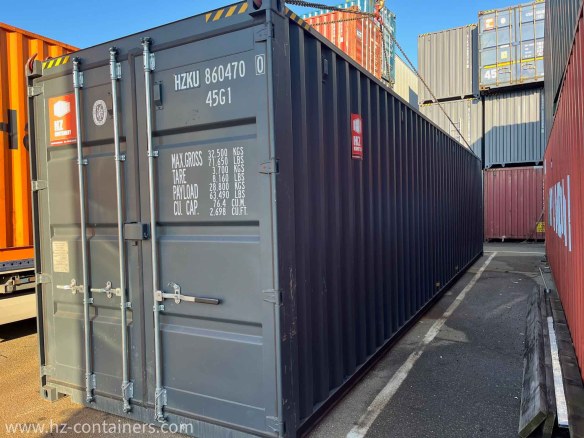
Natural rust on spare parts for shipping containers is a common, often desirable electrochemical process in which a protective layer of iron oxides – called patina – forms on the surface of special Corten steel. Unlike common corrosion on standard carbon steel, this phenomenon is part of a protective mechanism that increases the lifespan, structural integrity, and resistance of containers and their spare parts. It is therefore quite normal for signs of rust to appear on the surface or perimeter of spare parts for shipping containers. However, this does not mean that the spare part is already used or devalued. On the contrary, it is a completely normal chemical reaction of Corten steel. It is practically impossible for original spare parts to be without rust.
Understanding the difference between protective patina and destructive corrosion is essential for anyone who owns, operates, repairs, or sells containers. This article explains the causes, types, formation, prevention, and repair of natural rust on shipping containers with emphasis on spare parts.
Scientific Background: Why Steel Rusts and How Does Corten Work?
Corrosion Process and Patina Formation
Corrosion is a natural electrochemical process in which iron reacts with oxygen and moisture and transforms into iron oxides (rust). This process requires the presence of an anode (a place on the metal where oxidation occurs), a cathode (a place of reduction), and an electrolyte (for example, water with dissolved salts). The result is a reddish-brown, flaky rust that in common steel is not protective but porous and brittle, leading to gradual material destruction.
Corten steel (CORrosion resistance + TENsile strength) is a special low-alloy steel that contains additives such as copper, chromium, nickel, and phosphorus. These elements cause patina – a dense, adhesive, and stable layer of iron oxides – to form when wet and dry cycles alternate, which prevents further corrosion and protects the underlying metal.
Properties of Patina on Corten Steel
- Forms over 1–3 years depending on alternating moisture and dryness.
- Matures into dark brown to orange hues (aesthetic value).
- Protects metal from further oxygen and moisture penetration.
- In environments with permanent moisture (standing water, marine climate), patina is not fully functional.
Corten Steel in Practice
- Used on shipping containers, their parts (corner castings, door mechanisms, ventilation grilles, etc.), architecture, and design elements.
- High resistance to weathering corrosion means lower maintenance requirements, longer lifespan, and better structural stability of containers.
Types of Rust on Shipping Containers and Their Parts
| Property | Surface Rust (Non-Structural Rust) | Structural Corrosion (Structural Rust) |
|---|---|---|
| Appearance | Thin, uniform, reddish-brown layer, beginning patina | Deep, flaky, peeling rust, often with deformations and holes |
| Impact on Structure | Negligible – aesthetic phenomenon, does not threaten strength | Significantly weakens the structure, can lead to loss of watertightness and collapse |
| Examples on Parts | Light rusty film on locks, ventilation grilles, weld surfaces | Rusted beams, perforated floors, weakened corner castings, peeling metal at door hinges |
| Recommended Action | Clean, use rust converter, paint with anti-corrosion paint | Professional repair: part replacement, cutting out and welding a patch, or replacement of the entire element |
Key Note: Surface rust on Corten steel is part of the protective patina, while deep structural corrosion is a serious problem requiring immediate intervention.
Main Causes of Rust Formation and Spread
- Mechanical damage: Scratches, dents, abrasions that damage patina and paint.
- Salty environment: Sea salt disrupts patina formation, accelerates destructive corrosion.
- Standing water: Problem mainly on the roof, behind door seals, on the bottom frame – prevents drying, patina cannot mature properly.
- Condensation (“container rain”): Arises from temperature differences and leads to internal corrosion.
- Contact with soil: Bottom frame in constant moisture degrades quickly.
- Industrial pollution: Acid rain and chemicals disrupt patina stability.
- Galvanic corrosion: Combination of different metals (e.g., steel + aluminum) in the presence of electrolyte accelerates corrosion of the less noble metal.
Rust Prevention: Key to Long Lifespan of Spare Parts
Regular Maintenance and Inspection
- Inspections 2× per year focused on roof surfaces, corner elements, bottom frame, doors, and seals, locks.
- Immediate repair of minor paint damage, scratches, and beginning rust.

Protective and Anti-Corrosion Coatings
- Base coat (Primer): often zinc-based to ensure cathodic protection.
- Intermediate layer: epoxy, as a barrier against moisture.
- Top coat: polyurethane/acrylic for resistance to UV and mechanical damage.
- For minor repairs, DTM (Direct To Metal) paints with anti-corrosion components are ideal.
Proper Container Placement
- Never place container directly on the ground – concrete pads, wooden sleepers, or gravel bed are ideal.
- Ensure air circulation under the container and water drainage.
Control of Internal Humidity
- Installation of ventilation grilles (e.g., 30×30 cm) for air circulation.
- Use of dehumidifiers (silica gel, electric) in storage and residential containers.
- Suitable insulation (e.g., spray polyurethane foam) as a vapor barrier.
Repair and Treatment of Rust on Spare Parts
Surface Rust Repair Procedure
- Preparation: Protective equipment (gloves, glasses, respirator), steel brush, sandpaper, degreaser, base and top coat.
- Damage Identification: Thorough visual inspection, special attention to corners, joints, bottom part.
- Rust Removal: Use steel brush/grinder to remove loose rust and old paint.
- Surface Cleaning: Thoroughly degrease, remove dust and dirt.
- Application of Base Coat: Even thin layer, let dry.
- Application of Protective Coat: Quality paint for metal surfaces, several layers.
- Regular Maintenance: Inspections and quick repairs, regular cleaning.
Repair of Deep/Structural Corrosion
- If the material is rusted through, the affected part must be cut out and replaced (patch from the same thickness of Corten steel, professional welding).
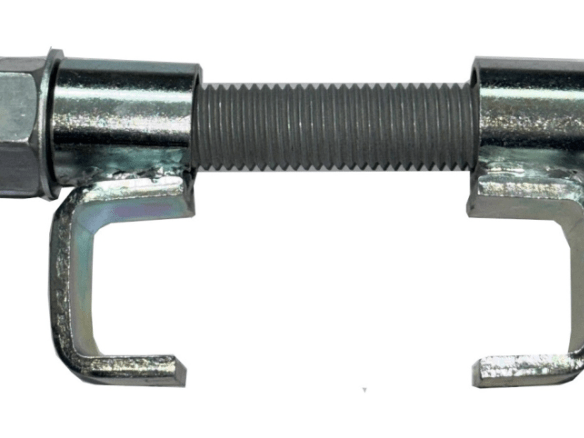
- For smaller parts (hinges, handles, ventilation grilles), replacement with new parts is recommended.
Impact of Rust on Structural Integrity and Safety
- Corner castings: Critical for lifting, stacking, and securing. Deep corrosion means decommissioning the container from service.
- Beams and frame: Weakening leads to deformations, floor damage, loss of load capacity.
- Door mechanisms: Rusted locks and hinges can fail during transport.
- Regular inspection and timely maintenance is key not only for lifespan but also for transport and storage safety.
Related Terms
- Corten steel: Low-alloy weather-resistant steel with natural protective patina.
- Patina: Dense, adhesive, and stable layer of oxides on the surface of Corten steel.
- Structural integrity: The ability of a structure to safely carry designed loads.
- Condensation: Condensation of water vapor on the inner walls of the container (so-called “container rain”).
- Galvanic corrosion: Accelerated corrosion of the less noble metal when in contact with another metal in the presence of electrolyte.
- DTM coating: Paint designed directly on metal with anti-corrosion properties.
Frequently Asked Questions (FAQ)
Is surface rust on a new spare part a problem?
Usually not – it is the beginning of protective patina formation. If the rust is not flaky and is uniform, no intervention is necessary, only light cleaning before installation.
How do I know if rust is just cosmetic or already structural?
Solid, ringing metal = surface rust. Crumbling, bending, hollow sound = structural corrosion, repair necessary.
What coating is best for repairing parts?
For minor repairs, DTM paints with anti-corrosion inhibitors; for more extensive renovations, a system coating: zinc base, epoxy intermediate layer, polyurethane top.
How does regular maintenance affect container lifespan?
Early intervention with minor damage significantly extends lifespan and reduces costs of extensive repairs.
Natural rust on Corten steel is a desirable phenomenon that ensures the protection of shipping containers and their parts from destructive corrosion. Proper recognition of protective patina, prevention, and timely maintenance are the foundation of long lifespan, safety, and functionality of containers. Investment in quality care, regular inspections, and proper repairs always pays off in the form of reliability and reduced future costs.

 Czech Republic, Sokolov
  FREE SHIPPING