
What RAL Shades Are Used for Shipping Containers?
RAL Shades for Shipping Containers form the fundamental pillar of color standardization in global container transport and logistics. The RAL System, originally from Germany, enables precise identification, reproducibility, and color consistency for all types of surface treatments of steel shipping containers. Container color is not merely an aesthetic choice – it serves to protect against corrosion, ensure safety, highlight corporate identity, and even affects the thermal properties of the container. The correct choice of RAL shade thus fundamentally influences the lifespan, maintenance, and usability of the container in various climatic and operational conditions.
Detailed Explanation
Colors on shipping containers that you encounter at ports or during transport are not chosen randomly. Each shade is part of a system that communicates information about the owner, age, purpose, and contents of the container. The standardized RAL system brings clear order and comprehensibility to global logistics.
History and Significance of the RAL System
- Origin of the system: RAL is an abbreviation for Reichs-Ausschuß für Lieferbedingungen und Gütesicherung, or the Imperial Committee for Delivery Terms and Quality Assurance. It was established in 1925 in Germany to standardize colors in industrial production and prevent misunderstandings between manufacturers, customers, and government institutions.
- Palette development: The first color chart contained 40 shades; today the RAL Classic series includes 216 basic shades, while the expanded RAL Design palette has more than 2000 colors.
- Significance in the container industry: It enables manufacturers and container fleet managers to precisely specify and maintain uniform visual identity and ensure compatibility during repairs and maintenance of containers worldwide.
Why Are Container Colors So Important?
Container color has consequences in four key areas:
| Function | Significance in Practice |
|---|---|
| Protection against corrosion | Quality paint in a specific shade creates a barrier against salt, UV radiation, and mechanical damage |
| Identification and safety | Colors serve as a corporate code, increase visibility, and signal the nature of cargo |
| Temperature regulation | Light colors reflect solar radiation, dark colors absorb heat; affects interior temperature |
| Aesthetics and architecture | Significantly affects appearance, integration into landscape or city, supports brand |
Protection Against Corrosion and Durability
- Container steel (Corten): Most containers are made of Corten steel, which has increased resistance to weather effects; however, paint extends lifespan by up to decades.
- Special coating systems: Anticorrosive primer coats (for example, epoxy with zinc admixture) and UV-stable topcoats (polyurethane, acrylic) are used. A quality system can withstand salt water, acidic rain, extreme temperatures, and mechanical stress.
Identification, Safety, Corporate and Operational Coding
- Corporate colors: Global companies such as Maersk (light blue), Evergreen (green), or Hapag-Lloyd (orange) have their own standards according to which entire fleets are painted.
- Safety coding: Distinctive shades (red, yellow) often mark containers with hazardous or special cargo. White containers are usually refrigerated (reefer).
- Ownership and age: Lessors choose darker shades, which effectively mask dirt and wear.
Temperature Regulation
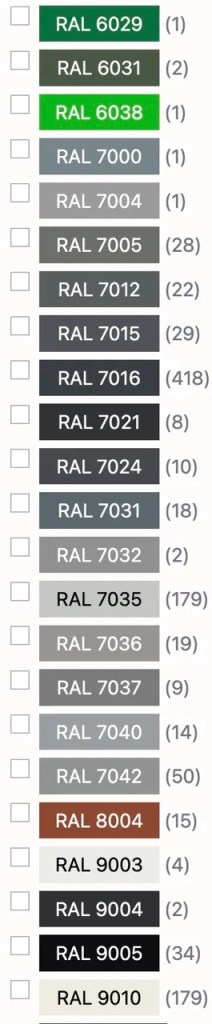
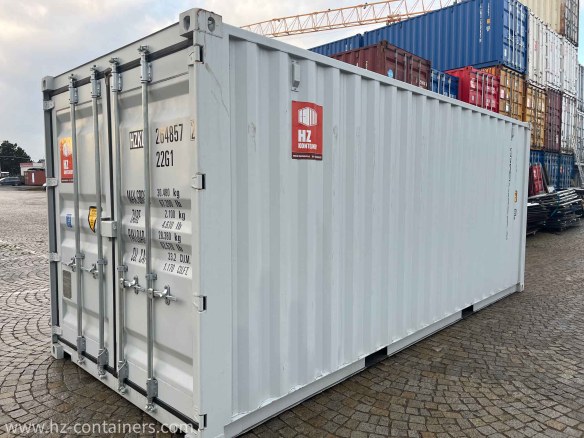
- Thermal efficiency: Light colors (RAL 9003, 9010) reflect more solar radiation, reduce interior heating, and save energy for refrigerated containers.
- Dark colors: For example, RAL 7016 (anthracite gray) or RAL 9005 (black) absorb more heat, more suitable for temperate climates or where an industrial appearance is desired.
Aesthetic and Architectural Function
- Container architecture: Color is a fundamental design element. For integration into the landscape, green/brown tones are popular; in cities, gray, white, or corporate colors dominate.
Shipping Container Painting Process
Proper application of paint is a complex process that determines the lifespan and durability of the container.
Painting Phases
- Surface preparation:
- Blasting/sandblasting to remove old coatings, rust, and impurities; opening steel pores for better adhesion.
- Inspection and repair of welds, possible replacement of damaged parts.
- Primer coat:
- Epoxy or zinc-based primer coats for maximum anticorrosive effect.
- Layer thickness typically 60–80 microns.
- Intermediate layer:
- Increases resistance to mechanical damage, improves adhesion of topcoat.
- Topcoat:
- Polyurethane, acrylic, or special marine lacquers with UV protection.
- Color according to RAL, thickness usually 40–60 microns.
- Total coating system thickness often exceeds 120 microns.
Powder coating: A modern method where powder paint is applied electrostatically and cured in an oven. The result is a very durable, uniform, and environmentally friendly surface.
Most Commonly Used RAL Shades for Shipping Containers
Although a container can be painted in almost any shade from the RAL palette, in practice the following colors are most commonly used:
Overview of Common Shades by Type of Use
| RAL Shade | Name | Use and Characteristics |
|---|---|---|
| 7016 | Anthracite Grey | Modern, elegant, universal; popular in architecture, for private and corporate purposes |
| 5010 | Gentian Blue | Classic container blue, often corporate color (ONE WAY containers) |
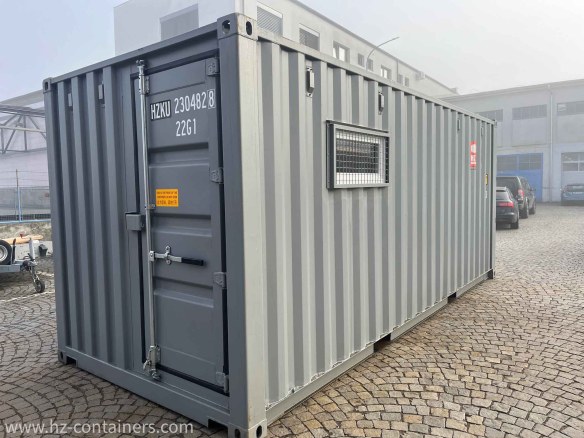
| 7035 | Light Grey | Neutral, light, suitable for interior and exterior, hides dirt well |
| 6005 | Moss Green | Ideal for integration into nature, garden and farm projects |
| 6011 | Reseda Green | Ecological projects, often in combination with wood |
| 9003/9010 | Signal/Pure White | Refrigerated containers, mobile structures, sales stands |
| 3020 | Traffic Red | Distinctive safety color, marking special and hazardous cargo |
| 8008 | Olive Brown | Camouflage and military projects |
| 9005 | Jet Black | Modern, luxurious appearance, masks dirt, strong heat absorption |
Real Market Examples
- RAL 7016 (Anthracite Grey): The most popular shade in recent years, favored for container homes, offices, garages, garden storage, and mobile cafes. It appears elegant and is universal.
- RAL 5010 (Gentian Blue): Standard color for new “One Way” containers and many used containers. It is offered by suppliers such as Kontejnery Kontik in their range.
- RAL 7035 (Light Grey): Often used for interior spaces of containers, where it reflects light and increases the sense of space.
Specific Shades for Refrigerated and Special Containers
- RAL 9003, 9010: White color is the standard for refrigerated (reefer) containers because it best reflects solar radiation and minimizes interior heating.
- RAL 3020, 1003: Distinctive red and yellow for containers with hazardous cargo or high need for visual differentiation.
Technical and Practical Aspects of Color Selection
How to Choose the Right Shade?
- According to purpose: For storage of food and sensitive materials, light colors (lower heating); for industrial and heavy operations, darker shades (hide dirt, robustness).
- According to location: In nature, green, brown, and gray shades are suitable. In cities and corporate areas, rather gray, blue, or corporate colors.
- According to maintenance: Darker colors better mask wear and dirt; light colors need to be washed more often, but better reflect light and heat.
Standards and Certifications
- ISO 6346: International standard for marking and identification of containers. Color is not prescribed here, but must be resistant to UV, salt, and mechanical damage.
- Coating certifications: Manufacturers and suppliers (e.g., Hempel, Jotun, PPG) have their own certified systems for container applications, tested in extreme conditions.
Related Terms
| Term | Meaning |
|---|---|
| Corten steel | Highly resistant steel with admixtures of copper, chromium, and nickel, creates a protective patina against corrosion |
| ISO 6346 | International standard determining identification codes for containers |
| Powder coating | Modern surface treatment technology, high durability and environmental friendliness |
| Polyurethane coating | Topcoat resistant to UV radiation, chemicals, and mechanical damage |
| Epoxy coating | Primer coat with high adhesion and anticorrosive properties |
Frequently Asked Questions (FAQ)
What is the most popular RAL shade for shipping containers?
Currently, it is RAL 7016 (anthracite grey) – particularly in the private and architectural segment. Among traditional colors, RAL 5010 (blue) and RAL 6005 (green) dominate in industrial and transport containers.
Can I have a container painted to order according to my own RAL choice?
Yes, most suppliers offer the option of painting in any RAL shade, including special coating systems according to customer requirements.
Why are refrigerated containers mostly white?
White color (RAL 9003, 9010) has the best ability to reflect solar radiation, thus minimizing interior heating and reducing operating costs for cooling.
What is the difference between RAL 7016 and RAL 7035?
RAL 7016 is a dark, anthracite grey with a modern appearance, while RAL 7035 is a light, neutral grey, often used in interiors.
What is the lifespan of container paint?
A quality coating system lasts 10–15 years in maritime operation without major repairs; in dry inland areas even longer, depending on the quality of application and maintenance.
Overview of Most Used Shades in Table
| RAL Shade | Name | Typical Container Use | Advantages and Notes |
|---|---|---|---|
| 7016 | Anthracite Grey | Architecture, offices, storage | Modern appearance, masks dirt |
| 5010 | Gentian Blue | Industrial transport, new containers | Corporate standard, high visibility |
| 7035 | Light Grey | Interiors, universal use | Reflects light, neutral appearance |
| 6005 | Moss Green | Nature, farms, gardens | Blends with surroundings |
| 9010 | Pure White | Refrigerated, medical containers | Best light reflection |
| 3020 | Traffic Red | Special and safety containers | Distinctive, high visibility |
| 9005 | Jet Black | Special design, architecture | Luxurious appearance, absorbs heat |

 Czech Republic, Strakonice
  FREE SHIPPING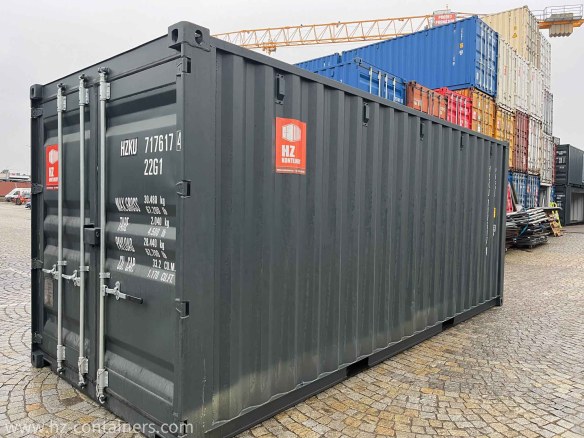
Other container news...
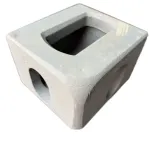
Corner casting steel vs aluminum
Every shipping container in the world — all 40 million of them — rests on eight critical components. Corner castings are the load-bearing blocks at each corner of an ISO shipping container, and they are the universal interface between the container and every crane, twistlock, spreader, and chassis on the planet. When you lift a container, stack it nine high on a ship, or lock it to a truck trailer, every ton of force flows through these fittings.

Construction cabin – selection, tips, dimensions and prices
Every construction project – whether a family house, a development project or a reconstruction – starts with the infrastructure. No construction manager, craftsman or investor who needs an on-site office, a changing room for workers or a safe storage for tools can do without a quality construction cell. But navigating the offer is not easy: residential containers, sanitary cells, storage modules, rental, purchase, refurbished pieces… This guide will give you answers to all the essential questions in one place.
Storage container
A storage container is a lockable steel box designed for the safe and dry storage of materials, tools, goods or equipment. Originally created as a shipping container for maritime transport, its durability and versatility have found their way onto construction sites, corporate premises and private land.
Shipping container 12m (40 ft)
A 12m shipping container is an investment that, if properly selected and cared for, will pay off in decades of trouble-free use. Whether you plan to use it as a warehouse, workshop, garage or the basis for a residential module — the key is careful selection of the condition, a thorough inspection before purchase and high-quality preparation of the base for placement. Take the time to compare offers, check the seller’s references and do not hesitate to personally inspect the container before buying. A properly selected 40-foot container will serve you reliably for many years.