
What is the rust on CORTEN STEEL?
Corten steel (Corten steel, COR-TEN) is a very specific and intentionally sought-after property. The biggest difference compared to common corrosion is that the rust – professionally known as patina – functions here as a protective shield. It forms in a controlled manner, through repeated alternation of wet and dry cycles, and creates a dense, adherent layer on the steel surface. This layer prevents further penetration of oxygen and moisture to the base metal, thereby significantly slowing down further corrosion. With common steel, rust is destructive; with Corten, it is, on the contrary, the key to its
longevity and unique, appreciated aesthetics.
Expert Summary
- Patina has significantly lower permeability to water and oxygen than rust on common steel.
- It forms only in atmospheric conditions (not underwater or in permanently wet environments).
- It is part of approved anti-corrosion systems, e.g., in bridge construction (see TP 3.2 ČKAIT, EN 10025-5, EN 1993-1-4).
Detailed Analysis: Understanding Corten’s Unique Corrosion
To understand the phenomenon of patina on Corten steel, it is important to discuss chemical composition, patina formation process, comparison with common steel, and practical implications for use.
Chemical Composition: The Secret of Self-Protective Ability
Corten steel (typically designated as S355J2W, S355K2W or according to American standards A588/A242) is low-alloyed. In addition to iron and carbon, it contains key additives:
| Element | Typical content (%) | Function in Corten steel |
|---|---|---|
| Carbon (C) | <0.2 | Basis of strength, toughness |
| Copper (Cu) | 0.2–0.5 | Formation of cohesive patina, increased corrosion resistance |
| Chromium (Cr) | 0.5–1.25 | Strengthening and stabilization of patina |
| Nickel (Ni) | 0.2–0.65 | Increased toughness and corrosion resistance |
| Phosphorus (P) | 0.07–0.15 | Improvement of patina cohesion, regenerative effect |
Alloying elements ensure that the resulting patina is fine-grained, compact, and firmly adhered. With common steel, rust is porous and flaky, which allows corrosion to penetrate deeply.
Note:
Corten is not the only type of weathering steel; there are other variants with similar properties (e.g., S235J0W, S355J0WP), differing in content and combination of alloys.
The Process of Protective Patina Formation: Controlled Transformation
Patina formation is a key process that determines the properties of Corten steel. It occurs in three main phases:
1. Initial Phase (0–6 months)
- Upon exposure to weather, initial surface oxidation occurs.
- A light, orange-brown, uneven layer of rust forms.
- The greatest washing off of loose particles occurs, which can stain surrounding surfaces (concrete, stone).
2. Development Phase (6–18 months)
- The patina thickens, and the color darkens to a rich reddish-brown.
- The layer is less dusty, and the surface acquires a more granular texture.
- Alternating wet and dry conditions are crucial for quality patina development.
3. Maturation Phase (18–36 months)
- The patina is fully stabilized; the color can be dark brown to purple.
- The layer is cohesive and protects the substrate virtually maintenance-free.
- Rust runoff is minimal.
Caution:
In permanently wet, rainy, or conversely, extremely dry environments, the patina may not develop correctly or quickly.
Difference Between Rust on Corten and Common Corrosion
| Property | Rust on Corten Steel (Patina) | Common Rust (Carbon Steel) |
|---|---|---|
| Structure | Dense, fine-grained, cohesive | Porous, flaky, non-cohesive |
| Function | Protective, prevents deep corrosion | Destructive, allows deep corrosion |
| Self-healing | Yes, patina regenerates locally | No, corrosion layer flakes off |
| Lifespan | 2–4× longer than common steel | Significantly shorter, dependent on maintenance |
| Appearance | Valued, warm tones | Undesirable, defect |
Practical difference:
Common steel that “imitates” the appearance of Corten is risky – the patina is not cohesive, degrades quickly, and can lead to complete rust-through.
Key Properties and Advantages of Rust on Corten Steel
Corten steel finds widespread use due to its patina, which brings these benefits:
- High resistance to atmospheric corrosion: Up to 4× longer lifespan outdoors compared to common steel.
- Maintenance-free: Once a stable patina is achieved, it requires no painting or special protection.
- Unique appearance: Aesthetically striking, original, and ever-evolving coloration, popular in architecture and design.
- Mechanical strength: Comparable to structural steels (tensile strength ≥ 355 MPa).
- Ecological aspect: Absence of toxic coatings, recyclability, lower ecological footprint during its life cycle.
Applications:
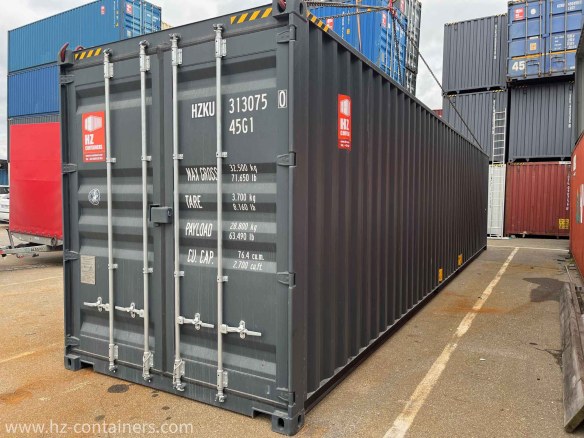
Shipping containers, bridges, facades, fencing, garden elements, sculptures, screens, roofing, etc.
Patina Management and Influence
Accelerating Patina Formation
- Activation spray: Acetic acid solution, saline solution (max. 5% NaCl), or industrial activators.
- Procedure: Apply repeatedly, always allowing to dry thoroughly.
- Warning: Uneven application can lead to the formation of “marks” on the surface.
Stopping and Preserving Patina
- Use of transparent lacquers (e.g., Owatrol Oil): Prevents further abrasion and rust runoff, fixes the appearance (often for interior applications).
- Disadvantage:
Loss of the dynamics of natural aging and self-healing ability.
What to Watch Out For: Rust Runoff
In the first 1–2 years, it is necessary to account for the runoff of loose rust particles, especially after rain. This water can irreversibly stain light, absorbent materials (concrete, stone, wood).
Recommendations:
- Design solutions: Drip edges, overhangs, diverting water away from sensitive surfaces.
- Pre-weathering: Allow the material to corrode away from the final location (e.g., on a construction site).
- Suitable substrate: Gravel, dark paving, grass strip.
Related Concepts
- Patina: A protective layer formed by the natural aging of metal.
- Atmospheric corrosion: Degradation of material due to atmospheric phenomena.
- Alloying: Addition of elements to steel to improve properties.
- COR-TEN: A trade name, international designation for weathering steel.
Frequently Asked Questions (FAQ)
Is Corten steel stainless?
No. Corten intentionally oxidizes (rusts), but it forms a cohesive protective layer. Stainless steel contains more chromium and is resistant due to a passive layer of chromium oxide.
How long does patina development take?
1.5–3 years, depending on weather exposure.
Does rust from Corten stain?
In the initial phases, yes (6–18 months). After stabilization, runoff is minimal.
Is it necessary to paint Corten?
No, painting would disrupt the self-protective mechanism. Exceptions are interior applications to prevent abrasion.
Why is Corten supplied without rust?
So that the patina forms naturally and evenly at the specific installation site.
Can Corten be used indoors?
Yes, usually with pre-weathered patina or with surface fixation using a transparent lacquer.

 Czech Republic, Vysoké Mýto
  FREE SHIPPING

Other container news...

High Cube container specifications
A high cube container — also referred to as an HC container, HQ container, or high-cube — is an intermodal shipping container that stands one foot taller than the standard ISO container. While a standard general-purpose container measures 8 feet 6 inches (2.59 m) in external height, a high cube container extends to 9 feet 6 inches (2.89 m). This extra 12 inches of vertical clearance translates into approximately 10–15% more cubic capacity without altering the container’s footprint — the same length and width are maintained, meaning the container occupies the same floor space on a vessel, chassis, or storage yard.

Shipping container parts
A shipping container looks like a simple steel box from the outside, but it is an assembly of dozens of precisely engineered shipping container parts — each governed by international standards, each designed to survive decades of ocean transit, crane lifts, and stacking loads that would crush an ordinary structure. Whether you are buying a used container, planning a container home, troubleshooting a repair, or simply building your logistics vocabulary, understanding every individual component is the difference between making an informed decision and an expensive mistake.

40 Foot Container Dimensions
If you have ever booked ocean freight, planned a warehouse layout, or designed a modular building project, you have asked the same question: what are the exact 40 foot container dimensions — and what do they mean for what you can actually load? The numbers are standardized worldwide, but the practical implications of those numbers are surprisingly nuanced. A 40-foot container is not simply 40 feet of usable space, and its weight limits are not what most people assume. This guide covers every measurement, every weight rating, and every loading consideration you need to make informed decisions about the world’s most common shipping container.
Quick Answer: A standard ISO 40-foot shipping container measures 12.19 m (40 ft) long × 2.44 m (8 ft) wide × 2.59 m (8 ft 6 in) high externally and provides approximately 67.7 m³ (2,390 ft³) of usable internal volume. The maximum gross weight is 30,480 kg (67,200 lbs), with a typical payload capacity of approximately 26,700–26,800 kg (58,900–59,000 lbs).

Cargo worthy container
If you have ever shopped for a used shipping container, you have almost certainly encountered the term cargo worthy — often abbreviated as CW or CWO (Cargo Worthy Only). It is one of the most important classifications in the container industry, yet it is also one of the most misunderstood. A cargo worthy container is not a container that looks new. It is not necessarily a container that has a valid CSC plate. And it is definitely not the same as a wind and watertight container. This guide explains what cargo worthy really means — from its technical definition and historical origins to the precise structural criteria, inspection process, cost implications, and common misconceptions that trip up even experienced buyers.