
What is Customs Clearance and Why It’s Important in Global Trade
Definition of Customs Clearance
Customs clearance refers to the official entry of goods into a country through a designated customs authority. It involves the verification of necessary documents, ensuring compliance with local and international regulations. The process often includes presenting passports for goods in the form of invoices, shipping documents, and, if required, permits or licenses from the appropriate regulatory bodies.
Goods are assessed for payment of duties and taxes based on their classification and value. Customs clearance ensures that goods entering or leaving a country are adequately accounted for in terms of permits, duties, and regulations, playing a critical role in global trade.
For example a freight forwarder shipping from USA to Australia will need to pass Australian customs clearance to import goods.
Key Components of the Customs Clearance Process
The customs clearance process comprises several core components. These include classification, documentation, examination, and taxation. Classification involves determining the correct category for the goods according to the Harmonized System (HS), which dictates the applicable tariffs and duties.
Documentation is another significant part, requiring submission of shipping invoices, bills of lading, and potentially certificates of origin. Examination involves physical inspection to verify the contents match the descriptions provided. Finally, the process includes calculating and ensuring the payment of duties and taxes before goods are released. Accurate and timely handling of these components is crucial to avoid delays.
The Importance of Customs Clearance
Customs clearance is crucial in meeting legal requirements, preventing illegal trade, and supporting smooth international trade activities. Each aspect plays a significant part in global commerce and security.
Compliance with Legal Framework
Customs clearance ensures that imports and exports conform to a country’s legal standards. Regulations vary widely between nations, requiring precise documentation and adherence to local laws. This process protects a country’s financial interests and maintains fair market conditions. Correct classification of goods and accurate paperwork are essential to avoid fines and delays. Traders benefit from professional customs brokers who navigate these complexities efficiently. Compliance with customs laws safeguards businesses from potential legal actions.
Prevention of Illegal Activity
Customs clearance acts as a critical checkpoint against illegal trade activities. By scrutinizing shipments, customs authorities help prevent the entry of prohibited goods such as drugs, contraband, and counterfeit products. These efforts are vital for national security and public safety. Customs officials employ advanced technologies to detect hidden illegal goods. Stopping illicit trade supports ethical business practices and protects consumers from harmful products. Enhanced security measures at customs keep both local and international markets secure and stable.
Roles in Customs Clearance
Customs clearance involves various roles crucial to its efficiency. Each player in the process, from regulatory bodies to business entities, ensures compliance with legalities and smooth movement of goods.
The Role of Customs Authorities
Customs authorities are pivotal in the customs clearance process, ensuring legal compliance and safety. They inspect goods to enforce regulations on tariffs, duties, and trade restrictions. These authorities work to prevent illegal activities such as smuggling by conducting detailed checks.
They are also responsible for collecting the appropriate duties and taxes on imported goods. By doing so, they help generate revenue for the government. Furthermore, they work to protect the economy by monitoring and controlling the flow of goods across borders.
The Role of Importers and Exporters
Importers and exporters must ensure that their goods meet the regulations of both the origin and destination countries. They are tasked with preparing the correct documentation, including invoices, packing lists, and certificates of origin, to facilitate smooth customs clearance.
Their role extends to declaring the correct value and type of goods to customs, which helps determine the amount of duty and tax payable. They should stay informed about changing regulations to avoid compliance issues, which could cause delays or penalties.
The Role of Customs Brokers
Customs brokers act as intermediaries between the importer or exporter and customs authorities. They handle the complex paperwork and coordination required for clearance. Brokers possess in-depth knowledge of import and export regulations, which enables them to assist companies in complying with laws and avoiding costly mistakes.
Brokers also offer advice on tariff classifications and duty rates, which can lead to cost savings. Their expertise supports businesses in navigating potential issues and expediting the clearance process by leveraging their industry relationships and experience.
The Customs Clearance Process
The customs clearance process involves preparing and submitting necessary documentation, following procedure steps, and making payments for any applicable duties and taxes. Each of these components ensures that goods can enter or leave a country legally and efficiently.
Documentation Required for Customs Clearance
Proper documentation is crucial. Customs authorities require various documents to process clearance. Commercial invoices detail the goods, value, and buyer and seller information. An export packing list provides specifics on the weight, dimensions, and packaging of the shipped items.
Bill of lading or airway bill serves as a contract between the owner of the goods and the carrier. Import licenses or permits may be necessary, depending on the nature of goods. A certificate of origin verifies where the goods were manufactured. Accurate documents prevent delays or additional costs.
Steps in the Customs Clearance Procedure
The procedure begins with submitting the relevant documents. Customs officers examine these documents to ensure compliance with regulations. They may conduct physical inspections to verify the contents. If items meet the required standards, the process moves forward without issue.
Following inspection, goods are classified based on the harmonized system (HS) code. This classification determines the duties and taxes applicable. Accurate declarations are vital; errors can lead to penalties or shipment delays. Customs releases the goods once all requirements are met.
Payment of Duties and Taxes
Duties and taxes are calculated based on the type and value of the goods. Import duties depend on the classification of the items, while taxes may include value-added tax (VAT) or goods and services tax (GST).
Payments must be made before goods can be cleared. Importers often pay through electronic funds transfer or via customs’ preferred payment methods. Once payment is confirmed, customs finalizes the release of the goods. Understanding these financial obligations is important for timely and cost-effective clearance.
Other container news...
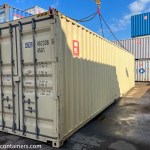
Buy shipping containers
Buying a shipping container means purchasing a standardized steel intermodal box — typically 10, 20, or 40 feet long — for use as ground-level storage, job site equipment housing, cargo transport, or architectural conversion. The right container can last decades. The wrong one can leak, rust through, or fail inspection the day it arrives. This guide covers every step of the process, from understanding what you’re actually buying to inspecting it in person and preparing your site for delivery.

20 Foot shipping container cost
If you are researching the cost of a 20 foot shipping container, you have likely already encountered wildly different prices — from $999 listings online to quotes exceeding $5,500. That range is not a sign of inconsistency. It reflects real differences in container condition, location, delivery logistics, and the seller you are dealing with.
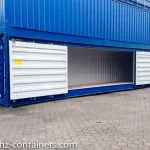
Side Opening container
A side opening container is an ISO-compliant intermodal shipping container engineered with full-length bi-fold doors along one of its long side walls, in addition to the standard cargo doors at one end. Unlike conventional containers that restrict access to a single set of rear doors, a side opening container — also widely called an open side container, open-sided shipping container, or side door container — provides unobstructed lateral access across the entire 20-foot or 40-foot length of the unit. This design transforms the container from a narrow tunnel into a wide-open space that forklifts can enter from the side, multiple workers can load simultaneously, and oversized cargo that would never fit through standard end doors can be placed without struggle.
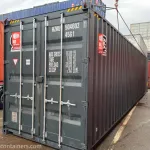
Can You Modify a 40ft High Cube Container?
The short answer is yes — you absolutely can modify a 40ft high cube container, and it is one of the most popular container types for modification projects worldwide. But the real question is not whether you can modify one; it is how to do it correctly, safely, legally, and within budget. This guide answers every dimension of that question, drawing on engineering principles, real-world pricing data, and the collective experience of thousands of modified container projects.
Key Takeaway: A 40ft high cube container offers 320 square feet of floor space with an extra foot of ceiling height compared to a standard container — making it the ideal canvas for offices, workshops, homes, retail spaces, and industrial applications. The extra height is particularly valuable when you add insulation and still want comfortable headroom.