
Usual Forms of Handling in Customs Warehouse – What is Permitted and Prohibited
What are Usual Forms of Handling in a Customs Warehouse?
Usual Forms of Handling (UFH) represent a key concept in the field of customs warehousing. These are a set of precisely defined operations that can be performed on goods that are not Union goods and are located in a customs warehouse. These operations are established and limited by European Union legal regulations, in particular Annex 71-03 of the Commission Delegated Regulation (EU) 2015/2446.
Main objectives of usual forms of handling
- Preservation of quality and commercial value of goods during storage
- Improvement of commercial presentation or quality of goods
- Preparation of goods for distribution, sale or further logistical movement
Usual forms of handling must not change the substance of the product or its tariff classification in the CN (Combined Nomenclature). In other words, goods after these operations must not acquire a new eight-digit CN code.
Typical examples: repackaging, sorting, simple cleaning, labeling or packaging. These operations do not constitute manufacturing, assembly or complex processing.
Legal Basis and Key Regulations
The legal framework for usual forms of handling is firmly anchored in European and Czech legislation:
European Union
| Regulation | Description | Key Articles / Annexes |
|---|---|---|
| Regulation (EU) No 952/2013 of the European Parliament and of the Council (Union Customs Code – UCC) | Basic regulation governing customs regimes (including storage), Articles 220 and 241 address storage and permitted operations | Art. 220, 241 |
| Commission Delegated Regulation (EU) 2015/2446 (DA) | Contains a detailed list of permitted usual forms of handling – Annex 71-03 | Annex 71-03 |
| Commission Implementing Regulation (EU) 2015/2447 (IA) | Establishes procedures and administration of special regimes | – |
| Commission Delegated Regulation (EU) 2016/341 (TDA) | Transitional rules until full implementation of electronic systems | – |
Czech Republic
- Act No. 242/2016 Coll., Customs Act
- Act No. 17/2012 Coll., on the Customs Administration of the Czech Republic
- Act No. 280/2009 Coll., Tax Code
Key Concepts and Definitions
| Term | Meaning |
|---|---|
| Customs Warehouse | A place under customs supervision intended for storage of goods that are not Union goods, without the need for immediate payment of customs duties and VAT. |
| Permit Holder | A person/company that has permission to operate a customs warehouse and perform usual forms of handling. |
| Regime Holder | A subject responsible for fulfilling obligations arising from the storage regime in a customs warehouse. |
| Customs Supervision | A system of controls, records and approvals carried out by customs authorities. |
| Combined Nomenclature (CN) | An eight-digit numerical code for the classification of goods in the EU (customs rates, statistics). |
Permitted Operations: Complete List According to Annex 71-03 DA (EU) 2015/2446
Below is the complete and current list of permitted usual forms of handling of goods in a customs warehouse (selection and expansion with practical examples and technical notes):
| Group | Permitted Operations | Examples / Notes |
|---|---|---|
| Preservation of Goods | Aeration, spreading, drying, dust removal, cleaning, pest treatment, simple repairs of packaging | Grain drying, wood fumigation, gluing torn cardboard |
| Inspection and Record-keeping | Inventory, sampling, sorting, weighing, mechanical filtering, removal of damaged parts | Wine sampling for analysis, removal of rotten fruit |
| Preservation | Pasteurization, sterilization, irradiation, addition of preservatives | Herb irradiation, juice pasteurization during storage |
| Packaging and Repackaging | Decanting, packaging into barrels/bags, vacuum packaging, palletization, simple repackaging | Repackaging electronics into smaller packages, goods palletization |
| Commercial Adjustment | Sorting, classification, textile pressing, cleaning, rust and oil removal, coating removal | Leather sorting by quality, degreasing metal parts |
| Quality Adjustment | Dilution/thickening, mixing batches of the same type, simple portioning or division | Tea mixing, cheese portioning, paper roll division |
| Preparation for Distribution | Attaching/removing labels, marks, seals, kit assembly (kitting), simple assembly/disassembly | Attaching Czech labels, gift package assembly, attaching wheels to chairs |
| Testing and Commissioning | Testing, simple adjustment or regulation of machinery, short-term operation to verify functionality | Brief test of imported machinery, equipment function verification |
IMPORTANT: Each specific operation must always comply with Annex 71-03! If a specific operation is not on the list, it cannot be performed as a usual form of handling.
Practical Table – Summary of Most Common Permitted Operations
| Operation | Practical Example | Limitations |
|---|---|---|
| Aeration, drying | Breathable goods (coffee, grain) | Must not result in fermentation/change of character |
| Simple packaging repairs | Pallet repair, cardboard gluing | Must not create a new packaging product |
| Sorting, weighing | Textile sorting, weighing bulk materials | Must not lead to CN code change |
| Packaging, repackaging | Electronics repackaging into retail packaging | Must not result in assembly, manufacturing or change of goods nature |
| Mixing of the same type | Mixing different batches of tea | Only same CN, no new mixture of different CN |
| Kitting (sets) | Gift packages | Goods must remain separate, no new “manufacturing” unit |
Prohibited Operations: What is Beyond the Scope of Usual Handling?
Key Limitations:
- No change in tariff classification (CN): The result of the operation must remain under the same eight-digit code.
- No obtaining of more favorable customs rate: Goods cannot be “transformed” through handling into a category with a lower rate.
- No manufacturing and processing operations: Manufacturing, complex assembly, chemical transformation, cooking, dyeing, sintering, assembly of complex equipment, etc.
- No fundamental change in product character: Goods must remain in their original substance, no new product must be created.
Examples of PROHIBITED operations:
- Assembly of a complete wheel from multiple imported parts
- Textile dyeing
- Chemical modification of plastics or metals
- Manufacturing of semi-finished or finished products
Permits and Record-keeping
How to Obtain a Permit?
- Submission of Application (see official template from the Czech Customs Administration): Must specify types of goods, scope and types of planned operations.
- Economic Necessity: You must demonstrate why the given handling is economically necessary for you.
- Approval by Customs Authority: The permit is tied to a specific warehouse and types of operations.
Record-keeping
- Precise and ongoing record of goods movement and handling – including data before and after each operation.
- Ability to trace back each item and operation.
- Records must be controllable by customs authorities at any time.
- Everything under customs supervision – including regular and random physical inspections.
Inspection, Sanctions and Practice
- Violation of rules may result in sanctions, customs duty assessment, VAT, fines, or even criminal liability.
- Customs Administration conducts regular and random inspections of physical goods and records.
- If unauthorized handling is discovered, the permit may be revoked.
- In practice, transparency, complete record-keeping, regular internal audits and employee training in the warehouse are key.
Comparison with the USA and Other Jurisdictions
| EU | USA (Bonded Warehouse) |
|---|---|
| Unlimited storage period | Maximum 5 years |
| Exhaustive list of permitted operations (Annex 71-03) | Similar list, but often broader interpretation of “handling” |
| Customs supervision and record-keeping | Similarly records, but different reporting requirements |
| Terminology: Customs Warehouse, Usual Forms of Handling | Bonded Warehouse, Manipulation |
Frequently Asked Questions (FAQ)
Does usual handling change the CN code of goods?
No, it must always remain the same. A change means processing, not usual handling.
Are customs duties or VAT paid during storage and handling?
No, until the goods are released into free circulation.
Can Union and non-Union goods be combined?
Yes, if the records allow their clear distinction.

 Czech Republic, Třebíč
  FREE SHIPPING

Other container news...
Corner casting steel vs aluminum
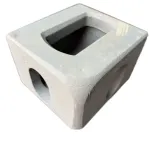
Every shipping container in the world — all 40 million of them — rests on eight critical components. Corner castings are the load-bearing blocks at each corner of an ISO shipping container, and they are the universal interface between the container and every crane, twistlock, spreader, and chassis on the planet. When you lift a container, stack it nine high on a ship, or lock it to a truck trailer, every ton of force flows through these fittings.

Construction cabin – selection, tips, dimensions and prices
Every construction project – whether a family house, a development project or a reconstruction – starts with the infrastructure. No construction manager, craftsman or investor who needs an on-site office, a changing room for workers or a safe storage for tools can do without a quality construction cell. But navigating the offer is not easy: residential containers, sanitary cells, storage modules, rental, purchase, refurbished pieces… This guide will give you answers to all the essential questions in one place.
Storage container
A storage container is a lockable steel box designed for the safe and dry storage of materials, tools, goods or equipment. Originally created as a shipping container for maritime transport, its durability and versatility have found their way onto construction sites, corporate premises and private land.
Shipping container 12m (40 ft)
A 12m shipping container is an investment that, if properly selected and cared for, will pay off in decades of trouble-free use. Whether you plan to use it as a warehouse, workshop, garage or the basis for a residential module — the key is careful selection of the condition, a thorough inspection before purchase and high-quality preparation of the base for placement. Take the time to compare offers, check the seller’s references and do not hesitate to personally inspect the container before buying. A properly selected 40-foot container will serve you reliably for many years.