
Temporary Structure from Shipping Containers and Building Code
What is a Temporary Structure from Shipping Containers under Building Code?
Temporary structure from shipping containers is an object whose main load-bearing structure or external envelope is formed by one or more shipping containers (most commonly ISO 20′ or 40′), which are adapted for construction purposes and placed on a plot of land for a precisely defined, time-limited period. After this period expires, the builder is obliged to remove the structure, or – if the building authority and applicable standards permit – legalize it as a permanent structure.
Why is this topic important?
- Shipping containers represent an increasingly sought-after building element due to their robustness, standardization, and mobility.
- Their use extends into innovative construction, modern logistics, and primarily into the public law system, namely building code.
- Although a container is itself a mobile device, when placed on a plot of land and used as a building (apartment, office, warehouse), almost all regulations applicable to ordinary structures apply to it.
Detailed Definition and Legal Framework
Shipping Container as a Building Element
- Shipping container (shipping container) is originally intended for the transport and storage of goods. Most commonly, it is made of CORTEN steel resistant to corrosion and climatic influences, which guarantees long service life even in extreme conditions.
- The structure is designed for stacking up to 7 units high; standardized dimensions (ISO 668) allow modular assembly and easy transport.
- For construction purposes, modification of the basic structure is necessary: cutting openings (windows, doors), insulation, installation of electrical/plumbing systems, surface modifications. These interventions affect static properties and fire safety.
| Typical Container Dimensions | Length | Width | Height | Weight of Empty |
|---|---|---|---|---|
| 20′ Standard (TEU) | 6.06 m | 2.44 m | 2.59 m | approx. 2,200 kg |
| 40′ Standard | 12.19 m | 2.44 m | 2.59 m | approx. 3,800 kg |
| 40′ High Cube | 12.19 m | 2.44 m | 2.90 m | approx. 4,200 kg |
Concept of Temporary Structure under Czech Law

- According to Act No. 183/2006 Coll. (Building Code) and its successor No. 283/2021 Coll., a temporary structure is one for which the building authority predetermines the duration. The amendment from July 2024 further facilitates the approval process for minor structures up to 40 m².
- Temporariness is a key concept:
- After the permitted period expires, the structure must be removed and the land restored to its original state.
- In some cases, the period can be extended, or the structure can be subsequently legalized as permanent (subject to stricter conditions).
Legal Advantages and Obligations
- Simpler approval process: For temporary container structures, often only notification or consent is sufficient, not building permit (especially for structures up to 40 m², not intended for permanent residence).
- Possibility of placement even on plots designated for future development or other purposes (according to territorial plan), because temporary structures do not hinder long-term territorial development.
- Obligation to remove: After expiration, the builder is obliged to ecologically remove the structure and recultivate the land.
Permits and Notification: When is a Permit Required?
One of the most frequently asked questions: Do I need a building permit for a container?
Basic Division According to Current Legislation (as of 07/2024):
| Type of Structure | Area | Permit | Conditions |
|---|---|---|---|
| Temporary structure up to 40 m² | ≤ 40 m² | Not required | No permanent connection to ground, max. 1 above-ground floor, not intended for residence or business, in accordance with territorial plan |
| Building notification | ≤ 150 m² | Notification to building authority | For smaller houses, recreational facilities, requires project documentation, municipal consent |
| Building permit | > 150 m² | Required | Complex structures, commercial operations, residence, more complex technical solutions |
Specifics According to Purpose of Use
- Storage container: If used purely for storage (e.g., on a construction site), often only consent or notification is sufficient, especially when placed for less than 180 days.
- Commercial operation / public amenities: Requires project documentation, often also building permit (depends on size and nature of operation).
- Residence: Most stringent regime, obligation to meet all standards for permanent residence (energy efficiency, fire safety, lighting, ventilation, hygiene).
News from July 2024
- Minor structure up to 40 m²: For such a structure (not only from a container) no permit or notification is required if it is not intended for permanent residence or business and meets other legal conditions
- Temporary placement (e.g., construction site facilities, mobile office): No permit is required if the structure is not permanently connected to the ground and is relocated or removed within 180 days
Technical Requirements and Building Regulations
Conversion of a shipping container into a usable building object requires compliance with a range of technical, safety, and hygiene standards.
Static Properties and Structural Modifications
- Original structure is dimensioned for point loads at corners (for stacking). Cutting openings for windows/doors, connecting multiple containers, or insulation means the need for a static assessment – an authorized structural engineer will propose necessary reinforcements and strengthening.
- Multi-story assemblies (e.g., container offices, schools): Ensuring stability, connection to foundations, checking wall and ceiling load capacity.
Fire Safety
- Steel structure has a high melting point, but quickly loses strength in a fire.
- Necessity of fire-resistant coatings, mineral insulation, or cladding with required resistance (EI 30–60).
- Solution of escape routes, installation of detectors and extinguishing equipment according to purpose of use.
Thermal Technology and Insulation
- Metal envelope conducts heat extremely well – without quality insulation it can be uninhabitable in winter and overheated in summer.
- Most common solution: internal insulation (PUR foam, mineral wool), or external contact insulation system.
- For permanent residence, necessary to meet energy efficiency requirements (PENB).
| Type of Insulation | Advantages | Disadvantages |
|---|---|---|
| PUR foam | high efficiency, small thickness | more complex application |
| Mineral wool | non-flammable, diffusion-open | greater thickness, water absorption |
| EPS/XPS | inexpensive, easy assembly | flammability, environmental burden |
Hygiene and Operational Requirements
- Natural lighting and ventilation: Proper design of window and ventilation openings according to Czech standards.
- Water, sewage, electrical installation: Must comply with applicable standards for the given purpose (residence, office, warehouse).
- Accessibility: For public structures, obligation to ensure accessibility for persons with limited mobility.
Foundations and Anchoring
- Temporary foundation: Concrete pads, ground screws, compacted gravel surface – allows easy disassembly and relocation.
- Permanent foundation: Concrete strips or foundation slab with permanent anchoring; necessary for permanent residential structures.
Practical Example
- Construction site facilities: Standard 20′ container without permanent connection to ground, used for max. 6 months – no permit required.
- Pop-up shop: Container with electrical installation, water connection, planned operation for 2 years – notification or permit depending on scope of modifications.
- Container house: Composed of several 40′ containers, with utility connections, insulation and foundations – building permit + compliance with all permanent residence requirements.
International Context and Trends
- International Building Code (IBC 2021): Since 2021, shipping containers are officially recognized as legitimate building elements, which simplifies approval processes in many countries.
- International Residential Code (IRC): Specifies rules for residential structures, including “container homes”.
- Inspiration for Czech Republic: Although these standards are not legally binding in the Czech Republic, they signal a global trend toward safer, standardized, and efficient container construction.
Differences in Use: Storage, Commercial, and Residential Structures
Storage (Container Storage)
- Simplest regime, often without permit (short-term, temporary).
- For long-term use, at least territorial consent or notification is necessary.
- Minimal technical requirements (static properties, access safety).
Commercial and Industrial Use (Commercial/Industrial)
- Temporary offices, pop-up shops, gatehouse, workshops.
- Require project and sometimes building permit, especially for food service operations or public services.
- Emphasis on hygiene, work safety, fire protection.
Residential Structures (Shipping Container Homes)
- Most stringent regime – shipping container homes have an obligation to meet all standards for permanent residence (energy, lighting, acoustics, fire safety, hygiene).
- Difference between temporary and permanent structure is in permit duration, foundation method, and possibilities for re-approval.
Glossary of Key Terms
| Term | Meaning |
|---|---|
| Building Code | Act No. 183/2006 Coll. (from 07/2024 No. 283/2021 Coll.), basic legislation for structures in the Czech Republic |
| Temporary structure | Structure with a defined duration, after which it must be removed |
| Building permit | Decision of building authority necessary for more complex structures (commercial, residential, larger objects) |
| Building notification | Simplified permit regime for smaller and simpler structures |
| Territorial plan | Territorial planning tool, defines how plots can be used |
| Building authority | Public administration body, exercises powers according to building code |
| ČSN (Czech Technical Standard) | Standards determining technical requirements for structures and materials |
| Static assessment | Assessment by authorized structural engineer, proves safety and stability of structure |
| Fire safety solution | Part of project documentation, establishes measures for fire safety of structure |
| Energy Performance Certificate | Document evaluating energy consumption of structure – mandatory for most new and reconstructed structures |
| International Building Code | International model building code, inspiration for standardization of container structures |
| International Residential Code | Model code for residential structures (in USA) |
Practical Tips for Successful Permit and Implementation
- Always verify the territorial plan – some plots exclude even temporary structures!
- Communicate with the building authority early – each municipality may have slightly different interpretation or requirements.
- Provide quality project documentation – significantly accelerates approval, prevents disputes.
- Consider the life cycle of the structure – will it be demolished after expiration, or do you want to request legalization as permanent?
- Consult with experts (structural engineer, designer, fire safety specialist) – especially for larger or multi-story assemblies.
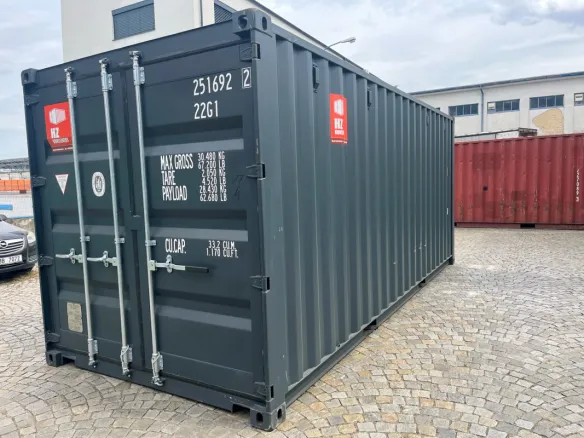
 Czech Republic, Třebíč
  FREE SHIPPING


Other container news...
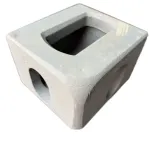
Corner casting steel vs aluminum
Every shipping container in the world — all 40 million of them — rests on eight critical components. Corner castings are the load-bearing blocks at each corner of an ISO shipping container, and they are the universal interface between the container and every crane, twistlock, spreader, and chassis on the planet. When you lift a container, stack it nine high on a ship, or lock it to a truck trailer, every ton of force flows through these fittings.

Construction cabin – selection, tips, dimensions and prices
Every construction project – whether a family house, a development project or a reconstruction – starts with the infrastructure. No construction manager, craftsman or investor who needs an on-site office, a changing room for workers or a safe storage for tools can do without a quality construction cell. But navigating the offer is not easy: residential containers, sanitary cells, storage modules, rental, purchase, refurbished pieces… This guide will give you answers to all the essential questions in one place.
Storage container
A storage container is a lockable steel box designed for the safe and dry storage of materials, tools, goods or equipment. Originally created as a shipping container for maritime transport, its durability and versatility have found their way onto construction sites, corporate premises and private land.
Shipping container 12m (40 ft)
A 12m shipping container is an investment that, if properly selected and cared for, will pay off in decades of trouble-free use. Whether you plan to use it as a warehouse, workshop, garage or the basis for a residential module — the key is careful selection of the condition, a thorough inspection before purchase and high-quality preparation of the base for placement. Take the time to compare offers, check the seller’s references and do not hesitate to personally inspect the container before buying. A properly selected 40-foot container will serve you reliably for many years.