
Shipping containers Podnanos Slovenia
Shipping containers Podnanos are in fact shipping containers offered from a specific depot location in Slovenia, not a special type of container or a separate product line. When Podnanos appears in an ad or offer, it is important information for the buyer mainly because of the price, availability, quality class of the container, and the method of transport to the Czech Republic.
Podnanos for shipping containers usually means the place where the container is physically stored, ready for pickup, or from where its further transport is organized.
This is often where the biggest confusion occurs. Many people look for a price or parameters and assume that Podnanos indicates a manufacturer, model, or special category of used container. In reality, it is primarily a logistical data point. If you understand this connection, it will be much easier for you to properly compare offers, calculate total costs, and avoid a situation where a container that looks cheap is no longer such a good deal once transport and handling are factored in.
What do shipping containers Podnanos mean?
Shipping containers Podnanos mean that the offered unit is registered, stored, or available at the Podnanos location in Slovenia. From the buyer’s perspective, it is similar to when an e-shop states from which warehouse the goods are shipped. The container itself can be a standard 20ft, 40ft, Cargo Worthy, IICL, or one-trip.
What is Podnanos in container logistics?
In container logistics, one commonly works with an extensive network of depots, transshipment points, and partner warehouses. A container is therefore not tied only to the seller’s country, but often to a specific physical location where it currently stands. This is especially important for used shipping containers, because their movement across Europe depends on the availability of units, trade flows, and current demand.
In this context, Podnanos is used as a location data point. So if you see an offer such as “shipping container 20′ CW, Podnanos, Slovenia,” you are essentially reading information about availability and the place of dispatch. This is essential for calculating transport, delivery time, and the suitability of the offer for your project.
Why does this location appear in offers for Czech customers?
A Czech customer today often does not buy from just one domestic warehouse. Sellers of shipping containers work with a European network of available units and display containers according to where they are physically stored at the moment. If a suitable 20′ container in CW class is available in Podnanos at an interesting price, it can appear in the Czech offer just as easily as a unit stored domestically.
However, this does not mean that transport will automatically be cheap or fast. The offer may be attractive thanks to the condition or purchase price, but the actual cost-effectiveness depends on the total sum of costs. This is precisely why, when searching for shipping containers Podnanos, it is so important to consider not only the price of the box itself, but also transport, placement, unloading, and any technical inspection.
Where is Podnanos located and why is it important for buying a container?
Podnanos is located in Slovenia and in the container offer it makes sense as a logistics point for units available in the wider region of Central and Southern Europe. For a buyer from the Czech Republic, this location is important because it directly affects the transport route, delivery time, and final price.
Where is Podnanos in Slovenia?
Podnanos is located in the territory of Slovenia and is relevant primarily because it is part of the European network of routes connected to ports, inland transport, and trade in used containers. In practice, this means that a container from this location can be interesting if it is in stock in suitable condition and its transport to the Czech Republic works out reasonably.
However, the customer does not need to know Slovenian geography in detail in order to make the right decision. They mainly need to know that the location of the warehouse is reflected in the price and logistics. The further the container is from the place of delivery and the more complex the handling, the greater the difference between the “price in the offer” and the “real price at the place of destination.”
How does the location affect the price and transport?
The price of a shipping container from Podnanos is not made up only of the purchase amount. The transfer from the depot, the type of vehicle, the availability of the date, the possibility of assembly at the site, and sometimes local access restrictions play a large role. If, for example, the place of delivery is poorly accessible for a larger rig, a different transport arrangement or additional equipment may be necessary.
Below is an overview of the main factors that influence the price:
| Factor | How it affects costs | Why it is important for Podnanos |
|---|---|---|
| Distance to the place of delivery | Increases the price of truck transport | Podnanos is a foreign depot, so transport is usually a separate item |
| Type of container | Changes the price of transport and handling | A 40′ container is logistically more demanding than a 20′ |
| Technical condition | Affects the purchase price | A better class is usually more expensive, but can reduce future costs |
| Loading at the depot | Sometimes included in the price, sometimes not | It is necessary to check the terms and conditions |
| Unloading at the customer’s site | May require equipment or a special vehicle | A frequent hidden cost in “cheap” offers |
| Date availability | May increase the price for express transport | Especially if you need a quick delivery |
| VAT and administration | Changes the final price | For a cross-border purchase, the pricing conditions must be read carefully |
What types and sizes of shipping containers can commonly be found in Podnanos?
When a user enters shipping containers Podnanos, they are usually not just looking for a location, but also a specific type of container. Most often, these are standard 20′ and 40′ containers, possibly their variants in CW, IICL classes, or one-trip design.
20′ and 40′ containers
The most common choice is a 20ft shipping container. It is popular for storing material, tools, equipment, and for smaller construction or operational facilities. It is more compact, easier to transport, and tends to be more practical where there is not enough space for handling.
A 40ft container makes sense at the moment when you need a larger volume or want to minimize the price per cubic meter of space. However, it is more demanding in terms of transport, unloading, and site preparation. Therefore, it does not pay off automatically; it is necessary to compare the logistical conditions of a specific project.
As a guideline, the following parameters are tracked for standard types:
| Type of container | Approximate length | Typical use | Practical note |
|---|---|---|---|
| 20′ standard | approx. 6 m | storage, smaller operations, technical facilities | most common choice for companies and private buyers |
| 40′ standard | approx. 12 m | larger storage, transport of bulkier cargo | requires more space for transport and placement |
| 40′ High Cube | approx. 12 m, greater clear height | bulky goods, conversions | advantage of greater interior space |
CW, IICL, and one-trip containers
One of the most important topics when choosing is the quality class. Ads often contain the designations CW, IICL, or one trip, i.e., a one-trip container. These terms have a direct impact on the price and suitability of use.
Cargo Worthy (CW) usually means that the container is suitable for transport and meets the basic technical requirements for further use in logistics. However, it does not mean that it looks like new. It may bear signs of use, cosmetic defects, local corrosion, or repairs.
IICL is usually perceived as a higher quality standard, often with a better overall condition and stricter requirements for technical condition. For more demanding storage or more representative use, it may be more suitable, but the price is usually higher.
One-trip container is usually an almost new unit after one transport journey. The advantage is a very good condition, the disadvantage is a higher purchase price. It is especially suitable where you want to minimize repairs, care about appearance, or plan a conversion.
| Class | What it usually means | Advantages | Limitations | Who it is suitable for |
|---|---|---|---|---|
| CW | suitable for transport and common use | lower price, good performance/price ratio | visible wear is common | storage, company operations, robust use |
| IICL | higher standard of technical condition | better condition, often less repairs | higher purchase price | more demanding buyers, more sensitive storage |
| One-trip | almost new container after one trip | minimal wear, longer service life | highest price | conversions, representative use, long-term investment |
How much do shipping containers cost in Podnanos?
The price depends on the size, condition, market, and whether it is listed with or without transport. Especially with foreign depots, it is very common for the offer price to cover only the container itself at the warehouse location.
What makes up the price of the container itself?
The basic purchase price is shaped primarily by the size of the container, its age, technical condition, and quality classification. A used 20′ CW container will usually be cheaper than a one-trip 20′ unit. Likewise, a 40′ HC is usually more expensive than a standard 20′.
The price is also influenced by current market availability. When there are more units of a certain class in a given location, the price may be more favorable than in a depot closer to the customer. This is one of the reasons why offers from Podnanos may seem very attractive at first glance.
What is and is not included in the price?
It is important to verify whether the stated price includes transport, loading, VAT, and assembly at the site. Very often it does not include everything. In practice, it then happens that a buyer compares two offers, but each is structured differently.
Typical items that are outside the basic price:
- transport to the Czech Republic,
- unloading or container assembly,
- surcharge for a specific date,
- container modifications,
- accessories such as locks, ventilation, additional doors, or electrical installation.
That is why it is reasonable not to ask just “how much does a container cost,” but rather “how much will it cost to have the container delivered and assembled on my land.” Only this question answers real decision-making.
How does shipping container transport from Podnanos to the Czech Republic work?
Transport of a shipping container from Podnanos to the Czech Republic is a separate logistics operation. It is not just a matter of hitching the container to a truck and taking it away. Every step has its technical and commercial conditions that affect both the price and the date.
What does the process from order to delivery look like?
First, a specific unit is reserved. At this stage, the buyer should confirm what class they require, whether they want 20′ or 40′, what the condition requirements are, and whether they need transport to the site. This is followed by confirmation of the storage location, commercial conditions, and usually the availability of the loading date.
Then the actual transport is addressed. The container is loaded at the depot, transported by truck, and arrives at the place of destination. There, the question of unloading comes into play: sometimes it is handled by a vehicle with appropriate equipment, sometimes external handling is needed. This is a detail that significantly changes the total price.
What conditions must the place of delivery meet?
The place of delivery must be accessible for truck equipment and at the same time prepared for the placement of the container. A free plot of land is not enough. It is necessary to address the load-bearing capacity of the surface, the width of the access road, the turning radius, obstacles above the vehicle, and enough space for handling.
If you do not verify these conditions in advance, what was originally a simple delivery can become complicated or more expensive. This applies doubly to longer 40′ containers, which require more space and better logistical preparation.
How to check the condition of a used container from Podnanos before buying?
A used shipping container can be a very good purchase if you properly assess its technical condition. It is not enough to rely on a general designation in the price list. Ideally, you should ask for photographs of the specific unit, a description of defects, and basic information about the class and past use.
What to check in the photos and technical description?
From the photos, it should be apparent what condition the corner castings, frame, doors, locks, gaskets, and floor are in. A visual inspection of corrosion is also important. With a used container, it is common for it to bear signs of operation, but the difference is between surface wear and a condition that will require immediate repairs.
Also pay attention to whether the doors close properly and whether the floor is even and free of significant damage. For storing more sensitive goods, tightness and the absence of larger deformations are essential. If the container is to be the basis for a conversion, you are also interested in the geometry of the structure and the quality of the walls.
How do shipping containers in Podnanos differ from other European depots?
The shipping containers in Podnanos themselves do not technically differ in being “Slovenian” or having any special construction. The difference is primarily in location, storage availability, and transport economics. This means that the cost-effectiveness of such an offer cannot be assessed without comparing it with other depots.
How to read an offer so it does not look cheaper than it really is?
The most important thing is to distinguish between the “depot” price and the “place of use” price. An offer without transport, without VAT, or without unloading is not bad in itself, but it must be read that way. If you are comparing two containers and one is from Podnanos without transport, while the other is already with delivery across the Czech Republic, these are not comparable amounts.
Equally important is to notice the designation AS IS, which can signal a sale without a broader guarantee of condition. Such an offer may make sense for an experienced buyer, but for ordinary storage use it can mean a higher risk of subsequent costs.
What are containers from Podnanos most often used for?
Shipping containers from Podnanos are used in the same way as containers from other depots: for storage, transport, technical facilities, and conversions. The location of the warehouse is not decisive, but rather the condition of the specific unit and the economics of its transport.
Storage, transport, and conversions
The most common use is safe storage of material, tools, machinery, or seasonal operational goods. Companies use them on construction sites, in production, in agriculture, and in logistics. The advantages are a robust steel structure, standardized dimensions, and relatively easy transportability.
Another area is conversions. A shipping container can become a workshop, a technical room, an operational warehouse, or the basis for a specialized module. For these purposes, it is usually important that the container is not significantly damaged in terms of construction and that it has the best possible preserved geometry.
When to choose a shipping container and when rather a residential or storage module?
A shipping container is a good choice when you need a robust steel box with high durability and you do not mind the industrial character of the solution. However, if you are looking for a finished space for people, with insulation, windows, electrical installation, and comfort, a residential container or modular cell is usually more suitable.
Many buyers confuse these categories. A shipping container is primarily a transport and storage structure. A residential module, on the other hand, is designed from the start for the stay of persons. A shipping container can be converted, but it is not automatically the cheapest way.
What are the most common mistakes around shipping containers Podnanos?
Around the term shipping containers Podnanos, several recurring mistakes arise. These then lead to incorrect comparison of offers or unrealistic expectations regarding price and condition.
Podnanos is not a brand or manufacturer
The first common mistake is that Podnanos sounds like a product designation. This is not the case. It is a location, not a manufacturer or a separate type of container. The actual nature of the offer is determined only by parameters such as size, class, condition, and delivery conditions.
CW does not mean “as new”
The second mistake concerns the CW designation. Cargo Worthy means that the container is suitable for a certain type of further use and meets basic technical requirements, not that it is flawless or visually representative. If someone expects an almost new appearance, they should rather look at IICL or one-trip design.
The lowest purchase price does not mean the lowest total cost
The third mistake is focusing exclusively on the basic price tag. With containers from Podnanos, the box itself may be cheaper, but once you add transport to the Czech Republic, handling, and possible repairs, the final amount may be higher than for a more expensive unit from a closer depot.
What is the future development of the shipping container market in Europe?
The market for used shipping containers in Europe is increasingly interconnected and at the same time sensitive to fluctuations in transport, material prices, and regional demand. Therefore, location data such as Podnanos will become increasingly important for buyers.
What can affect prices and availability?
Prices are influenced by several layers at once: international transport flows, availability of empty containers, seasonal demand, steel prices, and road transport costs. When there is a surplus of suitable units in a certain area, a price advantage can arise there. However, it changes quickly depending on the market.
The buyer should therefore not read one offer in isolation, but in a broader context. A favorable price today may not be available in a week, and conversely, a more expensive container may ultimately be a better choice thanks to faster delivery and lower repair costs.
Why will detailed local information become increasingly important?
The sale of shipping containers relies increasingly on a network of storage locations and transparent online offers. This means that data such as Podnanos, Koper, or other European points will play a greater role in decision-making. For the buyer, it will no longer be enough to know just the type of container. They will also have to understand where the container actually comes from and how this information changes the overall economics of the transaction.
Frequently asked questions about shipping containers Podnanos
What does Podnanos mean for shipping containers?
Podnanos usually indicates a storage or depot location in Slovenia where the container is physically stored. It is not a brand, model, or special construction type of container.
Where is the Podnanos depot located?
Podnanos is located in Slovenia and in shipping container offers it functions as the initial logistics point. It is important for the buyer mainly because of transport, date, and the final delivery price.
How to buy a shipping container from Podnanos to the Czech Republic?
It is necessary to select a specific unit, confirm its condition and class, check the price conditions, and especially calculate the transport to the Czech Republic including unloading. It is best to request a final price all the way to the place of use.
How much does a shipping container in Podnanos cost?
The price depends on the size, condition, class, and market. The offer amount often does not include transport to the Czech Republic or assembly at the site, so the final price is usually higher than the price listed at the warehouse.
What does CW quality mean for a container?
CW stands for Cargo Worthy. It is usually a used container suitable for further transport or practical use, but not necessarily a unit in a representative visual condition.
What is the difference between CW and IICL?
CW is generally the basic usable standard with common signs of operation. IICL is usually understood as a higher quality level with better technical and visual condition, and therefore is usually more expensive.
What dimensions do shipping containers from Podnanos have?
The dimensions depend on the specific type. The most common are 20′ containers with a length of approximately 6 meters and 40′ containers with a length of approximately 12 meters. The Podnanos location does not determine the dimensions.
Is transport necessary separately, or is it included in the price?
Very often, transport from Podnanos to the Czech Republic is a separate item. Therefore, it is important to check whether the stated price includes only the container at the depot, or complete delivery including handling.
Are containers from Podnanos suitable for storage?
Yes, if they have an appropriate technical condition. For storage, tightness, door functionality, floor condition, and the overall structural condition of the specific unit are mainly important.
How to check the condition of a used shipping container?
Request photographs of the specific unit, a description of defects, confirmation of the class, and ideally also information about tightness, condition of the floor, frame, and doors. For more demanding projects, a detailed inspection or personal examination is worthwhile.

 Podnanos, Slovenia
  WITHOUT SHIPPING
 Other container news...

40 Foot High Cube container cost
A 40 foot high cube container — often abbreviated as 40ft HC, 40′ HC, or 40-foot high cube — is one of the most common shipping container sizes sold on the secondary market. But if you are researching what a 40 foot high cube container costs, you have almost certainly noticed that prices are all over the map. One seller quotes $1,500. Another quotes $7,000. Both could be legitimate.
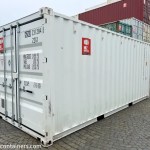
20 Foot container cost
If you have ever searched for a shipping container, you have almost certainly asked one question first: how much does a 20 foot container cost? The answer is not a single number. It is a range that spans from under $1,000 for a weathered, as-is unit to over $5,000 for a pristine, one-trip container — and that is before delivery, site preparation, or modifications enter the picture.
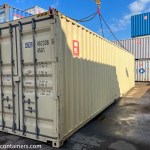
Buy shipping containers
Buying a shipping container means purchasing a standardized steel intermodal box — typically 10, 20, or 40 feet long — for use as ground-level storage, job site equipment housing, cargo transport, or architectural conversion. The right container can last decades. The wrong one can leak, rust through, or fail inspection the day it arrives. This guide covers every step of the process, from understanding what you’re actually buying to inspecting it in person and preparing your site for delivery.

20 Foot shipping container cost
If you are researching the cost of a 20 foot shipping container, you have likely already encountered wildly different prices — from $999 listings online to quotes exceeding $5,500. That range is not a sign of inconsistency. It reflects real differences in container condition, location, delivery logistics, and the seller you are dealing with.