
Shipping Containers Nitra – Slovakia
Shipping containers are an integral part of the global trade network and represent one of the most important innovations in the history of transport. These standardized shipping units enable the efficient transportation of goods around the world and have become the backbone of modern logistics. Whether you are looking for shipping containers in Nitra or elsewhere, understanding their functions and applications is key to any logistics project.
What exactly are shipping containers and how do they work?
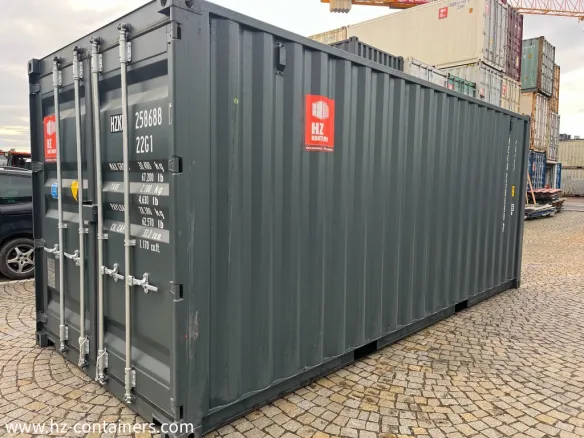
Shipping containers are standardized metal shipping units designed for transporting various types of goods by sea, road, and rail. They are rectangular structures made of a steel frame with steel walls and a roof, providing maximum protection for the transported goods.
The function of a shipping container is simple but effective. The goods are loaded into the container at the place of origin, the container is sealed, and then transported without further opening until it reaches its destination. This system minimizes handling of the goods, reduces the risk of damage, and enables easy transitions between different modes of transport – so-called intermodal transport.
Shipping containers operate on the principle of standardization. All containers meet international ISO standards, meaning they are compatible with all means of transport, from ships and trains to special trucks. This standardization is key to global trade.
| Container size | Length | Capacity (TEU) | Typical use |
|---|---|---|---|
| 20 ft (6.1 m) | 6.06 m | 1 TEU | Smaller shipments, domestic transport |
| 40 ft (12.2 m) | 12.19 m | 2 TEU | Standard international transport |
| 45 ft (13.7 m) | 13.72 m | 2.25 TEU | Higher capacity, special projects |
| 48 ft (14.6 m) | 14.63 m | 2.4 TEU | Maximum capacity in the USA and Canada |
Where did shipping containers come from and how have they evolved?
The history of shipping containers begins in the 1950s, when American entrepreneur Malcolm McLean invented the modern shipping container. Before his innovation, goods were loaded individually, which was time-consuming and expensive. McLean realized that a standardized shipping unit could revolutionize transport.
The first modern shipping containers began to be used in 1956 on the ship SS Ideal X. This groundbreaking moment changed the entire world of logistics. Over time, international standards ISO 668 were created, which standardized the dimensions and specifications of containers. This standardization allowed containers to be used on all ships and with various means of transport.
In the 1960s and 1970s, shipping containers became the dominant method of transporting goods. Ports around the world were rebuilt to handle containers efficiently. The emergence of container ports, such as Hamburg, Rotterdam, and later ports in Asia, changed the map of global trade.
In the Czech Republic and Slovakia, shipping containers became a common part of logistics from the 1980s. Today, they are available in Nitra and other cities as a standard solution for storage and transport.
How do shipping containers differ from other transport solutions?
Shipping containers differ fundamentally from traditional methods of transporting goods. Unlike loose-loaded goods, which get damaged during transport, shipping containers provide complete protection. The goods are packed once and then only the container as a whole is handled during the entire journey.
Comparison with pallets and other shipping units:
| Criterion | Shipping container | Pallet | Individual boxes |
|---|---|---|---|
| Protection against damage | Maximum | Low | Very low |
| Standardization | High (ISO) | Low | None |
| Intermodal transport | Yes | Limited | No |
| Capacity | 20-50 tons | 1-2 tons | 0.1-0.5 tons |
| Transport costs (per ton) | Low | Medium | High |
| Handling time | Minimal | Medium | High |
Shipping containers are also significantly cheaper per unit of goods compared to traditional methods. While pallets require constant handling and packaging, containers are loaded once and remain sealed until the destination. This means lower labor costs and a lower risk of theft.
What are the practical applications of shipping containers in the real world?
Shipping containers have a wide range of practical applications. In their primary role, they are used for international trade, where they enable the efficient transport of goods between continents. Electronics, textiles, food, machinery – virtually all goods can be transported in shipping containers.
Logistics and transport: This is the most common use. Containers are transported by ship from ports such as Hamburg or Rotterdam to ports in Asia and back. In the Czech Republic and Slovakia, shipping containers are used to transport goods to ports, where they are further distributed by road or rail. In Nitra and the surrounding area, containers are used to transport goods from access points to local warehouses and distribution centers.
Storage: Shipping containers are increasingly being used as permanent or temporary storage spaces. Their robust construction and protection against weather conditions make them ideal for storing sensitive goods, archival material, or tools.
Construction and industry: Containers are adapted for various industrial purposes. They are used as temporary residential units on construction sites, as workshops, offices, or mobile laboratories.
Housing solutions: In recent years, shipping containers have become a popular building material for residential units and tiny houses. Their modular character enables creative architectural solutions.
Emergency and humanitarian aid: Containers are used to transport humanitarian aid to affected areas and to provide temporary housing in the event of disasters.
What are the most common misconceptions about shipping containers?
There are several widespread misconceptions about shipping containers that need to be clarified.
Misconception 1: Shipping containers are expensive. The opposite is true. Shipping containers are one of the cheapest ways to transport large quantities of goods. Their depreciation is spread over hundreds of transports, making them very cost-effective.
Misconception 2: Shipping containers cannot be used for sensitive goods. On the contrary, containers provide excellent protection. For special goods, there are thermostatic containers and containers with controlled humidity.
Misconception 3: Containers are only for international transport. Shipping containers are also used for domestic transport and storage. In Nitra and other cities, they are commonly available for rent for both short-term and long-term use.
Misconception 4: All containers are the same. There are different types of containers with different specifications. Some are suitable for dry cargo, others for liquids, some have an open roof, etc.
Misconception 5: Buying a container once = buying forever. Containers are commonly rented. Renting is a more flexible and cheaper solution than buying, especially if you only need them temporarily.
What are the future trends and developments in the field of shipping containers?
The future of shipping containers is closely linked to digitalization, sustainability, and automation.
Digitalization and IoT (Internet of Things): Modern containers are increasingly equipped with sensors that monitor temperature, humidity, position, and the integrity of goods during transport. This data is transmitted in real time, enabling better control and optimization of logistics processes.
Sustainability and ecology: Growing awareness of climate change is leading to the development of more ecological solutions. Electric and hydrogen-powered trucks for container transport are becoming a reality. There is also growing interest in recycling and reusing containers.
Automation in ports: Ports are being automated to handle containers more efficiently. Autonomous vehicles and robotic manipulators increase capacity and reduce costs.
Modular architecture: The trend of using containers as a building material will continue. Architects and builders will look for innovative ways to use them for housing and workspaces.
Blockchain and transparency: Blockchain technology is beginning to be used to track containers and goods along the entire supply chain, increasing transparency and security.
Frequently asked questions about shipping containers
How much does it cost to rent a shipping container in Nitra?
The rental price of a shipping container in Nitra ranges from 2,000 to 5,000 CZK per month depending on the size (20 or 40 ft) and the length of the rental. Long-term rental is cheaper than short-term. Prices vary by service provider and current demand.
What is the difference between a 20 and 40 ft container?
A 20 ft container (TEU) is 6.06 meters long with a capacity of approximately 28 cubic meters. A 40 ft container (FEU) is 12.19 meters long with a capacity of approximately 67 cubic meters. A 40 ft container is more economical per unit of goods, but requires more space.
Can I buy a used shipping container?
Yes, used shipping containers are available on the market and are significantly cheaper than new ones. A quality used container can last for decades. When buying, it is important to check the condition, especially the bottom and walls, to prevent damage to goods during transport.
How long does shipping container transport take?
Maritime transport of a shipping container from Europe to Asia takes approximately 30-40 days. Road transport within Europe takes 1-5 days depending on the distance. In Nitra, transport from access points (ports, rail terminals) is fast – usually 1-3 days.
What are the most common types of container damage?
The bottoms of containers are most often damaged, which can bend or crack. Other common damage includes rust spots on the walls, dents, and door damage. A quality inspection before renting or buying is important.
Can a container be transported without a rented vehicle?
No, a container requires a special vehicle – a container trailer or a special transport vehicle. A regular truck cannot safely transport a container. Container rental usually includes the option of renting a transport vehicle.
What are the environmental impacts of shipping containers?
Shipping containers are more environmentally friendly than many other modes of transport. Maritime transport is the most efficient form of transport in terms of CO2 emissions per unit of goods. Road transport of containers is less efficient, but still better than individual shipments. The trend is moving toward electric and hydrogen-powered vehicles for container transport.
Can I modify a container myself?
Yes, containers can be modified by adding windows, doors, ventilation, and other elements. However, you should have permission from the container owner if you are renting. When you buy your own container, you have greater freedom in modifications.
How are containers transported by road?
Containers are transported on special trailers with hydraulic locks that hold the container securely in place. The vehicle must meet specific safety standards, and the driver must have the appropriate authorization. Transport is carried out in accordance with road regulations and safety standards.
 Nitra, Slovakia
  FREE SHIPPING
Other container news...

High Cube container specifications
A high cube container — also referred to as an HC container, HQ container, or high-cube — is an intermodal shipping container that stands one foot taller than the standard ISO container. While a standard general-purpose container measures 8 feet 6 inches (2.59 m) in external height, a high cube container extends to 9 feet 6 inches (2.89 m). This extra 12 inches of vertical clearance translates into approximately 10–15% more cubic capacity without altering the container’s footprint — the same length and width are maintained, meaning the container occupies the same floor space on a vessel, chassis, or storage yard.

Shipping container parts
A shipping container looks like a simple steel box from the outside, but it is an assembly of dozens of precisely engineered shipping container parts — each governed by international standards, each designed to survive decades of ocean transit, crane lifts, and stacking loads that would crush an ordinary structure. Whether you are buying a used container, planning a container home, troubleshooting a repair, or simply building your logistics vocabulary, understanding every individual component is the difference between making an informed decision and an expensive mistake.

40 Foot Container Dimensions
If you have ever booked ocean freight, planned a warehouse layout, or designed a modular building project, you have asked the same question: what are the exact 40 foot container dimensions — and what do they mean for what you can actually load? The numbers are standardized worldwide, but the practical implications of those numbers are surprisingly nuanced. A 40-foot container is not simply 40 feet of usable space, and its weight limits are not what most people assume. This guide covers every measurement, every weight rating, and every loading consideration you need to make informed decisions about the world’s most common shipping container.
Quick Answer: A standard ISO 40-foot shipping container measures 12.19 m (40 ft) long × 2.44 m (8 ft) wide × 2.59 m (8 ft 6 in) high externally and provides approximately 67.7 m³ (2,390 ft³) of usable internal volume. The maximum gross weight is 30,480 kg (67,200 lbs), with a typical payload capacity of approximately 26,700–26,800 kg (58,900–59,000 lbs).

Cargo worthy container
If you have ever shopped for a used shipping container, you have almost certainly encountered the term cargo worthy — often abbreviated as CW or CWO (Cargo Worthy Only). It is one of the most important classifications in the container industry, yet it is also one of the most misunderstood. A cargo worthy container is not a container that looks new. It is not necessarily a container that has a valid CSC plate. And it is definitely not the same as a wind and watertight container. This guide explains what cargo worthy really means — from its technical definition and historical origins to the precise structural criteria, inspection process, cost implications, and common misconceptions that trip up even experienced buyers.