
Shipping container floor: what is it made of, durability and longevity?
What is the floor of a shipping container made of?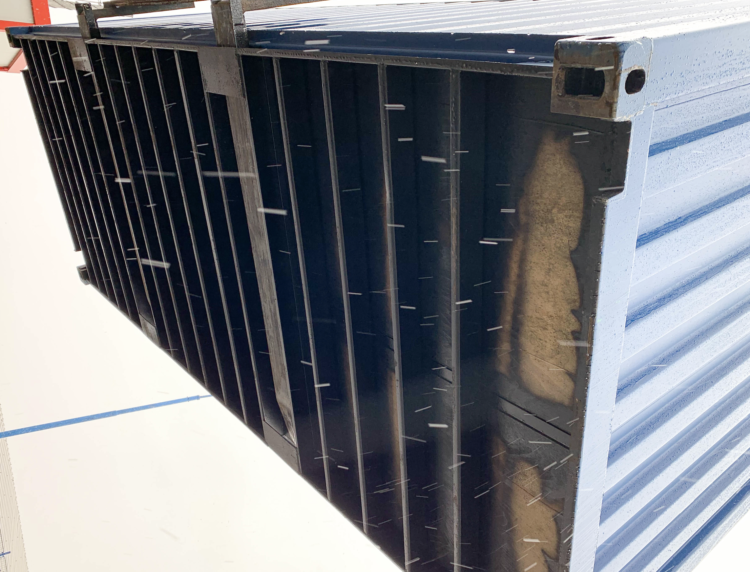
Shipping containers have floors designed to withstand extreme conditions during transport and storage. Most floors are made of hardwood, typically from exotic species like apitong or bamboo. These types of wood are highly durable and have a long lifespan, which is crucial for maintaining the container’s integrity.
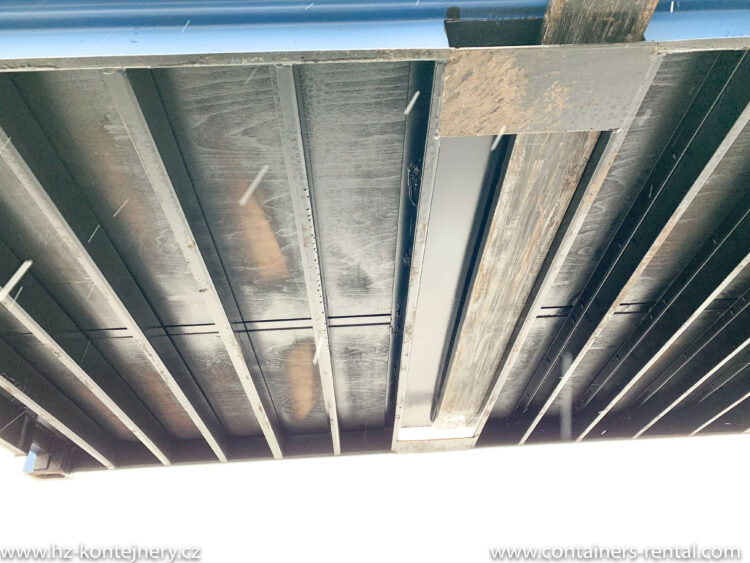
Shipping container floors are usually composed of layers of solid wooden planks attached to steel beams. This robust design ensures that the floor can handle heavy loads and resist mechanical damage during transport. Additionally, wooden floors are often coated with protective coatings that enhance their resistance to moisture and chemicals.
What is the durability of the floor in a shipping container?
Shipping container floors must be extremely durable to handle the harsh conditions of cargo transport. The wooden floors commonly used are known for their high strength and resistance. Apitong and bamboo are examples of woods that have natural resistance to wear, insects, and fungi. These properties are essential for ensuring that the floor lasts many years of intensive use.
Protective coatings on wooden floors further increase their durability. These coatings protect the wood from moisture, which is particularly important when transporting across the sea where there is high humidity. Additionally, coatings provide protection against chemicals and mechanical damage, which is necessary when handling heavy and sharp cargo.
Longevity of the floor in a shipping container
The lifespan of a shipping container floor depends on several factors, including the quality of the wood, protective coatings, and level of maintenance. Floors made of high-quality hardwoods, such as apitong or bamboo, can last 15 to 20 years or more if properly maintained.
Regular maintenance includes checking and repairing any cracks or damage, applying new protective coatings, and ensuring that the floor is clean and dry. These steps help extend the floor’s lifespan and ensure it continues to provide necessary protection and stability.
It is also important to mention that floors can be replaced or repaired if serious damage occurs. Replacing the floor may be costly, but it is an effective way to extend the lifespan of the entire container.
The floor of a shipping container is a critical part of its construction that must be highly durable and long-lasting. High-quality wood, such as apitong or bamboo, combined with protective coatings, ensures that the floor withstands the demanding conditions of transport and storage. Regular maintenance and any necessary repairs can further extend the floor’s lifespan, making shipping containers a reliable and durable solution for transporting and storing goods.
Important information for building concrete pads
When building concrete pads under a shipping container, even in the center of the container, it is important to account for the fact that the difference from the corner of the shipping container to the reinforced lower part of the container is 15 mm (see image)
This means that for building concrete pads placed elsewhere around the perimeter of the container (not just in the 4 corners), the pads must be 15 mm (1.5 cm) higher.
Concrete pads for a shipping container can also use „reinforcements around the container“ that serve as forklift forks. Note: the height difference must be accounted for here as well!

What is the height of the container’s floor itself?
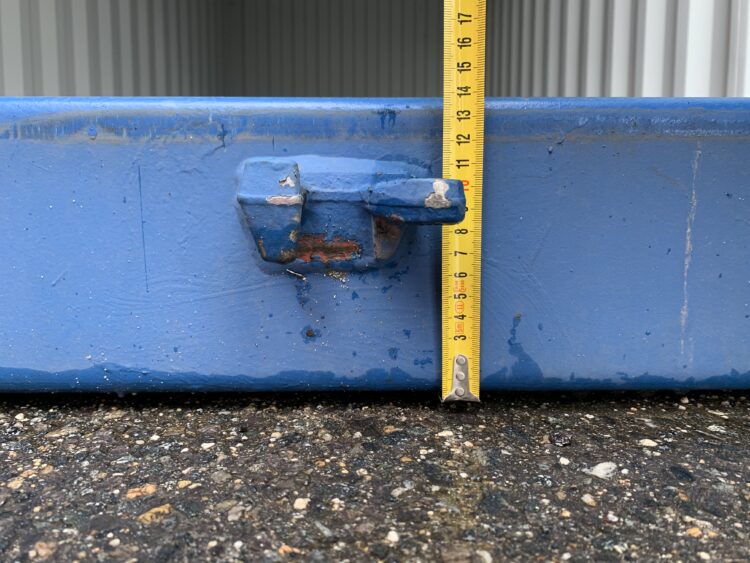
Standard dry storage shipping container – floor
The height from the ground to the start of the floor in a standard storage shipping container is approximately 140 mm (14 cm) as shown in the image, but note: the dimension may vary slightly depending on the container manufacturer. Therefore, it is advisable to always measure the specific container!
Refrigerated and cooling container – floor
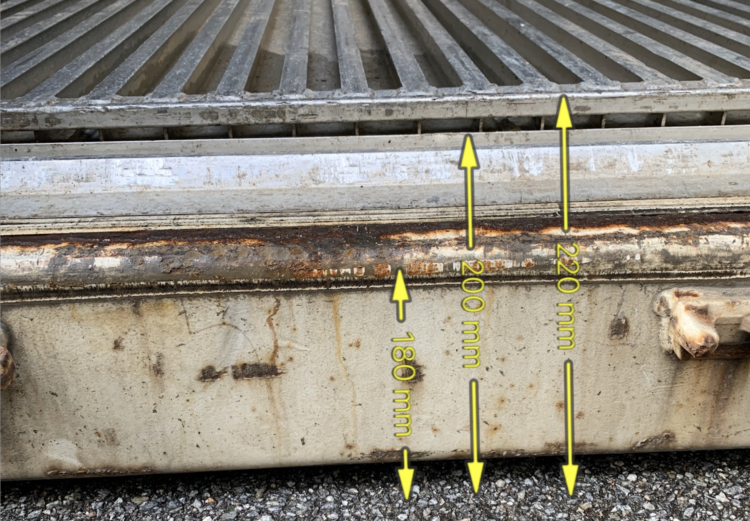
The height from the ground to the start of the floor in a refrigerated – cooling container is approximately 220 mm (22 cm) as shown in the image, with the first edge of the container floor approximately 180 mm (18 cm).
However, note: the dimension may vary slightly depending on the container manufacturer. Therefore, it is advisable to always measure the specific container!
Other container news...

20 Foot shipping container cost
If you are researching the cost of a 20 foot shipping container, you have likely already encountered wildly different prices — from $999 listings online to quotes exceeding $5,500. That range is not a sign of inconsistency. It reflects real differences in container condition, location, delivery logistics, and the seller you are dealing with.
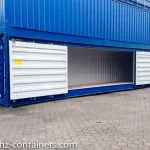
Side Opening container
A side opening container is an ISO-compliant intermodal shipping container engineered with full-length bi-fold doors along one of its long side walls, in addition to the standard cargo doors at one end. Unlike conventional containers that restrict access to a single set of rear doors, a side opening container — also widely called an open side container, open-sided shipping container, or side door container — provides unobstructed lateral access across the entire 20-foot or 40-foot length of the unit. This design transforms the container from a narrow tunnel into a wide-open space that forklifts can enter from the side, multiple workers can load simultaneously, and oversized cargo that would never fit through standard end doors can be placed without struggle.
40 Foot High Cube container cost
A 40 foot high cube container — often abbreviated as 40ft HC, 40′ HC, or 40-foot high cube — is one of the most common shipping container sizes sold on the secondary market. But if you are researching what a 40 foot high cube container costs, you have almost certainly noticed that prices are all over the map. One seller quotes $1,500. Another quotes $7,000. Both could be legitimate.
20 Foot container cost
If you have ever searched for a shipping container, you have almost certainly asked one question first: how much does a 20 foot container cost? The answer is not a single number. It is a range that spans from under $1,000 for a weathered, as-is unit to over $5,000 for a pristine, one-trip container — and that is before delivery, site preparation, or modifications enter the picture.