
Preparation and Record Keeping of Shipping Documents for Dangerous Goods
Preparation and record keeping of shipping documents for dangerous goods is a multi‑layered, legislatively strictly regulated process whose aim is to ensure safe, efficient and legally flawless transport of substances and items classified as dangerous goods. It includes a comprehensive set of activities from identification and classification of the goods, through proper packaging, labeling, preparation and verification of all documentation up to its handover to the carrier, information flow management among all links of the logistics chain, and subsequent archiving.
This process is a critical safety element in global logistics, especially in container transport, where multiple modes of transport are often combined (multimodal transport) and shipments cross state and continental borders. Thorough and correct record keeping of documents minimizes the risk of accidents, enables rapid identification of a shipment in emergency situations, and protects all parties involved from legal consequences.
Importance of Preparing and Recording Documents in Dangerous‑Goods Transport
Key aspects:
| Area | Importance |
|---|---|
| Safety | Shipping documents provide detailed information about the nature of the goods, their risks and recommended procedures in case of accident – indispensable for drivers, warehouse staff, crew and rescue services. |
| Legal compliance | Meeting documentation requirements is fundamental proof of due care by the shipper and carrier. Non‑compliance leads to heavy fines, transport bans or criminal liability. |
| Efficient communication | Standardised documentation enables error‑free information transfer between shipper, carrier, driver and consignee, reducing the risk of mix‑ups, mistakes and delays. |
| Traceability and audit | Careful record keeping and archiving allow retrospective tracking of goods movement, responsibility of each party and are essential when handling claims or incidents. |
Legislative Framework and Key International Agreements
Preparation and handling of documents for the transport of dangerous goods is detailed by a number of international conventions and codes (their requirements are also implemented into Czech legislation):
| Mode of transport | Main legislation / code | Scope, key points |
|---|---|---|
| Road | ADR (Accord européen relatif au transport international des marchandises Dangereuses par Route) | Road transport in Europe and accession countries; Chapter 5.4 ADR defines mandatory content of the transport document |
| Rail | RID (Règlement concernant le transport international ferroviaire des marchandises Dangereuses) | Rail transport in Europe and accession countries |
| Sea | IMDG Code (International Maritime Dangerous Goods Code) | International maritime transport; obligations for container shipments, packaging, labeling, documentation (e.g., Container Packing Certificate) |
| Inland water | ADN | Transport on rivers and canals in Europe |
| Air | IATA DGR (Dangerous Goods Regulations) | Air transport; very strict rules on packaging, labeling and documentation |
Note: The Czech Republic has fully implemented these agreements into its legal framework (e.g., Act No. 111/1994 Coll., on road transport, Decree No. 64/1987 Coll. on ADR, etc.).
Types of Containers and Their Role in Dangerous‑Goods Transport
In modern logistics, shipping containers (standard ISO containers, ISO tanks, IBC containers, specialised containers) are a key element for the safe transport of hazardous substances.
Main container types:
| Container type | Characteristics and use | Importance in dangerous‑goods transport |
|---|---|---|
| ISO container | Standard dimensions according to ISO 668 (20′, 40′, 45′), closed steel box | Basic transport and storage unit, sealable, labelable |
| ISO tank (tank‑container) | Special tank containers suitable for liquids, gases, chemicals | Mandatory certifications (e.g., IMO, CSC), strict pressure, material and cleaning requirements |
| IBC container | Intermediate Bulk Container, volume 500–3000 L | Suitable for smaller quantities, required UN marking, type tests |
| Special containers | For explosives (EX), radioactive materials, refrigerated (reefer) etc. | Depending on hazard class, special certificates and markings are required |
Certification requirements for containers:
- Certification according to IMO (International Maritime Organization)
- Regular inspections (CSC label – Container Safety Convention)
- UN codes, type approvals for tank‑containers
- Mandatory markings (hazard symbols, UN number, “DANGEROUS GOODS” legends, etc.)
Mandatory Content of the Transport Document (per ADR, IMDG, IATA)
Each transport document for dangerous goods must contain precisely defined data in the prescribed order (see ADR 5.4, IMDG Code 5.4, IATA DGR 8.1.6):
| Mandatory field | Description | Example |
|---|---|---|
| UN number | Four‑digit identifier of the substance/item | UN 1203 |
| Official name | Proper Shipping Name according to regulations (including technical name if required) | GASOLINE |
| Class number / subsidiary hazard | Class number (and subsidiary) according to classification (e.g., 3 for flammable liquids, 6.1 for poisons) | 3, or 6.1(8) |
| Packing group | Indication of danger level (I = high, II = medium, III = low) | II |
| Tunnel restriction code | Restrictions for passage through certain tunnel categories (road transport) | (D/E) |
| Number and description of packages | Specification of packaging – “10 drums”, “5 IBC containers”, etc. | 10 drums |
| Total quantity | Net or gross weight, volume | 2000 L |
| Shipper name and address | Identification of the party responsible for preparation and documentation | Jan Novák, Prague |
| Consignee name and address | Destination of the shipment | ABC Chemistry, Brno |
| Shipper’s declaration | Confirmation of compliance with the applicable agreement (optional, recommended) | “Shipment complies with ADR 2025” |
| Specific data per special provisions | e.g., for waste, environment, heated substances, radioactive materials | “WASTE, UN 1993, FLAMMABLE LIQUID” |
Note: For container transport, the document must also state the container number and type, and, if applicable, the seal number.
Accompanying and Related Documents
In addition to the main transport document, the following paperwork is essential, especially during inspections, incidents or audits:
- Written instructions per ADR (Instructions in Writing) – Standardised document that must be kept in the vehicle cabin; contains clear driver instructions for accidents, mandatory equipment, contacts, etc. Recommended in the driver’s language.
- Safety Data Sheet (SDS) – Mandatory source of information for classification and documentation preparation; includes detailed chemical, toxicological and environmental data.
- Vehicle/Container approval certificate – Required for the transport of highly hazardous substances, especially in EX, FL, AT and MEMU vehicles and specialised containers.
- Driver training certificate (ADR card) – Proof of completed training for dangerous‑goods transport.
- Container/Vehicle Packing Certificate – Confirms correct loading and securing of the shipment according to IMDG/ADR. Mandatory for road‑sea transport (e.g., when dispatching a container to a port).
- Permits and special authorisations – Required for certain goods (explosives, radioactive materials) from state authorities.
Electronic Record Keeping and Digitisation of Shipping Documentation
Modern logistics trends bring digitisation of shipping documentation, greatly increasing efficiency and data availability:
- e‑ADR, e‑IMDG, e‑CMR – Electronic transport documents, digital signatures, fast transmission and archiving.
- Digital archiving – Electronic storage of documents with data‑integrity guarantees; instant retrieval during inspections.
- Traceability – Digital records enable rapid tracking of shipment movement, document history, responsible persons and timestamps of changes.
- Integration with IT systems – Connection with ERP, WMS and TMS, automating data flow across the supply chain.
Note: Electronic documentation is accepted only if it meets legislative requirements (electronic signature, accessibility, backup).
Preparation and Record‑Keeping Process: Step by Step
| Phase | Description | Responsible party |
|---|---|---|
| 1. Classification of goods | Identification (SDS, lab tests), determination of UN number, class, packing group | Shipper, DGSA |
| 2. Selection of packaging and marking | Choice of certified packaging, UN marking, hazard symbols, integrity check | Shipper, DGSA |
| 3. Document completion | Careful filling of the transport document according to ADR/IMDG, including special data | Shipper, DGSA |
| 4. Document compilation | Gathering all related documents, permits, certificates, written instructions | Shipper, DGSA |
| 5. Handover to carrier | Delivery of complete documentation before loading | Shipper |
| 6. Carrier check | Verification of data accuracy, shipment‑document consistency, provision of written instructions to driver | Carrier/driver |
| 7. Record keeping and archiving | Archiving documents (minimum 3 months per ADR, usually 2–5 years per internal policies) in paper or electronic form | Shipper, carrier |
Role of the Dangerous‑Goods Safety Adviser (DGSA)
DGSA (Dangerous Goods Safety Adviser) is a mandatory figure for all companies that transport, handle or pack dangerous goods. Responsibilities include:
- Verifying correctness of classification and documentation
- Providing regular employee training
- Preparing annual safety reports
- Handling incidents and proposing preventive measures
- Liaising with regulatory authorities
Insufficient involvement of a DGSA or the absence of this function is a common cause of heavy fines during inspections.
Exceptions and Special Record‑Keeping Regimes
| Exception type | Characteristics and documentation requirements |
|---|---|
| Limited quantity (LQ) | Transport in small packages does not require a full transport document; gross weight must be communicated to the carrier, vehicle marked with the LQ symbol. |
| Exempt quantity (EQ) | Very small amounts; document may simply state “DANGEROUS GOODS IN EXEMPT QUANTITY” and the number of pieces. |
| Rule 1.1.3.6 ADR | “1000‑point rule” – allows transport of smaller amounts without some obligations, but a transport document is still required and must contain the point calculation. |
| In‑plant transport | For intra‑company short‑distance moves a simplified regime may be used, but recording and marking must not be omitted. |
 Georgia, Tbilisi
  WITHOUT SHIPPING
Other container news...

20 Foot shipping container cost
If you are researching the cost of a 20 foot shipping container, you have likely already encountered wildly different prices — from $999 listings online to quotes exceeding $5,500. That range is not a sign of inconsistency. It reflects real differences in container condition, location, delivery logistics, and the seller you are dealing with.
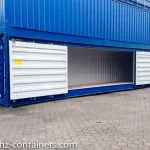
Side Opening container
A side opening container is an ISO-compliant intermodal shipping container engineered with full-length bi-fold doors along one of its long side walls, in addition to the standard cargo doors at one end. Unlike conventional containers that restrict access to a single set of rear doors, a side opening container — also widely called an open side container, open-sided shipping container, or side door container — provides unobstructed lateral access across the entire 20-foot or 40-foot length of the unit. This design transforms the container from a narrow tunnel into a wide-open space that forklifts can enter from the side, multiple workers can load simultaneously, and oversized cargo that would never fit through standard end doors can be placed without struggle.
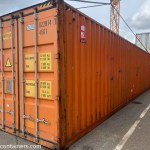
40 Foot High Cube container cost
A 40 foot high cube container — often abbreviated as 40ft HC, 40′ HC, or 40-foot high cube — is one of the most common shipping container sizes sold on the secondary market. But if you are researching what a 40 foot high cube container costs, you have almost certainly noticed that prices are all over the map. One seller quotes $1,500. Another quotes $7,000. Both could be legitimate.
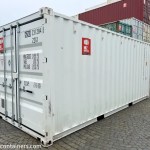
20 Foot container cost
If you have ever searched for a shipping container, you have almost certainly asked one question first: how much does a 20 foot container cost? The answer is not a single number. It is a range that spans from under $1,000 for a weathered, as-is unit to over $5,000 for a pristine, one-trip container — and that is before delivery, site preparation, or modifications enter the picture.