
Off-Road Wheels for Moving a Shipping Container
What are off-road wheels for moving a shipping container?
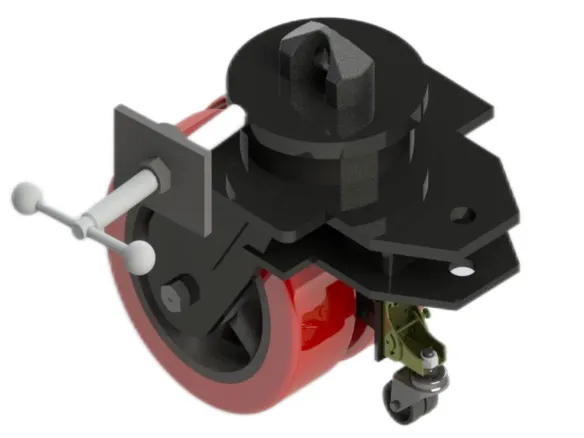
Off-road wheels for moving a shipping container, also known as transport wheels with off-road capability, are specially designed devices intended for mobilizing heavy shipping containers in demanding conditions. These are robust wheel systems with high load capacity that allow shipping containers to be moved without the need for cranes or other lifting equipment. These wheels are equipped with a twist-lock system that ensures secure attachment to the standard ISO 1161 corner castings of shipping containers.
Off-road wheels represent a revolution in logistics and container handling, especially in locations where infrastructure for more traditional transport methods is not available. Their main advantage is the ability to overcome uneven terrain, mud, gravel, and other challenging surfaces that conventional equipment could not handle. The load capacity of these wheels ranges from 3,000 kg up to 20,000 kg per set of four wheels, depending on the type and design.
Off-road wheels are manufactured from highly durable materials such as industrial rubber or polyurethane, which ensures exceptional durability and adhesion even on slippery surfaces. Each wheel is typically equipped with ball bearings and an enhanced twist-lock system that has been refined to increase safety and load capacity. Modern models often also include a braking system for additional security during transport.
Standard shipping containers (20-foot and 40-foot) are specially designed with corner locking elements (corner castings) that allow them to be handled using standardized tools. Off-road wheels utilize these corners for secure attachment and transport. In this way, the container becomes a mobile unit that can be moved without the need for special lifting equipment.
What are the main applications of off-road wheels in shipping container transport?
Off-road wheels for moving shipping containers are used in a wide variety of industrial and logistics applications. Their range of uses is very broad and continues to expand with growing demand for more flexible and efficient container handling. Practically anywhere there is a need to move a container without access to traditional handling equipment, off-road wheels prove to be the ideal solution.
Transport in ports and maritime terminals
In ports and maritime terminals, off-road wheels are used to transport containers between different areas of the terminals, especially in locations where it is not possible or economically appropriate to use large handling equipment. Operators can use off-road wheels to quickly move containers from one location to another without having to wait for crane availability. The average operator is able to move 10 to 15 containers per hour, which represents a significant increase in productivity.
Ports and terminals are increasingly relying on off-road wheels for handling empty containers and lighter loaded containers. These devices enable faster loading and unloading of ships, thereby reducing costs associated with vessel dwell time in port. Especially in smaller ports or remote locations where it is not economically justified to invest in expensive handling systems, off-road wheels are indispensable.

The use of off-road wheels in ports also reduces dependence on personnel and increases operational safety. Operators can work with containers in various weather conditions and at different times of day without having to wait for the availability of special equipment. This leads to increased terminal efficiency and reduced overall costs.
Construction sites and industrial facilities
On construction sites and in industrial facilities, off-road wheels are used for temporary storage and mobile shelters. Site managers and project designers appreciate the flexibility these devices provide — containers can be placed exactly where they are needed, without the need for later repositioning. Off-road wheels are particularly valuable on construction sites with uneven terrain, where more traditional transport methods would be inefficient or impossible.
Construction sites often use containers as mobile warehouses, offices, or temporary accommodation. Off-road wheels allow easy relocation of these units without damaging the surrounding terrain and without the need for special surface preparation. On sites with active construction, off-road wheels have proven invaluable, as they allow rapid changes in equipment layout without interrupting construction work.
Construction sites also appreciate the low operating costs of off-road wheels compared to renting expensive handling equipment. A set of off-road wheels can be purchased once and used for several years, whereas renting a crane or truck-mounted forklift would be financially costly.
Military and humanitarian operations
Military units and humanitarian organizations use off-road wheels for mobile hospitals, telecommunications stations, and warehouses in hard-to-reach areas. The ability of off-road wheels to overcome challenging terrain is critical for these applications, as quality roads and infrastructure are often not available.
Mobile hospitals can be rapidly deployed in disaster-affected areas, and off-road wheels ensure their easy relocation from one place to another. Similarly, telecommunications stations can be positioned in various locations without the need to build permanent infrastructure. Military operations also use off-road wheels to transport equipment and supplies in terrain where roads suitable for conventional vehicles are not available.
Humanitarian organizations also value off-road wheels for their ability to operate in extreme conditions. In areas affected by natural disasters, conflicts, or epidemics, off-road wheels can ensure the rapid movement of medical equipment and supplies without having to wait for the availability of special vehicles.
Temporary storage and logistics
Many companies use containers as temporary storage units in various locations. Off-road wheels enable economical handling of these units without the need to rent expensive handling equipment. Especially in agriculture, off-road wheels are used to transport containers with tools and equipment.
Logistics companies appreciate off-road wheels for their ability to work in various conditions and their relatively low operating costs. A set of off-road wheels is simpler to maintain and cheaper to operate than more traditional handling equipment. For companies that need to move containers only occasionally, off-road wheels are the ideal solution, as there is no need to invest in expensive equipment.
Logistics centers and distribution warehouses also use off-road wheels to handle containers on their premises. They allow easy relocation of containers between different parts of the facility without the need to rent special vehicles.
What are the technical specifications of off-road wheels?
Off-road wheels for moving shipping containers have very specific technical parameters that determine their performance and suitability for various applications. Understanding these specifications is key to selecting the right equipment for a specific task and ensuring safety during transport.
| Parameter | Value |
|---|---|
| Load capacity (4 wheels at 4 km/h) | 3,000 – 20,000 kg |
| Load capacity per single wheel | 750 – 6,500 kg |
| Load capacity at higher speed (20 km/h) | 50% of base load capacity |
| Wheel diameter | 250 – 630 mm |
| Wheel width | 160 – 200 mm |
| Maximum incline | 5° per wheel |
| Tire material | Polyurethane, rubber, nylon |
| Attachment system | ISO 1161 twist-lock |
| Bearing type | Ball bearing |
| Weight of set (4 wheels) | 150 – 400 kg |
Modern off-road wheels are often equipped with an enhanced twist-lock system that was refined in 2025. This system provides greater safety and allows for higher load capacities. Each set of four wheel systems is typically equipped with two sets with brakes for added control and safety.
Load capacity and loading
The load capacity of off-road wheels varies depending on the speed of movement. At lower speeds (4 km/h), the wheels can carry up to 20,000 kg per set of four wheels, which corresponds to 5,000 kg per single wheel. At higher speeds (20 km/h), the load capacity is reduced by half, i.e. 10,000 kg per set of four wheels.
This varying load capacity depending on speed is a result of the physics of motion and the dynamic forces that arise at higher speeds. When calculating the required load capacity for a specific application, it is recommended to divide the total weight (container + cargo) by a factor of 2.5 to account for terrain irregularities and dynamic influences. For example, a container weighing 800 kg with a cargo of 9,000 kg (total 9,800 kg) would require off-road wheels with a load capacity of at least 3,920 kg per set.
On uneven terrain and rough surfaces, the load on individual wheels increases, and it is therefore important to have sufficient load capacity reserve. Operators should always choose off-road wheels with a higher load capacity than theoretically required to ensure safety and longevity of the equipment.
Materials and durability
Off-road wheels are made from the most durable materials available. Polyurethane tires are the most commonly used material, as they combine high durability with good adhesive properties. Industrial rubber is used for applications requiring increased flexibility and elasticity.
Nylon is used for lighter applications and provides long service life with minimal maintenance. All these materials are selected for their ability to withstand extreme conditions, including high temperatures, frost, moisture, and chemicals. Polyurethane tires are particularly suitable for off-road applications, as they provide excellent adhesion on various surfaces regardless of weather conditions.
The ball bearings used in off-road wheels are made from high-quality steels and are packed in grease that reduces friction and extends their service life. The enhanced twist-lock mechanisms are designed to withstand repeated loading and releasing without wear or deformation.
How do off-road wheels differ from standard transport solutions?
Off-road wheels represent a qualitatively different approach to container handling compared to traditional methods such as cranes, straddle carriers, and tilt-bed trucks. A comparison of these solutions shows clear advantages of off-road wheels in specific situations and limitations in others.
| Criterion | Off-Road Wheels | Cranes | Tilt-bed Trucks | Straddle Carriers |
|---|---|---|---|---|
| Ability to overcome uneven terrain | Excellent | Limited | Limited | Limited |
| Maneuverability in tight spaces | Excellent | Good | Limited | Limited |
| Safety during transport | High | High | Medium | Medium |
| Operating costs | Low | High | Medium | Medium |
| Transport speed | Medium (4–20 km/h) | High | High | High |
| Infrastructure requirements | Minimal | Minimal | High | High |
| Operator training | Minimal | Extensive | Extensive | Extensive |
| Load capacity | Medium (up to 20 t) | High | High | High |
Off-road wheels are characterized by lower operating costs and minimal infrastructure requirements. Unlike cranes or truck-mounted forklifts, they do not require special site preparation and can operate on various types of surfaces. Their main disadvantage is lower transport speed and limited load capacity compared to heavier handling equipment.
Cranes are more efficient for vertical lifting and can lift very heavy containers, but require a special location and the operator must be certified. Tilt-bed trucks are fast and can move containers over longer distances, but require quality roads and are not suitable for uneven terrain. Off-road wheels are ideal for situations where the terrain is uneven, infrastructure is limited, and operating costs are important.
What are the most common mistakes when using off-road wheels?
Although off-road wheels are relatively simple devices, their improper use can lead to accidents, container damage, and operator injuries. Understanding these mistakes is key to safe and efficient operation.
Incorrect load distribution
One of the most common mistakes is incorrect load distribution inside the container. If the load is not evenly distributed, the container may tip over or individual wheels may be unevenly loaded. This leads to premature wear of some wheels and increases the risk of accidents.
Correct load distribution requires careful planning and inspection before starting transport. Heavier items should be placed low and closer to the center of the container. Operators should check that the container is balanced before starting to move it. In the case of uneven terrain, the load may not be evenly distributed across all four wheels, so it is important to monitor the condition during transport.
Insufficient securing of the container
Another common problem is insufficient securing of the container on the wheels. Although the twist-lock system is very reliable, it must be used correctly and checked regularly. An insufficiently secured container may shift during transport or even fall off the wheels.
All four corner points of the container should be properly secured, and the twist-lock mechanisms should be checked before each transport. Operators should be trained in the correct securing procedure and should know how to recognize whether the container is properly secured. During inspection, it is important to check that the twist-lock mechanisms rotate smoothly and are fully locked.
Ignoring terrain conditions
Many operators underestimate the effect of terrain conditions on transport safety. Mud, snow, ice and other slippery surfaces significantly reduce wheel adhesion and increase the risk of slipping or tipping. Operators should always assess the terrain before starting transport and, if necessary, choose an alternative route.
Wet terrain requires slower movement and increased caution. On slopes, the wheel braking systems should be used to prevent uncontrolled sliding. In winter, special attention must be paid to ice and snow, which can significantly reduce wheel adhesion.
Exceeding load capacity
Exceeding the maximum load capacity is a serious mistake that can lead to damage to the wheels and accidents. Operators should always know the maximum load capacity of their equipment and must respect it. When calculating load capacity, it is necessary to take into account not only the weight of the container itself, but also its contents.
It is recommended to divide the total weight by a factor of 2.5 to account for terrain irregularities and dynamic forces. If the total weight is close to the maximum load capacity, a safer approach should be taken and a system with higher load capacity should be chosen.
What are the basic procedures for safely moving containers on off-road wheels?
Safe and efficient movement of containers on off-road wheels requires adherence to clear procedures and best practices. These procedures have been developed based on many years of industry experience and are aimed at minimizing risks.
Equipment preparation and inspection
Before each use, a thorough inspection of the off-road wheels should be carried out. The operator should check:
- Condition of tires and their adhesion – tires should be clean and free of visible damage
- Functionality of the twist-lock mechanism – the mechanism should rotate smoothly and be fully functional
- Condition of bearings and smoothness of rotation – bearings should rotate without noise and without friction
- Functionality of the braking system – brakes should be fully functional and ensure stability
- Overall condition of the equipment and any damage – the equipment should be free of cracks, deformations, or other visible damage
If any damage or wear is detected, the equipment should not be used until it is repaired or replaced. Regular maintenance and inspection extend the service life of the wheels and increase safety.
Terrain assessment and route planning
Before starting transport, the terrain should be carefully assessed. The operator should:
- Identify potential obstacles and irregularities – identify stones, holes, branches, and other obstacles
- Assess the slope and surface stability – determine whether the terrain is not too steep or unstable
- Check moisture and the possibility of slipping – assess whether the surface is wet or slippery
- Plan the safest and most efficient route – choose a route that minimizes risks
In the case of challenging terrain, the route should be chosen to minimize steep hills and irregularities. On slopes, the container should be moved slowly and with caution.
Safe handling and movement
During the actual transport, the operator should:
- Move slowly and in a controlled manner, especially on uneven terrain
- Avoid sudden changes in direction and speed – abrupt maneuvers can cause tipping
- Maintain a minimum distance of 2 meters from the container during movement – to prevent injury in the event of a fall
- Never attempt to get under the container – this is very dangerous and can lead to fatal injuries
- Monitor the surroundings and be prepared for unexpected situations – always be alert and ready to react
Slow and controlled movement is the key to safety. Speed should be adapted to terrain conditions and the condition of the equipment. On average, off-road wheels should move at a speed of 4 to 20 km/h, depending on terrain conditions.
What are the trends and future of off-road wheels in container transport?
The technology of off-road wheels is constantly evolving, and there are a number of interesting trends and innovations shaping the future of this sector. These trends reflect the growing demand for more flexible and efficient logistics solutions.
Increased load capacity and improved materials
One of the main trends is the increase in load capacity of off-road wheels. Modern models achieve a load capacity of up to 20,000 kg per set of four wheels, which is a significant increase compared to older models. This increase is achieved through better materials, improved design, and an enhanced twist-lock system.
Manufacturers are also experimenting with new materials such as composite materials and special elastomers that provide better durability and adhesion. These new materials allow off-road wheels to operate in even more demanding conditions. Research and development also focuses on reducing the weight of the wheels without losing load capacity, which would facilitate their handling and transport.
Automation and intelligent systems
The future of off-road wheels also lies in automation and intelligent systems. There are experiments with autonomous vehicles towing containers on wheels, which could increase productivity and safety. Intelligent systems could monitor load, terrain, and equipment condition in real time.
These systems could also optimize routes and prevent accidents by warning operators of dangerous conditions. Integration with GPS and other technologies could enable better tracking and management of containers. Manufacturers are also working on developing sensors that could detect anomalies in loading and warn the operator of potential problems.
Sustainability and ecological aspects
The increasing emphasis on sustainability is leading to the development of more environmentally friendly off-road wheels. Off-road wheels are already more environmentally friendly than more traditional handling equipment, as they require less energy and produce fewer emissions. Future models could be even more environmentally friendly, for example by using recycled materials and reducing weight.
The use of off-road wheels also reduces the need to build permanent infrastructure, which has a positive impact on the environment. In the long term, off-road wheels can contribute to reducing the ecological footprint of logistics operations. Manufacturers are also exploring the possibility of producing off-road wheels from ecological materials and improving their recyclability at the end of their life cycle.
What are the most frequently asked questions about off-road wheels?
Operators and logistics managers often ask questions about the suitability, safety, and efficiency of off-road wheels. Here are answers to the most frequently asked questions.
How much does a set of off-road wheels weigh?
The weight of a set of four off-road wheels ranges from 150 kg for lighter models up to 400 kg for the most robust ones. This weight is important when calculating the total weight of the container and contents that the off-road wheels must carry. Lighter models are suitable for transporting lighter containers, while heavier models are designed for heavily loaded containers.
How long do off-road wheels last?
The service life of off-road wheels depends on the intensity of use, terrain conditions, and the quality of maintenance. Quality off-road wheels can last several years of intensive use. Regular maintenance and inspection are key to extending their service life. With proper maintenance, off-road wheels can last 5 to 10 years or more.
Can off-road wheels be repaired?
Yes, off-road wheels can be repaired. The most common repairs include:
- Tire replacement – tires wear out and need to be replaced
- Bearing maintenance – bearings need to be cleaned and lubricated
- Repair of the twist-lock mechanism – the mechanism can be damaged and needs to be repaired
- Replacement of the braking system – brakes can be damaged and need to be replaced
Manufacturers typically provide spare parts and repair services. It is important to use original spare parts to ensure compatibility and safety.
What is the minimum and maximum load that off-road wheels can carry?
The minimum load that off-road wheels can carry is approximately 3,000 kg per set of four wheels, which corresponds to lighter 20-foot containers. The maximum load goes up to 20,000 kg per set of four wheels, which is suitable for heavily loaded 40-foot containers.
When calculating the load, it is important to remember that it is recommended to divide the total weight by a factor of 2.5 to account for terrain irregularities and dynamic forces. Therefore, off-road wheels should be selected with a sufficient load capacity reserve.

 Czech Republic
  WITHOUT SHIPPING

Other container news...
Corner casting steel vs aluminum
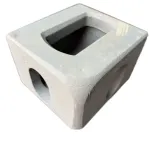
Every shipping container in the world — all 40 million of them — rests on eight critical components. Corner castings are the load-bearing blocks at each corner of an ISO shipping container, and they are the universal interface between the container and every crane, twistlock, spreader, and chassis on the planet. When you lift a container, stack it nine high on a ship, or lock it to a truck trailer, every ton of force flows through these fittings.

Construction cabin – selection, tips, dimensions and prices
Every construction project – whether a family house, a development project or a reconstruction – starts with the infrastructure. No construction manager, craftsman or investor who needs an on-site office, a changing room for workers or a safe storage for tools can do without a quality construction cell. But navigating the offer is not easy: residential containers, sanitary cells, storage modules, rental, purchase, refurbished pieces… This guide will give you answers to all the essential questions in one place.
Storage container
A storage container is a lockable steel box designed for the safe and dry storage of materials, tools, goods or equipment. Originally created as a shipping container for maritime transport, its durability and versatility have found their way onto construction sites, corporate premises and private land.
Shipping container 12m (40 ft)
A 12m shipping container is an investment that, if properly selected and cared for, will pay off in decades of trouble-free use. Whether you plan to use it as a warehouse, workshop, garage or the basis for a residential module — the key is careful selection of the condition, a thorough inspection before purchase and high-quality preparation of the base for placement. Take the time to compare offers, check the seller’s references and do not hesitate to personally inspect the container before buying. A properly selected 40-foot container will serve you reliably for many years.