
Insulation in a shipping container
Quick and Economical Solution
Insulation film in a shipping container is one of the ways to improve thermal efficiency and minimize heat loss. Nowadays, more and more people are turning to converting shipping containers into residential or work spaces. One of the key aspects of such conversions is ensuring quality insulation. Insulation film for shipping containers offers a simple, quick, and economical solution that helps you achieve optimal thermal efficiency and protection from adverse weather conditions.

Insulation film for shipping containers
Thermal Insulation Film
The thermal insulation silver film is used to maintain a stable temperature inside the container. It is a relatively simple and affordable option that is also easy to install and remove as needed. When folded, it also takes up little space and is easy to store. Thermal silver film is particularly effective when the container is exposed to sunlight in hot climates. However, to maintain a stable temperature inside the container, it is also essential to insulate the doors, walls, and other parts of the container. The film alone may not be sufficient if the entire container is not properly insulated. You can purchase it from us in the following variants.
Advantages of Insulation Film
The insulation film for shipping containers is made of thermal insulation silver aluminum foil. This material offers several advantages that make it an ideal choice for container insulation:
- Thermal efficiency: silver aluminum foil reflects sunlight, reducing container heating and minimizing heat loss. This helps maintain a stable temperature inside the container, which is crucial for protecting goods or ensuring comfort in a living space.
- Easy installation: Insulation film is very easy to install and remove. This allows quick and efficient deployment of insulation as needed, and any adjustments or repairs can be made without major issues.
- Space-saving: when folded, the insulation film takes up very little space. This means it can be easily stored and transported without taking up valuable space.
- Economy: Insulation film is an affordable solution that offers excellent value for money. This allows you to achieve the desired thermal efficiency without having to invest a lot of money.
Use of Insulation Film
Insulation film is suitable for various types of shipping containers and their uses. It can be used in cargo containers transporting temperature-sensitive goods, as well as in containers converted into living or work spaces. With proper installation, insulation film ensures a stable internal container temperature and protection from extreme temperatures, whether hot summer days or cold winter nights.
Installation of Insulation Film
Installing insulation film is quick and easy. First, prepare the surface of the container, which should be clean and dry. Then you can gradually unroll the film and, using suitable adhesive or tape, attach it to the walls, ceiling, and floor of the container. It is important to ensure that the film is firmly attached and that there are no gaps that could cause heat loss.
Combination with Other Insulation Materials
Although insulation film offers excellent thermal efficiency, to achieve maximum effect, it is recommended to combine it with other insulation materials. For additional insulation of the container walls and ceiling, you can use, for example, spray PUR foam or polystyrene boards. This ensures that the container is perfectly insulated and provides maximum comfort and protection from adverse weather conditions.
Insulation film in a shipping container is a quick and economical solution that ensures optimal thermal efficiency and protection from extreme temperatures. It offers several advantages, such as easy installation, space-saving, and economy. With proper installation and in combination with other insulation materials, insulation film can significantly improve comfort and protection inside a shipping container.
Method of Attachment to a Shipping Container
| Step | Description |
|---|---|
| 1 | The entire insulation of a shipping container takes up little space when folded and is easy to store. It can be easily installed and removed. The insulation cover is attached to the rear eyes of the container using the provided fastening tape. |
| 2 | The upper guide tape is then threaded through the side eyes. The hooks with carabiners sewn onto the insulation cover are then snapped into the guide tape. The protective film on the fastening tape is then removed. The entire insulation is then unrolled by pulling on the guide tape. For better adhesion of the insulation film to the container ceiling, the double-sided fixing tape must be pressed against the container ceiling from the inside with a broom or similar blunt object. |
| 3 | During loading and unloading, the film in the door area can be attached to the upper part of the door using an elastic fastening strap. |
| 4 | The fully installed insulation cover then covers all sides of the container. In the front part of the door there is a zipper for access to the container, which can be fully opened during loading and unloading. |
Other container news...

20 Foot shipping container cost
If you are researching the cost of a 20 foot shipping container, you have likely already encountered wildly different prices — from $999 listings online to quotes exceeding $5,500. That range is not a sign of inconsistency. It reflects real differences in container condition, location, delivery logistics, and the seller you are dealing with.
Side Opening container
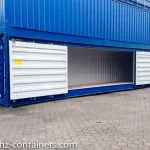
A side opening container is an ISO-compliant intermodal shipping container engineered with full-length bi-fold doors along one of its long side walls, in addition to the standard cargo doors at one end. Unlike conventional containers that restrict access to a single set of rear doors, a side opening container — also widely called an open side container, open-sided shipping container, or side door container — provides unobstructed lateral access across the entire 20-foot or 40-foot length of the unit. This design transforms the container from a narrow tunnel into a wide-open space that forklifts can enter from the side, multiple workers can load simultaneously, and oversized cargo that would never fit through standard end doors can be placed without struggle.

40 Foot High Cube container cost
A 40 foot high cube container — often abbreviated as 40ft HC, 40′ HC, or 40-foot high cube — is one of the most common shipping container sizes sold on the secondary market. But if you are researching what a 40 foot high cube container costs, you have almost certainly noticed that prices are all over the map. One seller quotes $1,500. Another quotes $7,000. Both could be legitimate.
20 Foot container cost
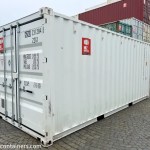
If you have ever searched for a shipping container, you have almost certainly asked one question first: how much does a 20 foot container cost? The answer is not a single number. It is a range that spans from under $1,000 for a weathered, as-is unit to over $5,000 for a pristine, one-trip container — and that is before delivery, site preparation, or modifications enter the picture.