
How long can you survive with air in a shipping container?
Survival in a sealed shipping container is an extreme situation that requires detailed analysis from the perspectives of physiology, physics, structural engineering, and safety protocols. The answer is not a simple number but a complex summary of factors influencing the realistic chance of survival. This article provides an in‑depth look at all relevant aspects – from the chemical composition of air, through construction details and ventilation, to temperature extremes and their impacts on human health.
Survival science in a closed space
Basic physiological parameters
The human body continuously consumes oxygen and produces carbon dioxide. These processes are key to estimating how long one can survive in a sealed environment.
| Parameter | Value for a resting adult (80 kg) | Note |
|---|---|---|
| O₂ consumption | 0.0055 L /kg /min, i.e., 26.4 L/h | Up to 3 × higher with physical exertion |
| CO₂ production | ≈ 22 L/h | Roughly equal to O₂ consumption |
| Atmospheric composition (%) | 21 % O₂ / 78 % N₂ / 0.9 % Ar / 0.04 % CO₂ | – |
Critical survival limits
| Gas | Safe level | First signs of danger | Lethal concentration |
|---|---|---|---|
| Oxygen | > 19.5 % | 16–15 % | < 10 % (loss of consciousness, death below 6 %) |
| CO₂ | < 0.5 % | 1–3 % (shortness of breath, headache) | > 5 % (death) |
Theoretical survival calculation for a container
For the calculation we use the most common 20‑foot dry‑van container.
| Dimension | Value |
|---|---|
| Internal volume | 33.2 m³ (33 200 L) |
| Initial O₂ volume | 6 972 L (21 %) |
| Initial CO₂ volume | 13.3 L (0.04 %) |
Calculation
- Reaching the critical O₂ level (15 %): a loss of 1 992 L, i.e., 1 992 / 26.4 ≈ 75.5 hours (≈ 3.1 days)
- Reaching the critical CO₂ level (5 %): an increase of 1 647 L, i.e., 1 647 / 22 ≈ 74.8 hours (≈ 3.1 days)
In ideal conditions, one calm person could theoretically survive up to 3 days.
Reality: Key factors affecting survival
Container airtightness
- The dry‑van construction is water‑tight but not air‑tight.
- It contains ventilation grilles (usually 2–4 per standard container) that allow limited air exchange.
- Rubber door seals degrade over time, developing micro‑cracks.
- Older or modified containers may be less sealed.
Ventilation features in practice
- PVC ventilation grille – corrosion‑resistant, easy to install, optimized opening pattern, provides airflow and moisture removal.
- Practical significance – prevents condensation, mold, and odor, but the air exchange through these openings is very low and has little effect on “breathing out” for a person inside.
Temperature and humidity – extreme risks
Physical properties of the container play a decisive role.
Container temperature – real data
| Environment | Inside temperature |
|---|---|
| Summer, direct sun | up to 57 °C (135 °F) |
| Tropical region | up to 70 °C |
| Polar region | down to –29 °C |
| Night cooling | walls retain heat, temperature drops slowly |
- Greenhouse effect – metal walls absorb and re‑radiate heat.
- Insulation – refrigerated (reefer) containers have effective insulation; standard containers do not.
- Color – light‑colored containers absorb less solar heat.
Effects on a person
- Temperatures above 40 °C – risk of heatstroke and dehydration within hours.
- High humidity – hampers breathing and impairs thermoregulation.
- Condensation (“container rain”) – water collects on walls at night, increasing moisture levels.
Physical activity and mental state
- Physical activity – struggling, panicking, or attempting escape can triple O₂ consumption and CO₂ production.
- Panic – rapid breathing can reduce survival time to one‑third of the theoretical value.
Number of occupants and internal volume
| Number of people | Theoretical survival (resting) |
|---|---|
| 1 | ≈ 72–75 h (≈ 3 days) |
| 2 | ≈ 36 h |
| 4 | ≈ 18 h |
- Load – reduces the available air volume; some cargo materials may emit toxic gases or consume O₂.
Construction of a shipping container – technical facts
| Property | Description |
|---|---|
| Material | COR‑TEN steel, high durability, strength |
| 20′ DV dimensions | 5.898 × 2.352 × 2.393 m (internal) |
| Floor | Plywood, treated against pests |
| Ventilation openings | 2–4 passive, often with PVC grille |
| Insulation | Only on reefer containers |
| Seals | Rubber profiles on doors |
Standardization and reuse
- ISO standardization – enables easy handling on ships, trains, and trucks.
- Service life – 10–15 years in maritime transport, then repurposed for warehouses, construction, or container houses.
- Alternative uses – after primary service, containers are often converted into shipping container homes, offices, garages, etc.
Extreme risks in a sealed container – reality vs. myth
| Risk rank | Type | Fatal time frame |
|---|---|---|
| 1 | Overheating | Hyperthermia – hours (sun, summer) |
| 2 | Cold exposure | Hypothermia – 1–2 days (winter) |
| 3 | Dehydration | – – 24–48 h without water |
| 4 | CO₂ poisoning | Hypercapnia – 1–3 days (depends on activity and number of people) |
| 5 | Oxygen shortage | Hypoxia – 1–3 days (usually alongside CO₂ rise) |
Real‑world examples
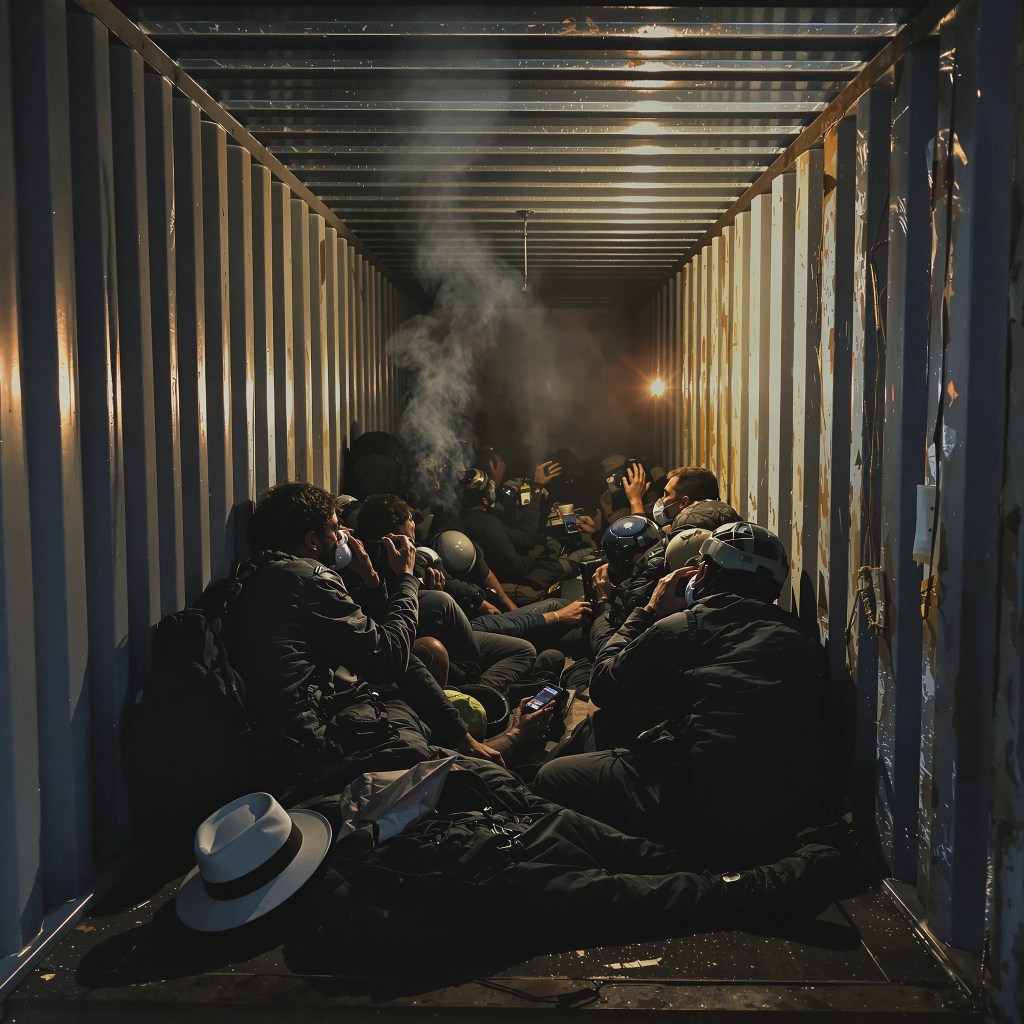
- Tragic cases of illegal migrants show that survival in a sealed container is often a matter of hours, not days.
- The combination of heat, humidity, panic, and lack of water can cause death within 24–48 hours.
Safety warnings and prevention
- Containers are NOT intended for human occupancy!
- Always ensure an escape route before entering a container.
- When converting to habitable containers, proper ventilation, insulation, and multiple exits are essential.
- Ports and warehouses enforce strict safety protocols (personnel checks, door security, ventilation verification).
Expert recommendations for container users
- Ventilation – add ventilation grilles or forced airflow for long‑term storage or human occupancy.
- Insulation – required for habitation or storage of temperature‑sensitive goods (polystyrene, PUR panels).
- Temperature and humidity monitoring – sensors are essential for food, chemicals, and electronics.
- Correct container type selection – choose refrigerated, ventilated, or insulated variants for specific purposes.
 Czech Republic, Karlovy Vary
  FREE SHIPPING
Other container news...

New sea shipping containers
If you are currently considering purchasing a new shipping container, you are not alone. While just twenty years ago containers were used almost exclusively for maritime transport, today they have found their way into construction, storage, business, and even housing. This growing popularity brings with it a host of questions: Which type should you choose? How much does it cost? How do you recognize quality? How can you avoid falling victim to scammers?
New shipping containers
If you are currently considering purchasing a new shipping container, you are not alone. While just twenty years ago containers were used almost exclusively for maritime transport, today they have found their way into construction, storage, business, and even housing. This growing popularity brings with it a host of questions: Which type should you choose? How much does it cost? How do you recognize quality? How can you avoid falling victim to scammers?

6m shipping container
Are you thinking about buying a 6-meter shipping container but aren’t sure what to look for? You are not alone—this 20-foot container is the best-selling size on the Czech market, and the differences between various types, conditions, and prices can be significant. In this guide, you will find everything you need to know: from exact dimensions and a comparison of categories (such as “one-way,” refurbished, and “Cargo Worthy”) to current prices and shipping advice.
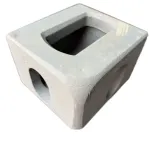
Corner casting steel vs aluminum
Every shipping container in the world — all 40 million of them — rests on eight critical components. Corner castings are the load-bearing blocks at each corner of an ISO shipping container, and they are the universal interface between the container and every crane, twistlock, spreader, and chassis on the planet. When you lift a container, stack it nine high on a ship, or lock it to a truck trailer, every ton of force flows through these fittings.