
How does sea salt affect shipping containers?
Why is sea salt such a critical issue for shipping containers?
Sea salt is one of the most aggressive corrosion factors in the maritime environment to which shipping containers are exposed. Corrosion caused by salt fundamentally influences their lifespan, safety, value, and operating costs. It is not only a visual degradation – rust and structural weakening can lead to catastrophic failures, cargo damage, and environmental impacts. Therefore, understanding this phenomenon is essential not only for logistics companies, container fleet managers, and port operators, but also for investors and users of container solutions in industry, construction, and housing.
What is sea salt and why is it so corrosive?
Chemical composition and properties
Sea salt is a mixture of salts, the main component being sodium chloride (NaCl), which makes up about 85 % of the dissolved substances in seawater. Other important ions are sulfates, magnesium, calcium, potassium, and especially chloride ions (Cl⁻). These tiny, highly mobile ions can penetrate microscopic imperfections in protective coatings and attack metal alloys, including special steels.
Key properties:
- Hygroscopicity: The salt absorbs moisture from the air, keeping the material surface wet.
- Highly conductive electrolyte: When mixed with water (e.g., rain, marine aerosol) it dramatically increases electrical conductivity, a key factor for the development of electro‑chemical corrosion.
- Chemical aggressiveness: Chloride ions disrupt protective metal layers and catalyze steel degradation.
Electrolytic nature of corrosion
Corrosion is an electro‑chemical process requiring three components:
- Anode: site of oxidation (metal dissolution)
- Cathode: site of reduction (typically oxygen consumption)
- Electrolyte: medium that allows ion movement (salty water, humid salty air)
Salty water creates an effective electrolyte; together with atmospheric oxygen and moisture it leads to rapid oxidation of iron into oxides and hydroxides – i.e., rust.
Process of corrosion in shipping containers
Materials: Cor‑Ten steel and its limits
Most containers are made from so‑called weathering steel (Cor‑Ten, Corten). This steel has increased resistance to atmospheric corrosion due to the formation of a compact protective patina that, under ideal conditions, prevents further ingress of corrosive agents.
Important:
- The protective patina works only with cycles of wetting and drying.
- In a marine environment the surface is often permanently moist (because of salt and humid air), which leads to unstable, porous, flaking rust that actually accelerates corrosion.
Types and mechanisms of corrosion
| Type of corrosion | Description | Risk for containers |
|---|---|---|
| Uniform corrosion | Even thinning of walls | Reduces load capacity, shortens lifespan |
| Pitting | Local deep corrosion “holes” | Rapid perforation, water ingress |
| Crevice | In seams, under seals, in folds | Hidden, difficult to detect |
| Galvanic | When in contact with a different metal (e.g., stainless bolts) | Accelerated degradation at the contact point |
A peculiarity of the marine environment is the presence of salt fog, where microscopic droplets of salty water coat the container surface, providing a constant supply of electrolyte and speeding up all corrosion types.
Risk factors and vulnerable spots
Geographic and climatic risks
- Tropical and subtropical zones: High temperature + humidity = extremely rapid corrosion.
- Ports and ship decks: Direct contact with salty water (spray, aerosol).
- Inland environments: Significantly lower corrosion rate.
Mechanical damage
Any scratch, dent, or gouge damages the coating and passivation of the steel and becomes an entry point for salty moisture and chlorides. High‑risk areas are especially those handled by crane, stacked, or transported.
Structural weak points
- Roof: Depressions collect standing salty water → localized corrosion.
- Undercarriage and corner elements: Constant contact with moisture, salt, mechanical wear.
- Welds: Areas of internal stress and differing microstructures, increased susceptibility.
- Door seals: Accumulation of dirt, moisture, and electrolyte → crevice corrosion.
Influence of the cargo being transported
- Transport of salt or chemicals: High internal corrosion risk.
- Hygroscopic cargo: Increased internal humidity, condensation, risk of internal corrosion.
Consequences of sea‑salt exposure
Structural and safety impacts
- Weakening of walls and load‑bearing parts, danger of collapse during stacking.
- Perforation leads to water ingress, cargo damage, mold growth, and further losses.
- In older containers, risk of failure during handling (injury hazard).
Economic consequences
- Significant costs for repairs, maintenance, and new coating applications.
- Service life reduction (from 15–25 years to <10 years in extreme conditions).
- Decreased residual value, higher insurance premiums, and replacement expenses.
Environmental impacts
- Flaking rust and old paints (often containing toxic substances) pollute marine and port environments.
- Shorter lifespan means greater raw‑material consumption and a higher carbon footprint for producing new units.
Prevention and protection: Modern technologies and practices
Protective coatings: From classic to nanotechnology
Standard multi‑layer system:
- Zinc‑rich primer: Acts as a “sacrificial anode,” corroding before the steel (cathodic protection).
- Epoxy intermediate layer: Significantly blocks water, oxygen, and chloride penetration.
- Top polyurethane/acrylate layer: Shields against UV, abrasion, and provides colour.
Modern innovations:
- Nanotechnological coatings (e.g., with carbon nanotubes): Form an extremely strong barrier, prevent micro‑cracks, have “self‑healing” properties, and allow faster wet‑on‑wet application.
- Optimised zinc primers (particle size): Boost cathodic protection efficiency and coating service life.
- Corrosion inhibitors (VCI): Release into the container interior, protecting internal surfaces from condensation and corrosion.
Higher‑resistance materials
- Stainless steel: Highest resistance, minimal maintenance, long life. High cost limits use to special containers or shelters.
- Aluminium: Light, good resistance, lower strength; suited for specific applications.
- Galvanisation, anodisation, polymer sprays: Greatly increase durability of ordinary structural steel.
Recommended maintenance procedures
- Regular washing with fresh water: Remove salt deposits after each long sea voyage.
- Visual inspections: Look for cracks, flaking paint, emerging rust spots.
- Immediate repair of damage: Local grinding and repainting of even small defects.
- Professional inspections: At least once a year (more often in extreme conditions).
Placement and operation strategies
- Shade from direct sea spray: Physical shelters, proper orientation.
- Elevated flooring: Minimise contact with water and salt at the bottom.
- Separate storage of “risky” cargo: Prevent internal corrosion.
Case studies and practical innovations
- Use of CNT‑based nanocoatings (TESLAN®): 2–3 times longer service life compared with conventional paints, reduced application time, elimination of “stripe coating” in high‑risk zones.
- Implementation of optimised zinc primers: Marked reduction of rust‑creep on exposed edges.
- Use of VCI inhibitors in containers with sensitive cargo: Significantly lower internal corrosion for long‑term stored units.
Related terms and context
- Sustainability and circular economy: Extending container life reduces demand for new raw materials, lowers ecological burden, and cuts waste generation.
- Standards and testing: ISO, NORSOK – international standards for testing coating resistance under simulated corrosive conditions.
- Logistics and planning: Efficient inspection and maintenance schedules are a key part of fleet management in maritime logistics.
 Czech Republic, Třebíč
  WITHOUT SHIPPING
Other container news...
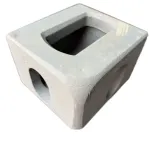
Corner casting steel vs aluminum
Every shipping container in the world — all 40 million of them — rests on eight critical components. Corner castings are the load-bearing blocks at each corner of an ISO shipping container, and they are the universal interface between the container and every crane, twistlock, spreader, and chassis on the planet. When you lift a container, stack it nine high on a ship, or lock it to a truck trailer, every ton of force flows through these fittings.

Construction cabin – selection, tips, dimensions and prices
Every construction project – whether a family house, a development project or a reconstruction – starts with the infrastructure. No construction manager, craftsman or investor who needs an on-site office, a changing room for workers or a safe storage for tools can do without a quality construction cell. But navigating the offer is not easy: residential containers, sanitary cells, storage modules, rental, purchase, refurbished pieces… This guide will give you answers to all the essential questions in one place.
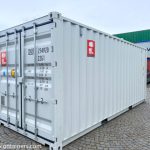
Storage container
A storage container is a lockable steel box designed for the safe and dry storage of materials, tools, goods or equipment. Originally created as a shipping container for maritime transport, its durability and versatility have found their way onto construction sites, corporate premises and private land.
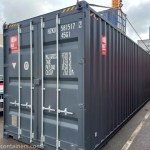
Shipping container 12m (40 ft)
A 12m shipping container is an investment that, if properly selected and cared for, will pay off in decades of trouble-free use. Whether you plan to use it as a warehouse, workshop, garage or the basis for a residential module — the key is careful selection of the condition, a thorough inspection before purchase and high-quality preparation of the base for placement. Take the time to compare offers, check the seller’s references and do not hesitate to personally inspect the container before buying. A properly selected 40-foot container will serve you reliably for many years.