
Evergreen Line
“Evergreen Line” refers to Evergreen Marine Corporation, a global leader in container shipping and logistics. The company is headquartered in Taiwan and is part of the Evergreen Group conglomerate, which has significantly contributed to the development of maritime shipping. Evergreen Marine Corporation is known for its innovative approaches, commitment to sustainability, and extensive global network. It operates more than 200 container vessels and serves international trade routes on five continents. The company has revolutionized container shipping through its commitment to efficiency, sustainability, and customer-oriented services.
Key Aspects of Evergreen Marine Corporation
1. Origins and History
Evergreen Marine Corporation was founded on September 1, 1968 by Dr. Chang Yung-fa, a visionary leader who played a key role in shaping the “Taiwan Miracle” in global maritime shipping. Evergreen’s journey began with a single 15-year-old cargo ship, but quickly grew into a logistics giant. In 1985, it became the world’s largest container carrier, particularly through its innovative bidirectional round-the-world service system.
Key Milestones:
| Year | Milestone |
|---|---|
| 1968 | Founding of Evergreen Marine Corporation |
| 1975 | Launch of container shipping between Far East and US East Coast |
| 1984 | Launch of bidirectional global line services |
| 2007 | Merger of all Evergreen shipping entities under the “Evergreen Line” brand |
In 1984, Evergreen Marine introduced its pioneering bidirectional round-the-world service, which connected eastern and western shipping routes—thereby transforming global trade logistics. The successful implementation of this service secured Evergreen Marine’s position as the world’s largest container carrier in 1985.
In 1999, Evergreen Marine established the Evergreen Seafarer Training Center, Taiwan’s first professional maritime training facility, which obtained ISO-9001:2000 certification. This center continues to provide quality training for maritime professionals and ensures safe and efficient operations.
2. Evergreen’s Contribution to the Maritime Industry
Evergreen Marine Corporation has brought significant changes to maritime shipping:
- Containerization: As a pioneer in standardized container shipping, the company played a major role in increasing the efficiency and reliability of global logistics.
- Service Network: Operates more than 150 commercial routes weekly, connecting the Far East, Europe, North America, and emerging markets in Africa and South America.
- Independent Growth: Unlike many competitors, Evergreen Marine focuses on organic growth and maintains financial independence without significant reliance on mergers and acquisitions.
The company was also instrumental in developing container terminal infrastructure, with dedicated facilities in Taiwan, Panama, and other strategic locations worldwide.
3. Fleet and Infrastructure
Evergreen Marine manages one of the most modern fleets in the industry, which includes over 220 vessels with a combined capacity of over 1.74 million TEU (twenty-foot equivalent units). These vessels are equipped to transport diverse cargo, including:
- Dry containers: For transporting general goods.
- Refrigerated containers (Reefers): For temperature-sensitive goods.
- Special containers: Designed for oversized or non-standard cargo, such as machinery and vehicles.
Evergreen Marine also operates regional transshipment hubs and specialized container terminals at strategic locations, such as Taiwan and Panama, ensuring efficient cargo handling and transshipment.
4. Sustainability Initiatives
Evergreen Marine Corporation is deeply committed to environmental protection and presents itself as a “Guardian of Green Earth.” The company has taken significant steps to reduce its environmental impact:
- Reduction of Greenhouse Gas (GHG) Emissions: Aims to reduce CO2 emissions by 70% by 2030 and achieve carbon neutrality by 2050.
- Eco-Friendly Fleet: Evergreen’s new vessels comply with MARPOL regulations regarding SOx and NOx emissions and are equipped with eco-friendly technologies, such as ballast water treatment systems and energy-saving equipment.
- Green Fuel Projects: Active investment in alternative fuels to reduce the environmental impact of maritime shipping.
5. Digital Transformation
Evergreen Marine has embraced modern digital tools to increase efficiency and improve customer experience:
- i-B/L (Intelligent Bill of Lading): A digital solution that simplifies the documentation process and supports paperless operations.
- GreenX E-Commerce Platform: Enables instant service reservations with fixed market rates for easy shipping arrangements.
- Carbon Emissions Calculator: Allows clients to measure and reduce the environmental impact of their shipments.
These digital initiatives ensure Evergreen Marine’s leading position in modernizing the maritime industry.
6. Evergreen’s Global Network
Evergreen Marine Corporation serves more than 315 locations worldwide and connects major business centers in Asia, Europe, America, and Africa. Through partnerships with other global shipping companies, it optimizes its routes and expands its service coverage.
Major Trade Routes Include:
- Far East – North America
- Far East – Europe
- Intra-Asian Services, connecting ports in the Persian Gulf, Red Sea, and Oceania.
7. Evergreen Group and Subsidiaries
As part of the Evergreen Group, Evergreen Marine Corporation collaborates with subsidiaries such as:
- Italia Marittima S.p.A. (Italy)
- Evergreen Marine (UK) Ltd. (United Kingdom)
- Evergreen Marine (Hong Kong) Ltd. (Hong Kong)
- Evergreen Marine (Singapore) Pte. Ltd. (Singapore)
The merger under the “Evergreen Line” brand in 2007 further streamlined its operations and strengthened its global identity.
8. Corporate Philosophy
The core philosophy of Evergreen Marine is “Creating profits, caring for employees, and giving back to society”, which has been the foundation of its success. The company is committed to social responsibility through:
- Employee Training: ISO-certified maritime training programs at the Evergreen Seafarer Training Center.
- Community Engagement: Investment in community development and emphasis on ethical corporate governance.
9. Ever Given and the Suez Canal Incident
In 2021, Evergreen Marine gained worldwide attention when its chartered vessel Ever Given became stuck in the Suez Canal, bringing global trade to a halt for nearly a week. Although the incident presented challenges, it demonstrated Evergreen Marine’s crisis management capabilities and its key role in global supply chains.
Frequently Asked Questions
Why is Evergreen Marine Corporation famous?
Evergreen is known for its pioneering role in container shipping, environmental initiatives, and extensive global trade network. It is also valued for its commitment to sustainability and innovation.
How does Evergreen contribute to environmental protection?
The company has committed to reducing CO2 emissions by 70% by 2030 and achieving carbon neutrality by 2050. It invests in eco-friendly vessels, alternative fuels, and digital solutions to minimize its environmental footprint.
How large is Evergreen’s fleet?
Evergreen operates a fleet of more than 220 vessels with a combined capacity of over 1.74 million TEU, ranking it among the leaders in container shipping.
What was the significance of the Ever Given incident?
The Suez Canal incident highlighted the critical role of container shipping in global trade. The event demonstrated the importance of efficient maritime logistics and infrastructure.

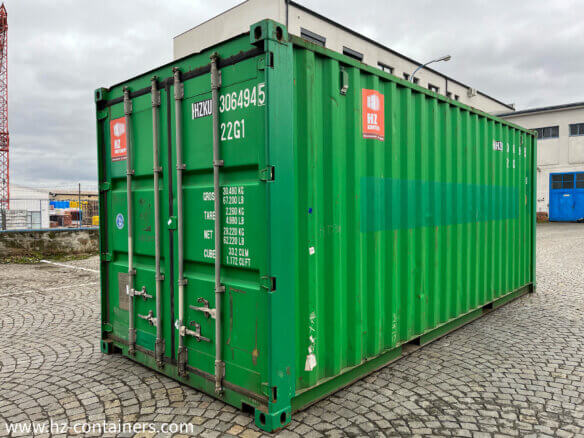
 Czech Republic, Třebíč
  FREE SHIPPING

Other container news...

The OPNBar leverage tool
The OPNBar leverage tool is a professional-grade, multi-purpose hand tool designed specifically for the shipping container and trucking industry. Manufactured by Shipping Container Safety International (SCS International) and proudly Made in the USA, the OPNBar is fundamentally a 3-in-1 trucker tool that combines a shipping container door leverage bar, a tire thumper, and a 5th wheel pull hook into a single, compact steel implement. The name “OPNBar” is a direct reference to its primary function: it is the bar that “opens” containers.

40 Foot Container Dimensions
If you have ever booked ocean freight, planned a warehouse layout, or designed a modular building project, you have asked the same question: what are the exact 40 foot container dimensions — and what do they mean for what you can actually load? The numbers are standardized worldwide, but the practical implications of those numbers are surprisingly nuanced. A 40-foot container is not simply 40 feet of usable space, and its weight limits are not what most people assume. This guide covers every measurement, every weight rating, and every loading consideration you need to make informed decisions about the world’s most common shipping container.
Quick Answer: A standard ISO 40-foot shipping container measures 12.19 m (40 ft) long × 2.44 m (8 ft) wide × 2.59 m (8 ft 6 in) high externally and provides approximately 67.7 m³ (2,390 ft³) of usable internal volume. The maximum gross weight is 30,480 kg (67,200 lbs), with a typical payload capacity of approximately 26,700–26,800 kg (58,900–59,000 lbs).
Shipping container wheels
Moving a 12-meter-long steel box that weighs up to 67,200 pounds was, for decades, exclusively a job for a crane and a licensed operator. That reality has changed. Shipping container wheels — an umbrella term covering a family of mobility solutions — now let a single person reposition a 20ft or 40ft container across a yard, warehouse, or construction site without calling in heavy equipment. This guide covers every aspect of container wheel systems: what they are, how they work, the types available, what they cost, and how to choose the right kit for your container.
Can You Modify a 40ft High Cube Container?
The short answer is yes — you absolutely can modify a 40ft high cube container, and it is one of the most popular container types for modification projects worldwide. But the real question is not whether you can modify one; it is how to do it correctly, safely, legally, and within budget. This guide answers every dimension of that question, drawing on engineering principles, real-world pricing data, and the collective experience of thousands of modified container projects.
Key Takeaway: A 40ft high cube container offers 320 square feet of floor space with an extra foot of ceiling height compared to a standard container — making it the ideal canvas for offices, workshops, homes, retail spaces, and industrial applications. The extra height is particularly valuable when you add insulation and still want comfortable headroom.