
Do Shipping Containers Have Fire Safety Certificates?
What are Shipping Containers?
Shipping containers, also known as intermodal containers, are standardized steel boxes designed for transporting goods by ships, trains, and trucks. Over time, these sturdy containers have been creatively repurposed for various applications, including storage units, temporary structures, residential homes, and even firefighter training facilities. Their structural strength, weather resistance, durability, and adaptability make them highly versatile.
However, when repurposing shipping containers, particularly for unconventional uses, questions often arise regarding their fire safety properties and certifications. This article examines whether shipping containers are fire-resistant, their inherent fire-resistant properties, and how they comply with fire regulations.
Do Shipping Containers Have Fire-Resistant Certification or Rating?
Shipping containers do not inherently have a “fire-resistant” certification. However, their construction materials and design make them naturally resistant to fire. Here is a more detailed look at why:
Material Composition
Shipping containers are primarily made from Corten steel (also known as weathering steel) or steel for use in marine environments. This highly durable, corrosion-resistant material is non-flammable and highly heat-resistant. Corten steel is widely used in structures such as bridges and skyscrapers due to its durability and fire-resistant properties. The steel shell of a container can withstand extreme temperatures without significantly losing its structural integrity.
Structural Design
The airtight design of shipping containers contributes to their fire resistance. In the event of a fire inside a container, the limited oxygen supply helps extinguish flames once the internal air is consumed. This sealing property also prevents fire from spreading to surrounding areas, provided there are no leaks or external modifications that compromise the system.
Internal Vulnerabilities
While the steel exterior is fire-resistant, the interior may contain flammable materials. For example, standard shipping containers often have wooden or bamboo floors, which can ignite during a fire. Additionally, modifications such as insulation, electrical wiring, or furniture inside the container may pose a fire risk.
Are Shipping Containers Fire-Resistant?
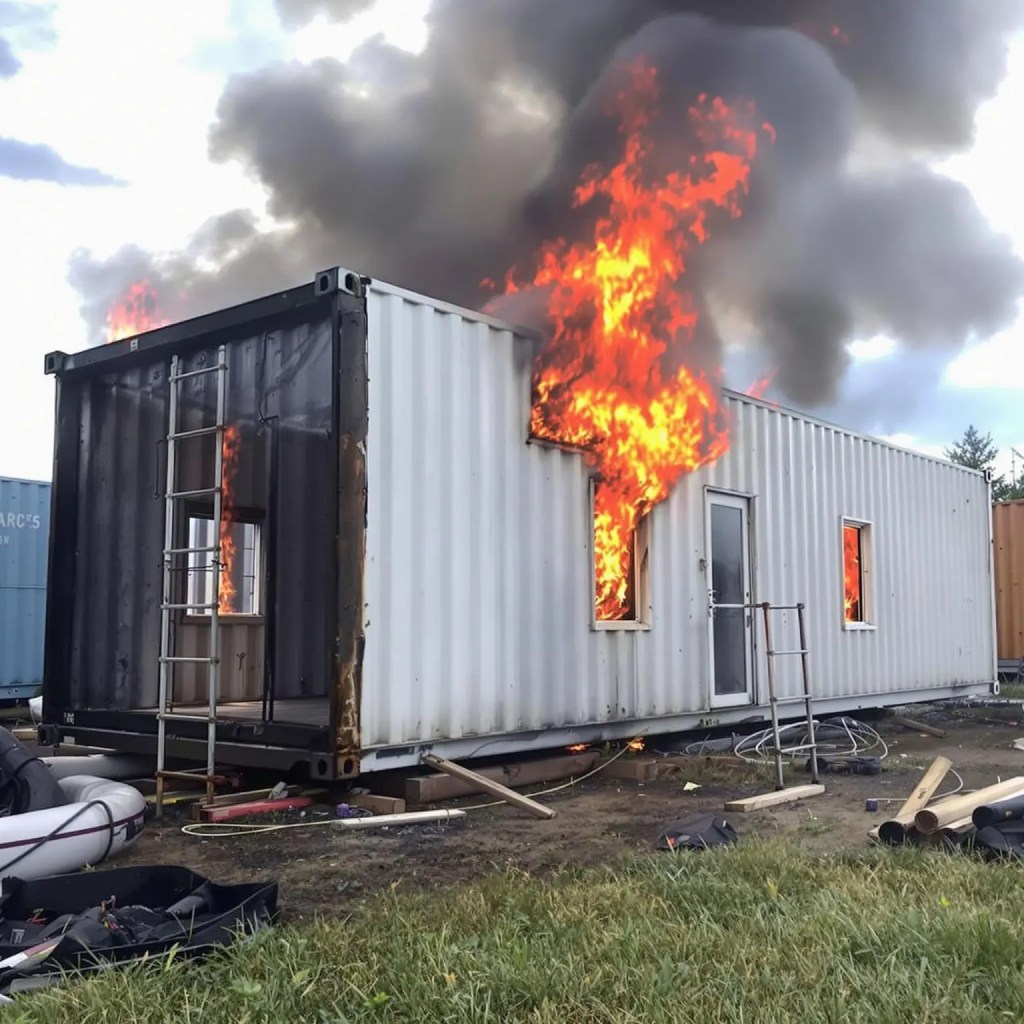
Shipping containers are not completely fire-resistant, but they exhibit significant fire resistance due to the following properties:
Fire Resistance Properties
- Steel Exterior: Steel walls are non-flammable and withstand high temperatures, preventing ignition or structural collapse.
- Limited Oxygen Supply: The sealed, airtight nature of containers limits oxygen supply, which helps extinguish internal fires.
- Containment Capability: Fires inside a container are less likely to spread outside it due to the steel enclosure.
Fire Hazards
- Flammable Interior: Modifications such as wooden floors, insulation, or stored flammable materials can ignite and sustain a fire.
- Heat Transfer: Steel is an excellent conductor of heat, and during a fire, the container’s exterior can become extremely hot, posing a risk to surrounding people or structures.
- Stored Materials: Containers containing flammable liquids, gases, or chemicals increase the risk of explosions and fire escalation.
Fire Safety Certifications for Shipping Containers
Shipping containers are typically not certified as “fire-resistant.” However, when repurposed for uses such as housing, storage, or temporary offices, fire safety requirements may need to be met. Here are key considerations:
Fire Ratings for Modifications
When converting shipping containers for secondary uses, fire-resistant modifications may be required. Common measures include:
- Installation of fire-resistant insulation materials, such as mineral wool or fiberglass.
- Addition of fire-resistant interior lining and coatings.
- Use of fire-resistant doors and windows.
- Incorporation of ventilation systems for managing heat and smoke.
Compliance with Local Standards
In many jurisdictions, converting shipping containers for residential or commercial use requires obtaining a Certificate of Occupancy. This certificate ensures compliance with fire safety and building codes.
Storage of Hazardous Materials
Containers used to store flammable or hazardous materials must comply with strict standards, such as guidelines from the National Fire Protection Association (NFPA) or regulations from the Department of Transportation (DOT) in the USA.
Fire Safety Risks and Mitigation Strategies
Key Risks
- Flammable Contents: Storing items such as fuels, paints, or chemicals can increase fire risk.
- Pressure Buildup: The airtight design of containers can lead to pressure buildup and potential explosions during a fire.
- Heat Transfer: The steel structure can transfer heat to surrounding flammable objects or buildings.
Risk Mitigation Measures
- Fire-Resistant Coatings: Apply fire-resistant coatings to interior and exterior surfaces.
- Pressure Relief Panels: Install panels to manage pressure and reduce the risk of catastrophic failure.
- Proper Ventilation: Ensure adequate ventilation for heat dissipation and prevention of pressure buildup.
- Fire Extinguishers and Alarms: Install fire extinguishers, smoke detectors, and fire alarms for early detection and suppression.
- Safe Storage Practices: Store flammable materials in approved containers and follow proper labeling.
Uses of Fire-Resistant Shipping Containers
Storage of Hazardous Materials
Shipping containers are often used to store hazardous substances such as chemicals, flammable liquids, and gases. In these cases, fire-resistant modifications and proper ventilation are essential.
Temporary Buildings
Containers serve as temporary offices, workshops, or storage units on construction sites. To ensure fire safety:
- Use fire-resistant insulation materials.
- Install smoke and heat detectors.
Firefighter Training Facilities
Firefighters often use modified shipping containers for live fire training exercises. These containers are designed to withstand controlled fires, making them ideal for training environments.
Residential and Commercial Buildings
The use of shipping containers in architecture, known as “cargotecture,” requires compliance with fire safety standards. These buildings must contain fire-resistant materials and meet local building codes.
Case Studies: Shipping Containers and Fires
- MSC Flaminia Fire (2012):
A shipping container carrying hazardous chemicals caught fire, leading to a catastrophic fire on the ship’s deck. This incident highlighted the importance of proper labeling and storage of flammable materials.
- Enderby Incident (2011, British Columbia):
A fire in a shipping container storing flammable liquids caused an explosion that tragically killed a firefighter. This event underscored the need for adequate ventilation and compliance with fire regulations.

 Czech Republic, Jeseník
  FREE SHIPPING

Other container news...
40 Foot High Cube container cost
A 40 foot high cube container — often abbreviated as 40ft HC, 40′ HC, or 40-foot high cube — is one of the most common shipping container sizes sold on the secondary market. But if you are researching what a 40 foot high cube container costs, you have almost certainly noticed that prices are all over the map. One seller quotes $1,500. Another quotes $7,000. Both could be legitimate.
20 Foot container cost
If you have ever searched for a shipping container, you have almost certainly asked one question first: how much does a 20 foot container cost? The answer is not a single number. It is a range that spans from under $1,000 for a weathered, as-is unit to over $5,000 for a pristine, one-trip container — and that is before delivery, site preparation, or modifications enter the picture.
Buy shipping containers
Buying a shipping container means purchasing a standardized steel intermodal box — typically 10, 20, or 40 feet long — for use as ground-level storage, job site equipment housing, cargo transport, or architectural conversion. The right container can last decades. The wrong one can leak, rust through, or fail inspection the day it arrives. This guide covers every step of the process, from understanding what you’re actually buying to inspecting it in person and preparing your site for delivery.

20 Foot shipping container cost
If you are researching the cost of a 20 foot shipping container, you have likely already encountered wildly different prices — from $999 listings online to quotes exceeding $5,500. That range is not a sign of inconsistency. It reflects real differences in container condition, location, delivery logistics, and the seller you are dealing with.