
Decommissioned shipping container price
Retired Shipping Container: Price and Uses
Retired shipping containers are becoming an increasingly popular choice not only in transportation but also in various construction projects, including warehouses, housing, and commercial spaces. To learn more about the prices and usage options for these containers, you are in the right place. You can find our complete offer of retired shipping containers for sale here: retired shipping containers price
What is a retired shipping container?
A retired shipping container is a container that is no longer used for its original purpose of transporting goods by sea. These containers are still in good technical condition and can be used for various purposes. They are robust, weather-resistant, and have a long lifespan. A retired shipping container represents a practical and cost-effective solution for storage and other uses. What exactly does the term „retired“ mean in the context of shipping containers and what other uses can these containers have? Let’s take a closer look.
Definition of a Retired Shipping Container
A retired shipping container is a container that was originally used for transporting goods by sea, but its lifespan in this role has ended. However, this does not mean that the container is non-functional or unusable. On the contrary, most retired containers are still in good condition and can offer much utility in various areas.
Why are Containers Retired?
Shipping containers are subject to strict international regulations and standards that ensure the safety and efficiency of maritime transport. When a container reaches a certain age or shows signs of wear, it may be retired from active transport. However, this does not mean it loses its value. A retired container can still be robust, durable, and fully functional for other purposes.
Advantages of Retired Shipping Containers
- Affordability: Retired containers are often much cheaper than new containers. This is ideal for those looking for a cost-effective solution for storage or construction.
- Durability and Longevity: These containers are designed to withstand extreme conditions at sea, which guarantees their strength and durability.
- Versatility: Containers can be easily adapted to various needs. You can use them as storage, living spaces, offices, or even as a basis for construction projects.
- Eco-friendly Approach: Recycling retired containers reduces the need for producing new materials, which contributes to environmental protection.
Disadvantages:
1. Wear and Tear: Retired containers may show signs of wear, such as rust or minor damage.
2. Transportation Costs: Transporting containers can be expensive, especially if special equipment, such as a crane, is needed.
What Factors Affect the Price of Retired Shipping Containers?
The price of retired shipping containers can be influenced by several factors:
- Condition of the Container: The price often depends on the condition of the container. Containers that are in very good condition with minimal wear will be more expensive than those with visible signs of use.
- Size: The price also varies depending on the size of the container. The most common sizes are 20′ and 40′. Larger containers generally cost more.
- Location: Transportation costs can also affect the overall price. Containers located closer to your area may be cheaper due to lower shipping costs.
- Supplier: Different suppliers may offer different prices, so it is important to conduct thorough market research.
- Purpose: Clarify what purpose you will use the container for. This will help determine what modifications will be needed.
- Transportation: Consider the costs and logistics associated with transporting the container to its destination.
Where to Find Retired Shipping Containers?
You can find retired shipping containers on various online marketplaces and specialized websites, where you may come across a wide range of containers in different sizes and conditions. A wide range of retired shipping containers at a low price can also be found here: offer and price of retired shipping containers from a trusted and reliable supplier.
Tips for Buying a Retired Shipping Container
- Inspect the Container in Person: If possible, inspect the container in person before purchasing. This ensures that the container meets your expectations and is in good condition.
- Check for Seals: Make sure the container is tight and has no leaks that could cause problems during storage.
- Ask About the Price: Each quality and size of the shipping container is priced differently. Many sellers are willing to offer a discount if you are buying multiple containers at once.
- Consider Transportation: Before purchasing, ensure you have arranged transportation of the container to its destination. Some sellers offer transportation as part of the service, which can be advantageous.
Uses of Retired Shipping Containers
Retired shipping containers can be used in various areas:
- Storage: Containers are ideal for storing various types of goods, tools, or materials.
- Housing: Increasingly, people are converting containers into residential homes. They are affordable and can be customized according to specific needs.
- Commercial Spaces: Containers can serve as mobile offices, shops, or cafes.
- Construction Projects: Containers can be used as a base for various construction projects, such as schools, hospitals, or cultural centers.
RETIRING SHIPPING CONTAINERS AT AN AFFORDABLE PRICE
Retired shipping containers offer an affordable and versatile solution for various needs. Whether you are looking for storage space, housing, or commercial space, a retired container could be an ideal choice. When purchasing a container, make sure you consider all important factors, such as condition, size, and location, to get the best possible value for your money. Their flexibility and durability make them an ideal choice for many different uses. If you are looking for a robust and adaptable space, a retired shipping container could be exactly what you need.
Other container news...

20 Foot shipping container cost
If you are researching the cost of a 20 foot shipping container, you have likely already encountered wildly different prices — from $999 listings online to quotes exceeding $5,500. That range is not a sign of inconsistency. It reflects real differences in container condition, location, delivery logistics, and the seller you are dealing with.
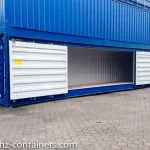
Side Opening container
A side opening container is an ISO-compliant intermodal shipping container engineered with full-length bi-fold doors along one of its long side walls, in addition to the standard cargo doors at one end. Unlike conventional containers that restrict access to a single set of rear doors, a side opening container — also widely called an open side container, open-sided shipping container, or side door container — provides unobstructed lateral access across the entire 20-foot or 40-foot length of the unit. This design transforms the container from a narrow tunnel into a wide-open space that forklifts can enter from the side, multiple workers can load simultaneously, and oversized cargo that would never fit through standard end doors can be placed without struggle.
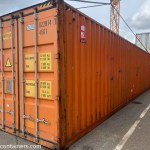
40 Foot High Cube container cost
A 40 foot high cube container — often abbreviated as 40ft HC, 40′ HC, or 40-foot high cube — is one of the most common shipping container sizes sold on the secondary market. But if you are researching what a 40 foot high cube container costs, you have almost certainly noticed that prices are all over the map. One seller quotes $1,500. Another quotes $7,000. Both could be legitimate.
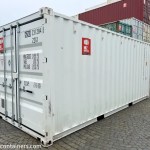
20 Foot container cost
If you have ever searched for a shipping container, you have almost certainly asked one question first: how much does a 20 foot container cost? The answer is not a single number. It is a range that spans from under $1,000 for a weathered, as-is unit to over $5,000 for a pristine, one-trip container — and that is before delivery, site preparation, or modifications enter the picture.