
ADR/IMDG Training and Certification – Scope, Obligations, Validity, Types of Training
What is ADR/IMDG Training and Certification?
ADR/IMDG training and certification is an education system that is inseparably linked to safety and legal operations in the transport of dangerous goods. This area is legislatively anchored at several levels: the European Agreement ADR for road transport, the IMDG Code for maritime transport, and is based on the UN Model Regulations. Certification is necessary for all persons who come into contact with dangerous goods in any way, from handling to administration.
Key Legal Foundations
| Type of Transport | Main Regulation | Updates | Scope of Application |
|---|---|---|---|
| Road | ADR | Every 2 years | Europe, countries with ADR agreement |
| Maritime | IMDG Code | Every 2 years | Worldwide, maritime transport |
| Rail | RID | Every 2 years | Europe, direct connection to ADR |
| Air | IATA-DGR | Annually | Worldwide, air transport |
| Inland Waterway | ADN | Every 2 years | Inland water transport |
The basis for all these regulations is the UN Model Regulations, which ensures a high degree of compatibility between different types of transport and countries.
Training Objectives
- Teach personnel to correctly identify, classify, and pack dangerous goods.
- Ensure safe marking and documentation (see detailed requirements below).
- Minimize risks to health, the environment, and property.
- Ensure compliance with all current legislative requirements.
Why is ADR/IMDG Training Absolutely Critical?
Prevention of Accidents and Protection of Lives
Every year, dozens of accidents related to the transport of dangerous substances occur in Europe and worldwide. Incorrectly marked containers, improperly packed chemicals, or lack of knowledge of safety procedures can lead to leaks, fires, or explosions. Proper training ensures that employees:
- Know the rules for packing and marking according to ADR/IMDG (see marking table below).
- Can safely handle individual classes of substances (flammable, toxic, explosive, radioactive, etc.).
- Are able to respond quickly and effectively in case of accidents and leaks of dangerous substances.
Protection of the Environment and Property
In the event of a leak of, for example, oil or corrosive substances into the aquatic environment, long-term ecological disaster can occur. Properly trained personnel know how to prevent such incidents, how to properly separate incompatible substances, and how to properly secure transport units.
Compliance with Legislation
Ignorance of the law is no excuse. Inspections by environmental authorities, customs authorities, or the police are frequent in the area of dangerous goods transport. Failure to provide training or poor documentation can result in fines in the hundreds of thousands and prohibition of activities.
Efficiency and Supply Chain Continuity
Properly trained personnel minimize the risk of shipment delays, rejection at ports or borders, which leads to reduced costs and increased company reliability.
Preparedness for Emergency Situations
Training also includes practice of emergency situations – leaks, fires, accidents. Employees know who to inform, how to proceed during evacuation, and how to minimize damage.
Basic Concepts and Regulations
Brief Overview of Regulations by Type of Transport
| Abbreviation | Full Name | Area of Application | Main Focus |
|---|---|---|---|
| ADR | Accord européen relatif au transport international des marchandises Dangereuses par Route | Road transport | Rules for packing, marking, documentation, vehicles, drivers |
| IMDG | International Maritime Dangerous Goods Code | Maritime transport | Rules for containers, ships, packing, marking, loading |
| RID | Regulations concerning the International Carriage of Dangerous Goods by Rail | Rail transport | Rules for wagons, packing, marking |
| IATA-DGR | Dangerous Goods Regulations | Air transport | Strict limits, packing, marking, personnel training |
| ADN | European Agreement concerning the International Carriage of Dangerous Goods by Inland Waterways | Inland waterway transport | Specific conditions for ships and packing |
Classification of Dangerous Goods
Dangerous goods are divided into 9 classes:
- Class 1: Explosive substances and articles
- Class 2: Gases
- Class 3: Flammable liquids
- Class 4: Flammable solids
- Class 5: Oxidizing substances and organic peroxides
- Class 6: Toxic and infectious substances
- Class 7: Radioactive materials
- Class 8: Corrosive substances
- Class 9: Other dangerous substances and articles
Each substance is assigned a UN number, which must be stated on the packaging and in documents.
Obligations – Who Must Be Trained?
According to Chapter 1.3 of ADR and IMDG, everyone who must be trained:
- Packs, repacks, marks, labels, and prepares dangerous goods for transport.
- Loads and unloads packages/containers onto vehicles or ships.
- Prepares transport documentation (CMR, DGD).
- Plans, orders, or organizes the transport of dangerous goods.
- Drives a vehicle transporting dangerous goods (including below-limit quantities).
- Performs the function of safety advisor (DGSA).
Note: The obligation also applies to agencies and freight forwarding companies that only mediate transport.
Types of ADR/IMDG Training
Overview of Forms and Content of Training
| Type of Training | Intended For | Main Content | Certificate Validity |
|---|---|---|---|
| General Awareness | Every employee coming into contact with dangerous goods | Basics of regulations, classification, marking, documentation | 2 years |
| Position-Specific | According to specific function (packer, warehouse worker, administrator) | Detailed instructions for packing, marking, loading, documentation | 2 years |
| Safety Training | Workers handling dangerous goods | Accident prevention, use of PPE, emergency procedures | 2 years |
| ADR Driver Training | Drivers of vehicles transporting above-limit quantities | Detailed knowledge of ADR, obligations, technique, accidents | 5 years |
| DGSA Training | Safety advisors | Comprehensive knowledge of ADR/IMDG, report preparation, risk analysis | 5 years (exam required) |
| Refresher Training | Anyone whose certification is expiring | Updates in legislation, review of key topics | 2/5 years |
Practical Forms of Training
- In-person training (most common for drivers and DGSA)
- Online e-learning (for general awareness, specific functions, and safety)
- Combined forms (theory online, practice in-person)
Scope and Content of Training
Each training must cover:
1. Legislative Framework
- Structure of ADR/IMDG, main parts (Annex A/B, Parts 1–9)
- Obligations of transport participants
2. Classification and Identification
- Classes of hazard, UN numbers, correct transport name
- Instructions for using Table A of Chapter 3.2 of ADR
3. Packaging and Packing
- Requirements for approved UN packages, codes, closure, tightness control
- Separation of incompatible substances, group packing
4. Marking and Labeling
Each piece (package + dangerous substance inside) must be clearly marked:
| Package Volume/Weight | Minimum Font Height for UN Number | Additional Requirements |
|---|---|---|
| > 30 l or >30 kg, bottles >60 l | 12 mm | UN number and hazard label |
| ≤30 l or ≤30 kg, bottles ≤60 l | 6 mm | UN number and hazard label |
| ≤5 l or ≤5 kg | Proportional to size | UN number and hazard label |
- The hazard label must be directly on the package surface and must not be covered.
- Orientation arrows are mandatory on two opposite sides of the piece (e.g., group packages with liquids).
5. Transport Documentation
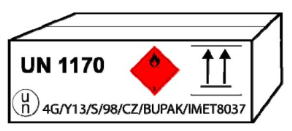

- Bill of lading (CMR), transport declaration (DGD), driver instructions
- Mandatory details: UN number, correct name, class, packing group, number and type of packages, total quantity, name and address of sender and recipient
6. Loading, Unloading, and Separation
- Rules for safe cargo securing
- Separation of substances that must not be transported together
- Inspection of package integrity before and after loading
7. Exemptions and Reliefs
- Limited quantities (LQ), excepted quantities (EQ) – simplified conditions, lower requirements for marking and documentation
8. Obligations of Participants
- Shipper, carrier, recipient, packer, loader, performer, unloader – each has precisely defined obligations that must be known
9. Safety and Emergency Procedures
- Emergency plans, procedures for leaks, fires, accidents
- Notification to relevant authorities (Police, Fire and Rescue Service, Environmental Protection Authority, Customs Authority)
Validity and Certification
| Type of Training/Certification | Validity | Extension |
|---|---|---|
| General and Position-Specific Training | 2 years | Refresher course |
| ADR Driver (Certificate) | 5 years | Refresher + exam |
| DGSA Advisor | 5 years | Exam at the Ministry of Transport |
A certificate is proof of compliance with legal obligations and can be in paper form, digital, or on a plastic card. The obligation to keep records of training is set by law for at least the duration of the training validity + 1 year.
Practical Tips and Recommendations
- Regularly monitor updates to regulations (ADR/IMDG changes every 2 years, changes may affect training content).
- Maintain records of trained employees including date and scope of training.
- Use a combination of e-learning and practical training for efficient training of a larger number of employees.
- Do not forget refresher training – timely repetition is key to maintaining compliance.
- Consult complex cases with DGSA – a safety advisor is mandatory for most companies that regularly transport dangerous goods.
Frequently Asked Questions (FAQ)
Is there a difference between ADR training for drivers and general awareness training?
Yes, driver training is more in-depth, includes vehicle technology, emergency response, is concluded with an exam and issuance of an ADR card. General awareness training is shorter, more theoretical, and intended for other personnel.
Can training be completed online?
Yes, most training for general and specific functions is available in e-learning format. Driver and DGSA training is typically combined and includes an in-person component.
What are the consequences of not providing training?
Fines up to hundreds of thousands of CZK, prohibition of activities, legal liability in case of accident. The company bears full responsibility for damage caused by untrained personnel.
How often must training be repeated?
General/position-specific training every 2 years, ADR driver and DGSA every 5 years.
How to properly mark a package with a dangerous substance?
Mandatory is the UN number (e.g., UN 1203), hazard label corresponding to the hazard class, font size according to package volume, weather-resistant marking, and possibly orientation arrows.
 Czech Republic, Třebíč
  FREE SHIPPING

Other container news...

Obligation to Check Tightness When Selling a Reefer Container
Who is responsible for the refrigerant leak check when selling a refrigerated container? Find out what obligations the seller has at the time of handover and why they must provide a PTI report along with the technical data plate. Learn which regulatory requirements and F-gas record-keeping duties become the sole responsibility of the new owner.

New shipping containers
If you are currently considering purchasing a new shipping container, you are not alone. While just twenty years ago containers were used almost exclusively for maritime transport, today they have found their way into construction, storage, business, and even housing. This growing popularity brings with it a host of questions: Which type should you choose? How much does it cost? How do you recognize quality? How can you avoid falling victim to scammers?
New sea shipping containers
If you are currently considering purchasing a new shipping container, you are not alone. While just twenty years ago containers were used almost exclusively for maritime transport, today they have found their way into construction, storage, business, and even housing. This growing popularity brings with it a host of questions: Which type should you choose? How much does it cost? How do you recognize quality? How can you avoid falling victim to scammers?

6m shipping container
Are you thinking about buying a 6-meter shipping container but aren’t sure what to look for? You are not alone—this 20-foot container is the best-selling size on the Czech market, and the differences between various types, conditions, and prices can be significant. In this guide, you will find everything you need to know: from exact dimensions and a comparison of categories (such as “one-way,” refurbished, and “Cargo Worthy”) to current prices and shipping advice.