
Stacking Cone SZ-1

What is the Stacking Cone SZ-1?
The Stacking Cone SZ-1 is a specialized device used in container securing systems to ensure the stability and safety of stacked containers during transport by sea or land. It functions as an intermediate connector that aligns and stabilizes two vertically stacked containers, enabling safe arrangement on ships, trucks, and terminals. It is designed to withstand dynamic forces, such as ship movement (e.g., pitching, rolling, and yawing) or vibrations during land transport.
Key Features:
- Durable Material: Typically manufactured from high-quality steel or corrosion-resistant alloys, ensuring long service life even in harsh marine conditions.
- Compatibility: Designed to fit into corner castings of containers complying with ISO standards, including 20-foot, 40-foot, and 45-foot sizes.
- Low Weight: Weighing approximately 3 kg, it combines lightweight construction with high strength for easy handling and installation.
This stacking cone is primarily used in container cargo handling systems. It serves as a solid connection point that transfers shear forces between containers and increases stack stability during transport.
Key Features of the Stacking Cone SZ-1
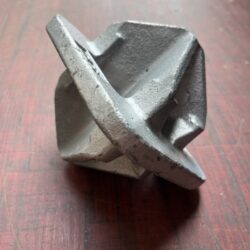
- Intermediate Connector:
- Positioned between two containers, the SZ-1 prevents both horizontal and vertical displacement.
- ISO Standard Compliance:
- Ensures compatibility with corner castings of standard ISO containers and supports various container types.
- Durability:
- Manufactured from high-strength materials resistant to corrosion and material fatigue in marine environments.
- Alternative Designations:
- Known under various codes depending on the manufacturer, such as IS-1/115, E1-5-3, or F447-2-2.
- Wide Application:
- Used on container ships, river vessels, in intermodal transport, and in container depots for container securing.
Functions in Container Securing Systems
The SZ-1 plays a key role in container securing and fastening systems and performs the following main functions:
1. Alignment:
- Enables precise vertical alignment of stacked containers, minimizing risks during harsh marine conditions or sudden vehicle movements.
2. Force Transfer:
- Transfers shear forces and ensures stack integrity under dynamic loading, such as wind or ship movement.
3. Enhanced Safety:
- Prevents container displacement or collapse, thereby reducing the risk of accidents.
4. Efficiency:
- Enables higher stack layering, optimizes cargo transport capacity, and reduces shipping costs.
Applications of the Stacking Cone SZ-1
1. Container Ships:
- Secures containers on decks and below decks using supplementary equipment, such as twistlocks and securing bars.
2. River Vessels:
- Stabilizes containers during transport on inland waterways.
3. Container Depots:
- Used in terminals for safe container stacking during loading/unloading.
4. Intermodal Transport:
- An integral part of systems where containers are transferred between ships, trucks, and trains.
Related Terms
- Container Securing: Fastening containers to prevent movement during transport.
- Twistlocks: Devices that complement stacking cones in container securing.
- Cargo Securing Manual: Documentation describing methods and equipment for cargo safety.
Why is the Stacking Cone SZ-1 Important?
The significance of the SZ-1 includes several aspects:
- Safety: Ensures safe container stacking even under extreme conditions.
- Efficiency: Enables higher stacking for cost-effective transport.
- Standards Compliance: Meets global shipping standards.
- Versatility: Suitable for various container sizes and applications.
Frequently Asked Questions
Question 1: What materials is the SZ-1 made from?
- It is typically manufactured from high-strength steel or corrosion-resistant alloys.
Question 2: How does the SZ-1 differ from other stacking cones?
- It is lightweight, durable, and specially designed for shear force transfer.
Question 3: Can the SZ-1 be used with non-standard containers?
- Although designed for ISO standard containers, modifications may be available.
Question 4: Where can the Stacking Cone SZ-1 be purchased?
- Available from HZ CONTAINERS.
The Stacking Cone SZ-1 is an indispensable component of modern container cargo transport, ensuring safety, efficiency, and compliance with international standards. Designed for durability and versatility, it plays a key role in securing containers in various transport modes and environments, thereby supporting the global logistics network.

 Czech Republic
  WITHOUT SHIPPING

