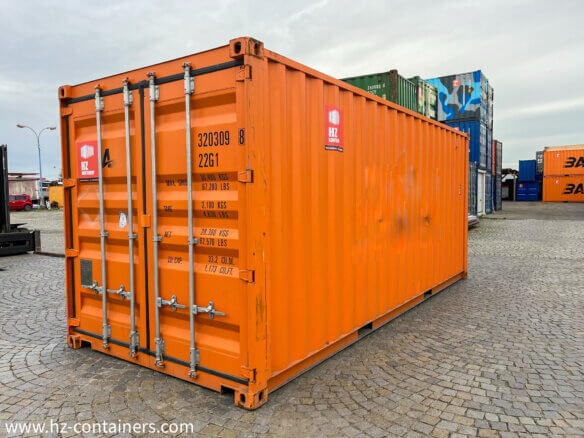
Shipping Container iC 61
The term Shipping Container iC 61 refers to a specific type of intermodal transport container with the designation “iC 61”. This classification emphasizes its compatibility with certain international railway networks, in this case specifically with Korean National Railways, as indicated by the number “61” in the code. These containers fall into the broader ecosystem of ISO-standardized intermodal containers, which are essential for seamless transportation of goods across various transport modes, including ships, trains, and trucks.
The prefix “iC” stands for “InterContainer”, a designation ensuring that containers meet international safety and compatibility standards for railway transport. The designation iC 61 thus guarantees that the container meets specific certification and safety requirements of the Korean railway system, as confirmed by organizations such as the Korean Railroad Research Institute (KRRI).
Key Features of Shipping Containers
Shipping containers, including those with the iC 61 classification, are standardized, durable structures designed for safe transportation and storage of goods. They play a crucial role in global trade and form the backbone of containerization, which enables efficient and large-scale movement of goods.
1. Standardized Dimensions and Types
Shipping containers are available in various sizes and configurations, with the most common being:
- 20-foot and 40-foot containers (standard and High-Cube).
- Standard containers have a height of 8 feet 6 inches (2.59 meters).
- High-Cube containers are slightly taller, reaching a height of 9 feet 6 inches (2.90 meters).
- Internal dimensions:
- A standard 20-foot container has an internal length of 5.898 m, width of 2.362 m, and height of 2.393 m.
- A High-Cube 40-foot container offers greater capacity with an internal height of 2.698 m.
These dimensions are standardized according to ISO regulations, ensuring compatibility within global transport systems, including railways, shipping lines, and road transport.
2. Construction and Materials
Shipping containers are made from durable steel (such as Corten steel), which ensures long lifespan even in harsh maritime and environmental conditions. Their robust construction guarantees:
- Resistance to wind and water, which protects cargo from external elements.
- Compliance with CSC (Convention for Safe Containers) standards, which ensure adherence to international safety and inspection requirements.
A CSC plate is attached to each container containing important technical information, such as maximum weight, stacking strength, and inspection dates.
3. Markings
Each container is equipped with specific alphanumeric codes that provide information about ownership, dimensions, and compatibility with transport systems. The designation iC 61 means:
- iC: Certification for InterContainer railway transport.
- 61: Compatibility with Korean National Railways.
These markings are key to ensuring easy identification and safe movement across international borders and transport networks.
Significance of the “iC 61” Designation
The designation iC 61 is part of a broader system of railway safety certifications, which determine the compatibility of containers with specific national railway systems. This certification ensures that containers marked as iC 61 meet safety, construction, and operational requirements within Korean railway infrastructure.
For example, the Korean Railroad Research Institute (KRRI) conducts tests and certifications to ensure that these containers meet strict safety protocols. The iC certification system is internationally recognized and is essential for ensuring interoperability between different railway systems. Other examples of iC designations include:
- iC 70: Certification for British Railways.
- iC 80: Certification for Deutsche Bahn (German Railways).
- iC 87: Certification for SNCF (French National Railways).
Key Elements of Shipping Container Markings
Shipping containers, including those marked iC 61, typically contain a range of standardized markings. These markings are essential for identification, international regulation, and safe handling. The most important markings include:
1. Container Number
A unique alphanumeric sequence consisting of four letters and seven digits. The format is as follows:
- Owner code: The first three letters identify the container owner.
- Equipment category identifier: The fourth letter, usually “U”, indicates that the container is intended for cargo transport.
- Serial number: A six-digit numeric sequence assigned by the owner.
- Check digit: A single digit verifying the correctness of the container number.
2. ISO Code
A four-digit code indicating the size and type of container:
- The first two digits specify the container dimensions.
- The last two characters describe its type (e.g., refrigerated, general purpose, High-Cube).
For example, the code 22G1 designates a 20-foot standard container, while 45G1 designates a 40-foot High-Cube container.
3. Gross Weight and Tare Weight
- Maximum gross weight: The total capacity of the container including cargo, typically around 30 tons.
- Tare: The weight of an empty container, which ranges between 4 to 10 tons.
4. CSC Plate
The CSC (Convention for Safe Containers) plate is a metal plate attached to the container containing technical specifications and inspection certifications. It ensures compliance with international safety standards.
Uses of Shipping Containers iC 61
Containers marked iC 61 are exceptionally versatile due to their compatibility with multiple transport modes and compliance with Korean railway standards. Their common uses include:
1. Intermodal Cargo Transport
These containers are designed for seamless movement between ships, trains, and trucks without the need to unload cargo. Their standardized size and robust markings simplify logistics on international trade routes.
2. Railway Transport in South Korea
The iC 61 certification enables the transport of these containers across the Korean National Railways network. This ensures safe and efficient delivery of goods within South Korea and to neighboring countries via railway.
3. Global Transport
Although specifically certified for Korean railways, containers marked iC 61 are also suitable for worldwide transport, provided they meet broader ISO standards.
4. Storage Solutions
Many businesses use shipping containers as storage units for goods, tools, and equipment. Their durable construction and weather protection make them ideal for temporary or long-term storage.
Advantages of Using Shipping Containers iC 61
1. Standardization
ISO and iC certifications ensure that these containers are compatible with a wide range of transport systems, reducing logistical complexity.
2. Durability
Made from steel resistant to weather, these containers are built to withstand harsh conditions during transport and storage.
3. Efficiency
Their intermodal design enables quick transitions between transport modes, minimizing delays and reducing costs.
4. Flexibility
Available in various sizes and configurations, containers such as iC 61 can meet diverse cargo needs.
Frequently Asked Questions (FAQs)
Question: What does “iC 61” mean on a shipping container?
Answer: The designation “iC 61” means that the container is certified for railway transport on the Korean National Railways system. “iC” stands for “InterContainer” and “61” specifies the railway certification.
Question: Can iC 61 containers be used outside Korea?
Answer: Yes, containers marked as iC 61 meet international ISO standards and can be used globally, although their specific railway certification is intended for Korea.
Question: What dimensions are available for iC 61 containers?
Answer: iC 61 containers are typically available in standard lengths of 20 feet and 40 feet, as well as in High-Cube variants for greater capacity.
Question: Are these containers resistant to weather?
Answer: Yes, all ISO certified containers, including iC 61 models, are designed to be resistant to wind and water.
Closing Thoughts
The Shipping Container iC 61 is a highly specialized transport container designed for multimodal transport with unique certification for use on Korean National Railways. Its compliance with international standards ensures reliability, safety, and compatibility, making it an invaluable element in global trade and logistics. Whether for transport, railway shipping, or storage, these containers continue to revolutionize the way goods are transported worldwide.

 Czech Republic, Třebíč
  FREE SHIPPING