
Decommissioned Shipping Containers
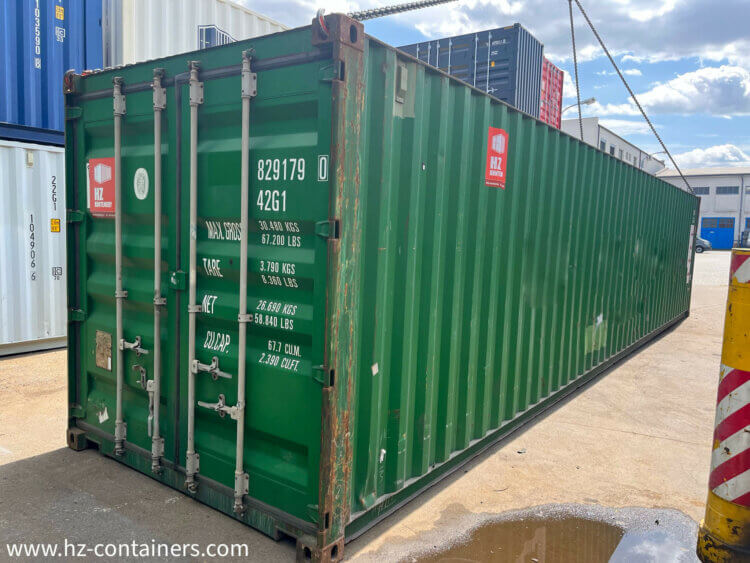
AS IS is the designation for decommissioned shipping containers from transport. This designation means that a maritime container is sold in its current state, without warranties or modifications. The designation “AS IS” indicates that a shipping container may have various defects, visible or hidden damage, wear or deterioration.
What are decommissioned shipping containers?
Decommissioned shipping containers are containers that no longer serve their original purpose – transporting goods by sea. After several years of use, these containers are retired from active service, yet they can still be utilized for various purposes. This is an ecological and economical way to extend the lifespan of these robust and durable containers.
Most common uses of decommissioned shipping containers
Storage: Decommissioned containers are ideal for storing materials, tools, machinery and other items. Thanks to their solid construction, they ensure a safe and dry environment.
Construction: Containers can be used as building elements for various structures. Popular examples include container homes, which are cost-effective, quickly implemented and ecological.
Mobile offices and workshops: With minimal modifications, a decommissioned shipping container can be converted into a mobile office or workshop. These containers can be equipped with electrical installations, air conditioning and other necessary elements.
Condition of decommissioned containers: There are three standard categories for decommissioned shipping containers:
AS IS 10, AS IS 5, AS IS 2
The higher the number, the worse the quality. The number following AS IS is a designation used to describe the condition and functionality of the container. This is a standard designation indicating that the container is sold in accordance with its current condition and without further modifications or repairs. The numbers following the “AS IS” designation refer to the degree of wear or age of the container.
Decommissioned shipping containers: Everything you need to know
When selecting a decommissioned shipping container, it is important to consider:
- Dimensions: Ensure that the container meets your spatial requirements.
- Condition: Check the condition of the container and decide whether renovation is necessary.
- Type: Select the type of container according to your specific needs (storage, housing, office, etc.).
Why choose a decommissioned shipping container?
Decommissioned shipping containers represent an excellent option for those seeking affordable, ecological and flexible solutions for storage, housing or other purposes. Thanks to their robust construction and customization options, they are an ideal choice for various applications. If you are interested in using decommissioned shipping containers, do not hesitate to explore the options and find a container that best suits your needs.
Decommissioned shipping containers AS IS: What it means and how to use them
Decommissioned shipping containers, also known as containers in “AS IS” quality, are containers that have been retired from regular operation in maritime transport. These containers may be damaged, older in manufacture or no longer meet modern transport and safety standards. Despite this, they still have a wide range of uses outside of maritime transport.
What are AS IS containers?
AS IS containers are often referred to as “as is,” which means they are sold in the condition in which they were retired. These may be containers with minor damage, corrosion or wear, which however do not prevent their further use. These containers are no longer suitable for transporting goods by sea, but can still be functional and practical for other purposes.
Most commonly used types of shipping containers
20′ DC (Dry Container): Standard container with a height of 2.6 m and length of 6 m, suitable for most storage and transport needs.
40′ HC (High Cube): A taller variant of the standard container with a height of 2.9 m and length of 12 m, providing more space for storage or conversion.
Refrigerated containers: Special containers designed for transporting and storing goods requiring regulated temperature.
Containers with side doors: Allow easy access to the container contents from the side, simplifying cargo handling.
DECOMMISSIONED CONTAINERS FOR SALE – COMPLETE OFFER HERE

 England, London
  WITHOUT SHIPPING


Possibilities for using decommissioned containers
- Storage: One of the most common uses of decommissioned shipping containers is storage. Thanks to their robust construction and resistance to weather conditions, they are ideal for storing tools, materials or personal items.
- Shelters: Containers can be converted into temporary or permanent shelters. They are used, for example, as garages, workshops or warehouses for agricultural machinery.
- Mobile offices: With some modifications, containers can be converted into mobile offices. They are ideal for construction sites or other temporary workplaces where you need to quickly create a work space.
- Shops and kiosks: Decommissioned containers also find application in the commercial sphere. Many entrepreneurs use them to create mobile shops, cafes or stands.
- Housing: With growing interest in alternative housing, containers are becoming a popular material for building cheap and ecological shipping container homes. They can be easily converted into living spaces with all amenities.
Advantages and disadvantages of using decommissioned containers
Advantages:
- Price: Decommissioned containers are generally cheaper than new ones. Acquiring a decommissioned container is thus usually much cheaper than buying a new one. Additionally, their maintenance and modifications are relatively simple and low-cost.
- Availability: They are easily available and can be purchased in various sizes and conditions.
- Versatility: Due to their construction and durability, they can be used for a wide range of purposes.
- Ecological benefit: Recycling and reusing decommissioned containers helps reduce waste and maintain ecological balance.
- Flexibility: Containers can be easily adapted to various needs and uses, making them a universal solution for many applications.
Disadvantages:
- Condition: It may be necessary to perform repairs or modifications to make the containers fully functional.
- Aesthetics: They may have visible signs of wear that may require aesthetic modifications.
Decommissioned shipping containers AS IS represent a practical and affordable solution for various needs. Whether you are looking for storage space, a mobile office or material for building alternative housing, decommissioned containers offer a wide range of possibilities. When purchasing them, it is important to consider the condition of the container and any potential costs for repairs or modifications.
The difference in designations such as “AS IS 10”, “AS IS 5” and “AS IS 2” indicates the degree of wear on the container. Individual digits following the “AS IS” designation indicate the required number of working hours to bring the container to Cargo Worthy quality
Detailed description here:
AS IS 10
The designation “shipping container AS IS 10” indicates that the shipping container is in a heavily worn condition and approaching the end of its lifespan, which is also reflected in the very low price. It may have visible signs of wear, damage, rust or other serious defects that could affect its functionality. However, it always depends on what the further purpose of such a container should be. If you do not require the container to be waterproof and fully functional and, for example, you only need to secure garden equipment against theft, store tires, etc., such a container may be completely sufficient.
AS IS 5
The designation “shipping container AS IS 5” indicates that the decommissioned shipping container is still functional, but has a moderate level of wear. There may be visible signs of use and minor damage, but generally it still serves its purpose without problems. Again, here it depends on the further purpose of the container for which it is being purchased. It can be used, for example, for short-term storage of outdoor scooters, bicycles or skates overnight in an area where there are not particularly high demands on the risk of intrusion into the container.
AS IS 2
The designation “shipping container AS IS 2” designates a container in good condition with minimal wear. It may have rather small signs of use and its functionality is generally considered satisfactory. Such a shipping container is most often acquired for the purpose of storing undemanding material.
It is important to realize that the degree of wear or age of the container indicated in the “AS IS” designation may be subjective and may vary depending on the seller or carrier.
When a decommissioned container is designated as “AS IS”, it means that the seller provides no warranties regarding the condition or functionality of the container. All responsibility for inspecting and assessing the container before purchase is transferred to the buyer. It is therefore important to conduct a possible personal inspection of the container before purchase so that you are aware of its condition.