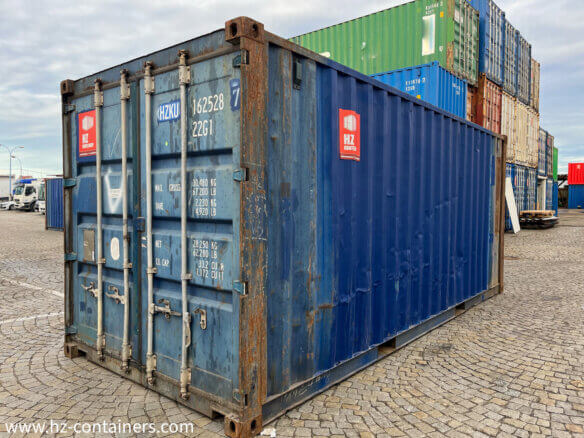
Trieste – Italy Container Port
Container port Trieste is one of the most important logistics centers in Europe and represents a key point connecting the Mediterranean with Central and Eastern Europe. Located at the northern end of the Adriatic Sea in the Italian region of Friuli-Venezia Giulia, this port serves as a strategic gateway for international maritime transport and container operations. With modern infrastructure and high processing capacity, the container port of Trieste has become an essential player in the global maritime logistics network.
Where is the container port of Trieste located and what is its historical significance?
Trieste is a historically significant port city with roots dating back to the Austro-Hungarian Empire. The city is located in northeastern Italy, more specifically in the Friuli-Venezia Giulia region, on the shores of the Adriatic Sea. The geographical location of the port of Trieste is one of its greatest advantages – it lies at the crossroads of routes connecting the Mediterranean Sea with Central Europe, the Balkans, and Central European countries.
Historically, the port of Trieste was an important trading center during the Austro-Hungarian Empire. After the collapse of the empire and the emergence of modern Italy, the port transformed into one of the key gateways for Italian trade. Today, the container port of Trieste ranks among the fastest-growing ports in Europe, thanks to its strategic location, which allows direct connections with countries such as Austria, Hungary, the Czech Republic, Slovakia, and Germany.
The port of Trieste is also characterized by its status as a free port (Free Port of Trieste), which means it has special customs and tax regimes that facilitate trade and reduce bureaucracy for commercial operations.
What capacity and infrastructure does the container port of Trieste have?
The infrastructure of the container port of Trieste is modern and well-equipped to handle large volumes of cargo. The main port operator is Trieste Marine Terminal (TMT), which manages the most modern container facilities in the region.
Basic port parameters
| Parameter | Value |
|---|---|
| Number of berths | 5 berths |
| Length of quay | Over 1,000 meters |
| Annual capacity | Approximately 1.2 to 1.6 million TEU |
| Type of handling | Containers, Ro-Ro, general cargo |
| Modern equipment | Ship-to-shore cranes, mobile cranes, automated systems |
| Storage area | Extensive storage facilities and yards |
The port of Trieste is equipped with modern ship-to-shore cranes capable of handling large container ships. The facility is equipped with mobile cranes that provide flexibility in cargo handling. The terminal also offers automated solutions for more efficient container processing and reduced ship turnaround time.
The storage capacity of the port of Trieste is extensive, with space for both empty and full containers. The port also has special zones for various types of cargo, including hazardous materials, refrigerated units, and oversized cargo.
Rail and road connections
One of the key advantages of the container port of Trieste is its excellent connection to the rail network and road corridors. The port has direct rail connections with more than twenty inland destinations in Europe, including Austria, Hungary, the Czech Republic, and Germany.
The port of Trieste is also part of the Trans-European Transport Network (TEN-T), which ensures coordinated connections with other European ports and logistics centers. This infrastructure enables efficient transport of containers from sea to land using combined transport (intermodal logistics).
How does the container port of Trieste differ from other Italian ports?
Italy has several important ports for container transport, but the container port of Trieste is distinguished by its strategic location and focus on trade with Central and Eastern Europe.
| Port | Location | Annual Capacity | Main Advantages | Focus |
|---|---|---|---|---|
| Trieste | North of the Adriatic Sea | 1.2–1.6 million TEU | Access to Central Europe, free port, lower prices | Central and Eastern Europe |
| Genoa | Ligurian Sea | Over 2 million TEU | Largest Italian port, direct access | Global trade |
| Venice | North of the Adriatic Sea | Over 200,000 TEU | Close to Trieste, smaller port | Regional trade |
| Gioia Tauro | Tyrrhenian Sea | Over 3 million TEU | Largest in the south, transshipment hub | Transshipment |
The container port of Trieste has several competitive advantages. First, its location in northern Italy makes it an ideal entry point for trade with Austria, Hungary, the Czech Republic, and Germany. Second, the free port status means lower customs costs and simpler procedures. Third, handling and storage prices are often more competitive than in Genoa, which is larger but also more expensive.
Genoa, despite being the largest Italian port, is more focused on global trade and has higher prices. Venice is smaller and less equipped. Gioia Tauro in southern Italy serves primarily as a center for transshipment of containers between large ships.
What services and operations does the container port of Trieste offer?
The container port of Trieste is not only a place for loading and unloading containers. The terminal offers comprehensive services that cover the full spectrum of logistics needs.
Basic services
- Loading and unloading of containers (loading/unloading) – Modern cranes enable fast processing of ships with large container capacities.
- Container storage – Long-term and short-term storage of empty and full containers.
- Cargo handling – Repackaging, inspection, and preparation of cargo for further transport.
- Services for ships – Piloting, mooring, maintenance, and ship repairs.
Extended logistics services
- Intermodal connections – Direct connection to rail transport for combined transport (rail-road).
- Container Freight Station (CFS) – Services for unpacking and packing non-standard cargo.
- Customs processing – Direct customs procedures at the terminal, which shortens processing times.
- Services for Ro-Ro cargo – Handling of vehicles, machinery, and large items.
- General cargo – Processing of oversized and special cargo.
Free port – special advantages
Thanks to its free port status, the container port of Trieste offers special customs regimes. Goods can be stored, processed, and repacked without immediate payment of duties and taxes. This means significant cost savings and greater flexibility for commercial operations.
How does container processing work at the container port of Trieste?
The container processing procedure at the port of Trieste is structured and optimized to minimize ship turnaround time.
Typical import process
- Ship arrival and planning – The ship is assigned to a specific berth and a loading/unloading plan is prepared.
- Unloading – Ship-to-shore cranes unload containers from the ship onto the quay area.
- Transport to the yard – Mobile cranes or automated guided vehicles (AGVs) transport containers to the storage yard.
- Storage and inspection – Containers are stored and undergo customs inspection.
- Pickup – The customer picks up the container either directly from the terminal or has it transported further by rail or road.
Typical export process
- Arrival of the container at the terminal – The customer brings a full container to the terminal.
- Acceptance and inspection – The terminal carries out documentation checks and physical inspection.
- Storage – The container is placed in the yard in accordance with the loading plan.
- Loading onto the ship – When the ship is ready, containers are loaded onto the ship.
- Departure – The ship departs with containers bound for the next port.
The total processing time depends on cargo volume, customs inspection, and staff availability. Unloading and loading typically takes between 12 and 48 hours.
What are the future trends and developments of the Container Port of Trieste?
The container port of Trieste is constantly evolving and investing in the modernization of its infrastructure. Here are the key trends and plans for the future.
Capacity expansion
The port of Trieste has plans to expand its Molo VIII terminal, which should increase annual capacity to 1.6 million TEU. This expansion will include new quay space and additional storage areas.
Digitalization and automation
Like other modern ports, Trieste is also focusing on the digitalization of its processes. It invests in:
- Automated systems for container handling
- Digital platforms for cargo booking and tracking
- Intelligent systems for planning optimization
Sustainability and ecology
The container port of Trieste has committed to environmentally sustainable development. It plans to:
- Reduce CO₂ emissions by switching to electrified cranes
- Use renewable energy at the terminal
- Improve air and water quality in the port
Strengthening connections with Central and Eastern Europe
The port of Trieste focuses on increasing the share of trade with Central and Eastern Europe. This includes:
- Establishing new direct shipping lines to Asia
- Expanding rail connections
- Improving logistics services for traders in the region
Frequently asked questions
What are the opening hours of the container port of Trieste?
The container port of Trieste operates 24 hours a day, 7 days a week. Handling of ships and containers is carried out continuously. However, administrative services have standard working hours, usually from 8:00 to 17:00 on weekdays.
How do I get to the container port of Trieste?
The port of Trieste is accessible:
- By air: The nearest international airport is Trieste Airport (Friuli Venezia Giulia), which is approximately 40 km from the port.
- By road: The port is connected to the main road networks and highways that link Italy with Austria and Hungary.
- By rail: Direct rail connections to Vienna, Budapest, Prague, and other European cities.
What are the container handling fees in Trieste?
Fees vary depending on the type of operation (unloading, loading, storage) and current market conditions. In general, fees in Trieste are competitive and often lower than in Genoa. It is recommended to request a specific offer directly from the terminal.
What documents do I need for import/export via Trieste?
Standard documents include:
- Bill of Lading
- Commercial invoice
- Customs declaration
- Certificates of origin (if required)
- Special certificates (for hazardous cargo, food, etc.)
Trieste has direct customs processing that facilitates procedures.
How long does ship unloading take in Trieste?
Unloading time depends on the number of containers and staff availability. It typically takes between 12 and 48 hours. Trieste’s modern infrastructure enables relatively fast processing.
Which shipping lines serve the container port of Trieste?
The container port of Trieste is served by several major international shipping lines, including MSC, Maersk, and others. The port has direct connections to Asia, the Mediterranean, and other regions.
Can I store a container in Trieste long-term?
Yes, the port of Trieste offers long-term container storage. Storage fees vary depending on the length of storage and the type of container. The free port status means you can store goods without immediate payment of duties.
What are the most common problems when importing via Trieste?
The most common problems include:
- Incorrectly filled out customs documentation
- Missing certificates of origin
- Insufficient cargo insurance
- Late ship arrivals
It is recommended to work with a professional customs declarant or logistics company familiar with local procedures.
What are the advantages of using the container port of Trieste for trade with Europe?
The main advantages include:
- Direct connection with Central and Eastern Europe
- Lower prices than in Genoa
- Excellent rail connections
- Free port status with lower duties
- Modern infrastructure and fast processing
- Professional staffing

 Italy, Trieste
  WITHOUT SHIPPING