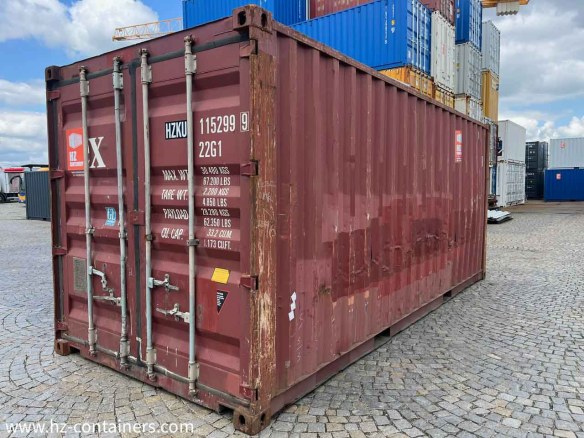
Surface Rust on Shipping Containers
What is Surface Rust on a Shipping Container?
Surface rust is the most common and least serious form of corrosion on the surface of shipping containers. It is a thin, often purely cosmetic layer of iron oxide that forms when steel is exposed to oxygen and moisture. It is important to understand that shipping containers are made of Corten steel (COR-TEN, weathering steel), which is designed so that the surface, stable layer of rust (called patina) protects the underlying metal from deeper destructive corrosion.
Surface rust is therefore often a sign of the correct functioning of the protective mechanism of Corten steel – not a failure of the structure. In used containers, it is common and usually has no effect on the structural integrity of the container. For laypeople, it is key to distinguish between surface rust and advanced structural corrosion.
Scientific Background: Why Do Shipping Containers Rust?
Oxidation Process
Corrosion is an electrochemical process in which iron reacts with oxygen and water to form iron oxide (Fe₂O₃·nH₂O – rust). The process proceeds as follows:
| Phase | Description of Technical Process |
|---|---|
| Anode/Cathode | Areas with different electrochemical potential form on the surface |
| Electrolyte | Water (especially salt water) enables ion movement and accelerates corrosion |
| Oxidation Reaction | Fe → Fe²⁺ + 2e⁻ ; Fe²⁺ + O₂ + H₂O → Fe₂O₃·nH₂O |
The presence of salts (typically sea salt) and air pollution (industrial emissions, acid rain) significantly accelerate corrosion.
Corten Steel (Weathering Steel) – How Does the Protection Work?
- Composition: Corten contains approximately 0.2% copper, 0.5% chromium, 0.5% nickel, and traces of phosphorus. These elements promote the formation of a protective rust layer.
- Protective Patina: A dense, highly adhesive layer of rust forms on the surface, preventing moisture and oxygen from reaching the internal metal.
- Self-Healing Effect: When mechanically damaged, the patina renews itself if conditions of alternating wet and dry environments are ensured.
- Lifespan: The standard lifespan of a shipping container made of Corten steel is 20–25 years without major maintenance.
Types of Rust on Shipping Containers
| Type of Rust | Appearance/Symptoms | Impact on Structure | Recommended Action |
|---|---|---|---|
| Surface Rust | Thin, reddish-brown, uniform | None/aesthetic | Wire brush, basic coating |
| Pitting Corrosion | Small holes, localized | Weakening in the area | Deep cleaning, patching |
| Flaking Rust | Peeling layers, deep corrosion | Significant metal loss | Cutting out, welding patch |
| Structural Rust | Holes, weakening of load-bearing parts | Integrity threat | Professional repair, part replacement |
Surface rust is common and harmless. Pitting and flaking corrosion are more serious and require intervention; structural rust is critical.
Causes of Rust Formation and Spread
- Mechanical Damage: Every scratch or dent damages the protective coating and patina, opening the way for corrosion.
- Salty Environment: Sea salt is a catalyst. Containers from ports and maritime transport are significantly more at risk.
- Standing Water: Roof deformations, areas around doors, depressions – water accumulates there and increases the risk of corrosion.
- Condensation (“Container Rain”): Temperature differences cause water droplets to form on the inner walls, threatening not only the inner surface but also stored goods.
- Ground Contact: Containers placed directly on soil have the bottom frame in permanent moisture.
- Insufficient Maintenance: Neglected inspections and repairs of minor damage lead to corrosion developing from small sites into larger problems.
- Industrial Pollution: Acid rain and chemicals in the air can damage the patina.
Solutions: Prevention and Repair of Surface Rust
Rust Prevention
| Step/Prevention | Technical Description |
|---|---|
| Proper Foundation | Solid base (concrete, sleepers, gravel) for air circulation and minimizing ground moisture contact |
| Drainage | Roof without depressions, drainage systems, or possibly a canopy or tarp |
| Regular Inspections | Inspection at least 1× per year, focusing on welds, corners, doors, roof, and bottom frame |
| Protective Coatings | Use of basic anti-corrosion paints, zinc coatings, or corrosion inhibitors |
| Internal Humidity Control | Ventilation (grilles, turbines), wall insulation, use of dehumidifiers |
Regular maintenance significantly extends the container’s lifespan and prevents costly repairs.
Removal and Repair of Surface Rust
- Manual Removal: Wire brush (ideally on a drill), sandpaper, removal of all loose rust down to the metal.
- Chemical Treatment: Rust converters based on phosphoric acid, which convert iron oxide into stable iron phosphate.
- Coating: After cleaning, apply a basic anti-corrosion coating and top protective lacquer (e.g., Rustoleum, Corroseal).
- Sandblasting: For larger areas or complete renovation, sandblasting is recommended, which ensures an ideal surface for new coating.
- Hole Repair: Cutting out rusted areas, welding a patch of Corten steel, followed by coating treatment.
- Sealing: For small holes, FLEXSEAL or other sealants can be used temporarily, but long-term a welded patch is better.
Specific Applications and Related Risks

Storage Containers
- The greatest risk is internal corrosion due to condensation, especially when storing materials that retain moisture.
- Ventilation and regular inspection of the internal surface are key.
Container Homes and Offices
- Every opening (window, door) means disruption of protection – precise sealing and anti-corrosion coating are necessary.
- Insulation must be done with regard to vapor barriers to prevent condensation between the insulation and steel.
- External cladding significantly extends the container’s lifespan.
- Quality foundations are essential for preventing deep corrosion of the bottom frame.
Related Terms
| Term | Meaning |
|---|---|
| Corten Steel (Weathering Steel) | Special alloy with higher resistance to atmospheric corrosion, self-renewing protective patina |
| Structural Integrity | Ability to withstand loads without loss of strength or deformation |
| Condensation (Container Rain) | Formation of water droplets on inner walls due to temperature differences and poor ventilation |
| Sandblasting | Mechanical surface cleaning with abrasive under high pressure |
| Corrosion Inhibitor | Chemical that slows or blocks corrosion after application to a metal surface |
Frequently Asked Questions (FAQ)
Is surface rust a reason for concern when buying a used container?
Usually not, if it is not accompanied by deeper pits or holes. Surface rust is normal and common.
How do I tell the difference between surface and structural rust?
Surface rust is smooth and can be wiped off with a wire brush. Structural rust is accompanied by holes, significant sheet metal weakening, or metal crumbling.
How often should I inspect my container?
At least 1× per year, ideally in spring after the winter months.
What coating is best for a shipping container?
Industrial anti-corrosion paints based on zinc or epoxy, ideally DTM (Direct To Metal) type.
Can surface rust be completely removed by myself?
Yes, with early intervention using a wire brush, rust converter, and coating. Advanced corrosion is better handled professionally.
Conclusion
Surface rust is a common part of the life of every shipping container and in Corten steel is even a welcome protective phenomenon. For long lifespan and safe use, regular maintenance, proper foundation, and timely resolution of any damage are key. Modern containers are structurally prepared to withstand even demanding conditions, yet it is worth investing time in inspection and prevention. This way you will keep your container functional, aesthetic, and safe for many years.

 Czech Republic, Humpolec
  FREE SHIPPING