
What is the difference between a depot, terminal and transshipment hub for shipping containers?
In the complex world of global logistics and maritime transport, shipping containers play a crucial role as standardized units that enable efficient, safe and cost‑effective movement of goods across continents. For this system to work, an extensive infrastructure of different types of facilities has developed around the containers – depots, terminals and transshipment hubs. Although these facilities are often confused, each has a unique and indispensable function in the logistics chain.
Container Depot
What is a container depot?
A container depot (also called a container yard, abbreviated CY) is a logistics facility primarily intended for management, storage, maintenance and repair of empty shipping containers. Depots are essential for controlling the flow and availability of containers on a global scale, especially when containers do not contain cargo and are waiting for the next use.
Location and types
- Port‑based depots – located directly at ports, providing rapid turnover of empty containers between shipping lines and exporters/importers.
- Inland Container Depots (ICD) – strategically placed inland, often near industrial centres; sometimes referred to as “dry ports” and connected to seaports by rail or road networks.
Main functions and services of a depot
| Function | Description |
|---|---|
| Storage of empty containers | Safe, organized temporary storage, often with the option of longer‑term storage |
| Maintenance & repairs (M&R) | Inspection, cleaning, repairs (according to IICL or CSC standards), repainting, parts replacement, ensuring “cargo‑worthy” condition |
| Inventory management | Digital records, monitoring location, condition and type of each container (20′, 40′, high‑cube, reefer, etc.) |
| Sale and rental of containers | Sale of retired units, short‑term and long‑term leasing for logistics companies and private customers |
| Customisation and modification | Conversions of containers for storage, residential or office spaces, installation of special equipment |
Modern trends in depots
- Digitisation and automation – advanced inventory management systems (e.g., OLTIS, Navis), RFID tagging, online monitoring.
- Environmental measures – minimising unnecessary moves of empty containers, CO₂ savings (e.g., through METRANS rail network).
- Safety and certification standards – inspections according to IICL, regular renewal of CSC plates, compliance with hygiene regulations.
Real‑world example in the Czech Republic/Europe
METRANS operates a network of terminals and depots in Central Europe, allowing efficient balancing of supply and demand for empty containers and reducing inefficient back‑haul trips to the port, thereby significantly lowering environmental impact.
Container Terminal
What is a container terminal?
A container terminal is a highly specialised facility (usually part of a port) whose main purpose is rapid and efficient handling of full and empty containers between different modes of transport – ships, trains and trucks. It is the junction where sea meets land.
Key operations in a terminal
| Operational area | Description | Typical technologies and equipment |
|---|---|---|
| Maritime operations | Loading/unloading of ships using giant portal cranes (Ship‑to‑Shore, STS) | STS cranes, portainers |
| Yard operations | Moving containers between quay, yard storage and terminal gates, short‑term storage | RTG (Rubber‑Tired Gantry), RMG, straddle carriers, reach stackers, AGV, ASC |
| Inland connections | Receiving/releasing containers to/from trains and trucks, document control, weighing, customs checks | Automated gates, weighing systems, X‑ray scanners |
Modern technology and trends
- Automation – automated stacker cranes (ASC), fully autonomous vehicles (AGV), robotic container handling.
- Digitisation and software – Terminal Operating Systems (TOS), AI for flow optimisation, digital queue and block management.
- Vertical storage – innovative vertical container stacks to increase capacity on limited space (pilot projects in Asia).
- Green technologies – electrification of equipment, renewable energy use, eco‑vehicles, energy recovery, “green corridors”.
- Safety – biometric and camera systems, hazardous‑material detection, access control, cyber‑security.
Challenges of terminal logistics
- Continuously increasing vessel sizes (ULCV, up to 24 000 TEU) put extreme pressure on capacity, technology and staff.
- Need for high throughput and minimal waiting times.
- Optimising container placement in the yard according to loading/unloading plans (yard planning).
Notable terminals
- Europe – Rotterdam (Maasvlakte 2 – fully automated), Hamburg, Bremerhaven, Gdańsk, Koper, METRANS Česká Třebová (dry terminal).
- World – Shanghai, Singapore, Hong Kong, Los Angeles, Jebel Ali (Dubai).
Transshipment Hub
What is a transshipment hub?
A transshipment hub is a specialised facility (usually a large container terminal) where the main activity is transferring containers from one ship to another. Cargo typically does not stay long; it is simply “transshipped” onto another vessel, often within a “hub‑and‑spoke” system.
Transshipment process
- Unloading – Containers destined for transshipment are off‑loaded from the main ocean vessel (mainline vessel, ULCV) onto the terminal.
- Temporary storage – In a designated yard area they wait for the arrival of a smaller feeder vessel.
- Loading – Transfer onto the feeder vessel, which then distributes the cargo to regional or smaller ports.
Importance and strategic role
- Network efficiency – Enables deployment of large, fuel‑efficient ships on main routes while smaller vessels serve regional ports.
- Consolidation and de‑consolidation – Merges shipments from many origins and then splits them to final destinations.
- Geopolitical and economic significance – Located at crossroads of major routes (e.g., Singapore, Suez, Panama, Algeciras, Rotterdam, Tanjung Pelepas).
Largest transshipment hubs in the world (by TEU)
| Port | Country | Annual throughput (TEU, 2023) | Share of transshipment |
|---|---|---|---|
| Shanghai | China | 47 million | ~50 % |
| Singapore | Singapore | 37 million | up to 85 % |
| Ningbo‑Zhoushan | China | 33 million | ~35 % |
| Rotterdam | Netherlands | 15 million | ~65 % |
| Algeciras | Spain | 5.1 million | >90 % |
| Jebel Ali | UAE | 14 million | high |
Innovations in transshipment hubs
- Fully automated blocks, robotic cranes, predictive AI for planning transfers.
- Green‑port initiatives (shore power, electrification, digital logistics corridors).
- Value‑added services: consolidation, customs handling, high‑turnover storage.
Comparison Table: Depot vs. Terminal vs. Transshipment Hub
| Criterion | Container Depot | Container Terminal | Transshipment Hub |
|---|---|---|---|
| Main function | Storage, M&R, sale/rental | Transfer between ship, train, truck | Ship‑to‑ship transfer (“transshipment”) |
| Container type | Almost exclusively empty | Full and empty (mainly full) | Full (exclusively in transit) |
| Storage time | Long‑term (weeks/months) | Short (3–5 days) | Very short (hours, max days) |
| Primary goal | Availability, care, maintenance | Throughput, speed, efficiency | Connectivity, rapid transfer |
| Typical equipment | Reach stackers, workshops, services | Giant portal cranes, AGV, RTG, TOS | Same as terminal, optimised for ship‑to‑ship |
| Example operation | Storing empty containers for later export | Unloading cargo from ship, moving to train | Container from Asia transshipped in Rotterdam onto feeder for Scandinavia |
Connection and Lifecycle of a Container
The whole system is interconnected – an empty container leaves a depot for an exporter, the full container travels to a terminal, is transshipped at a hub, arrives at the destination terminal, and the empty container is then stored again in a depot. Every part of the infrastructure is indispensable for a smooth flow of goods worldwide.
Conclusion
Depots, terminals and transshipment hubs form the backbone of global container logistics. Distinguishing them is essential:
- Container depot = service and storage centre for empty containers (maintenance, records, sale/rental).
- Container terminal = transshipment node between sea and land (fast movement of full containers, high automation and digitisation).
- Transshipment hub = specialised location for ship‑to‑ship container transfers, key to maritime network efficiency.

 Czech Republic, Prague
  WITHOUT SHIPPING


Other container news...

New shipping containers
If you are currently considering purchasing a new shipping container, you are not alone. While just twenty years ago containers were used almost exclusively for maritime transport, today they have found their way into construction, storage, business, and even housing. This growing popularity brings with it a host of questions: Which type should you choose? How much does it cost? How do you recognize quality? How can you avoid falling victim to scammers?
New sea shipping containers
If you are currently considering purchasing a new shipping container, you are not alone. While just twenty years ago containers were used almost exclusively for maritime transport, today they have found their way into construction, storage, business, and even housing. This growing popularity brings with it a host of questions: Which type should you choose? How much does it cost? How do you recognize quality? How can you avoid falling victim to scammers?

6m shipping container
Are you thinking about buying a 6-meter shipping container but aren’t sure what to look for? You are not alone—this 20-foot container is the best-selling size on the Czech market, and the differences between various types, conditions, and prices can be significant. In this guide, you will find everything you need to know: from exact dimensions and a comparison of categories (such as “one-way,” refurbished, and “Cargo Worthy”) to current prices and shipping advice.
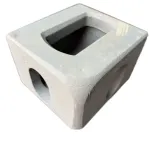
Corner casting steel vs aluminum
Every shipping container in the world — all 40 million of them — rests on eight critical components. Corner castings are the load-bearing blocks at each corner of an ISO shipping container, and they are the universal interface between the container and every crane, twistlock, spreader, and chassis on the planet. When you lift a container, stack it nine high on a ship, or lock it to a truck trailer, every ton of force flows through these fittings.