
What does corrosion resistance C5 mean?
Corrosion resistance C5 denotes one of the highest categories of protection for steel structures against atmospheric corrosion, as defined by the international standard ISO 12944. This specification is intended for structures exposed to extremely aggressive conditions – industrial zones with high humidity and contamination, or coastal and marine areas with high salinity. For containers C5 is essential especially in maritime transport, storage in ports and heavy industry.
Key facts:
- C5 means “very high” corrosion load (only CX is higher).
- C5 protection is crucial for long service life and investment safety.
- ISO 12944 is a globally recognized standard for designing, applying and inspecting protective systems on steel structures.
ISO 12944 standard and its role in container protection
The ISO 12944 standard was introduced in 1998 and last significantly updated in 2018. It sets comprehensive requirements for protecting steel structures, including shipping containers, against corrosion through appropriate coating systems and surface treatments.
Key elements of the standard
- Definition of environmental corrosivity categories (C1 to CX) based on intensity and type of corrosive influences.
- Requirements for surface preparation, application and inspection of coating systems.
- Specification of coating service life according to expected maintenance intervals (L, M, H, VH).
- Strict laboratory tests and cyclic trials that simulate real‑world environmental conditions.
The standard serves as a basis for designers, manufacturers, technicians and users – enabling the standardisation of requirements across markets and applications.
Sub‑categories of C5 by environment
| Sub‑category | Environment | Typical applications |
|---|---|---|
| C5‑I (Industrial) | Industrial zones with high humidity and chemical contamination | Refineries, chemical plants, power stations, warehouses, steel mills |
| C5‑M (Marine) | Coastal, marine areas with high salinity | Ports, offshore platforms, coastal bridges, storage containers in ports |
Specifics of the C5 environment
- Extreme humidity and frequent condensation (almost permanent surface moisture).
- Presence of aggressive substances (SO₂, chlorides, ammonia).
- High temperature fluctuations, UV radiation, cyclic condition changes.
- Possibility of permanent contact with seawater or salty mist.
Note: For containers intended for long‑term stay at sea or in humid industrial zones, C5 is often a basic technical requirement.
Technical parameters and measurement of C5 corrosion resistance
Quantification of environmental corrosivity (according to ISO 9223)
| Category | Zinc corrosion rate (µm/year) | Typical environment |
|---|---|---|
| C1 | < 0.1 | Interiors, dry warehouses, offices |
| C2 | 0.1 – 0.7 | Rural areas |
| C3 | 0.7 – 2.1 | Industry, cities, low‑salinity coasts |
| C4 | 2.1 – 4.2 | Industrial areas, medium‑salinity coasts |
| C5 | 4.2 – 8.4 | High‑humidity industrial zones, marine coasts |
| CX | 8.4 – 25 | Extreme offshore, Arctic regions, tropics |
Testing of C5 systems
- Cyclic ageing tests (ISO 12944‑9): combination of UV radiation, salt mist and freezing.
- Test duration: 2688 hours (112 days) – alternating extreme conditions.
- Inspection: evaluation of blistering, rusting, cracking, coating adhesion and extent of corrosion in cross‑section.
C5 protection systems – coating composition and surface treatment
Protection at the C5 level requires a multi‑layer coating system with thorough surface preparation. The type of coating alone is insufficient – application method and layer thickness are also critical.
Typical C5 coating system for containers and steel structures
| Layer | Function | Typical products/chemistry | Thickness (µm) |
|---|---|---|---|
| Surface preparation | Removal of rust, scale, oil; ensure optimal adhesion | Abrasive blasting to Sa 2.5 (ISO 8501‑1) | – |
| Primer | Active barrier against corrosion, adhesion | Zinc‑rich epoxy, zinc phosphate | 80–120 |
| Intermediate coat | Barrier against moisture and chemicals | Epoxy coatings | 80–160 |
| Topcoat | UV stability, mechanical and chemical resistance, aesthetics | Polyurethane, acrylic, fluoropolymer | 60–120 |
Total dry film thickness: 240–400 µm (depending on service life and specific application).
Specifics for containers
- Uniform application to all corners, seams and edges, which are most vulnerable.
- Treatment of “cut edges” – often the first points of corrosion attack.
- Possibility of combining with hot‑dip galvanising for certain applications.
Practical application process for C5 systems
Step‑by‑step
- Surface preparation
- Abrasive blasting to Sa 2.5 (nearly white metal), removal of all scale, rust and contaminants.
- Verify cleanliness (dust test, visual inspection, roughness measurement).
- Apply primer
- Within 4 hours after blasting (prevents “flash rust”).
- Follow manufacturer‑specified thickness (usually 80–120 µm).
- Apply intermediate coats
- After primer has dried, to achieve the required barrier protection.
- Check thickness, ensure no gaps between layers.
- Apply topcoat
- Provides UV, chemical and abrasion resistance.
- Choose colour and gloss according to aesthetic and functional requirements.
- Quality control
- Measure layer thickness (magnetic, ultrasonic devices).
- Perform adhesion tests, inspect coating integrity, look for defects (blisters, flaking).
- Document every step (photos, measurements, reports).
Importance of C5 protection for shipping containers
Why C5 is critical
- Shipping containers are frequently exposed to harsh environments: salty water, sunlight, temperature swings, mechanical stress (handling, stacking).
- Inadequate corrosion protection leads to rapid degradation, leaks, loss of structural integrity and container value.
- For storage containers in ports, C5 is often required by law or customer specifications (e.g., petrochemical industry).
- Investing in a C5 system can extend container service life by 10–20 years compared with standard systems.
Examples of failures due to insufficient protection
- Pitting corrosion under coating – often starts at welds and edges, spreads unnoticed.
- Corrosion of the container floor structure – reduces load capacity and creates safety hazards.
- Rapid degradation of roof paint – combination of UV and salt water.
Recommended practices and quality control for containers
- Use systems approved under ISO 12944 C5 (verify coating manufacturer certifications).
- Meticulous application and inspection of all layers – no shortcuts, no missed hard‑to‑reach areas.
- Regular inspections (visual and thickness measurements) during production and in service.
- Repairs only with compatible coatings – avoid creating “unprotected spots”.
- When containers are stored outdoors or near the sea, clean them regularly to remove salts and debris.
Service life of C5 systems and maintenance planning
ISO 12944 defines “service life until first major maintenance” as follows:
| Category | Expected service life |
|---|---|
| L (Low) | up to 7 years |
| M (Medium) | 7–15 years |
| H (High) | 15–25 years |
| VH (Very High) | more than 25 years |
C5‑VH therefore provides protection for over 25 years in the most demanding conditions, which is essential for offshore containers, depot storage containers or petrochemical applications.
Common mistakes and practical recommendations
- Insufficient surface preparation – skimping on blasting leads to rapid coating failure.
- Neglecting details – welds, corners and rusty fasteners must be treated separately.
- Wrong system selection – using a standard coating instead of a C5‑approved system.
- Lack of quality control and maintenance – absence of regular inspections allows corrosion to progress unnoticed.
Summary – key take‑aways
- C5 is a technical standard, not a marketing term.
- Steel containers and structures with C5 protection have significantly longer service lives and lower maintenance costs.
- A properly designed, applied and inspected C5 system is the best safeguard against degradation and loss of value, especially in the demanding conditions of maritime transport and storage.
 Czech Republic, Chrudim
  FREE SHIPPING

Other container news...

New shipping containers
If you are currently considering purchasing a new shipping container, you are not alone. While just twenty years ago containers were used almost exclusively for maritime transport, today they have found their way into construction, storage, business, and even housing. This growing popularity brings with it a host of questions: Which type should you choose? How much does it cost? How do you recognize quality? How can you avoid falling victim to scammers?

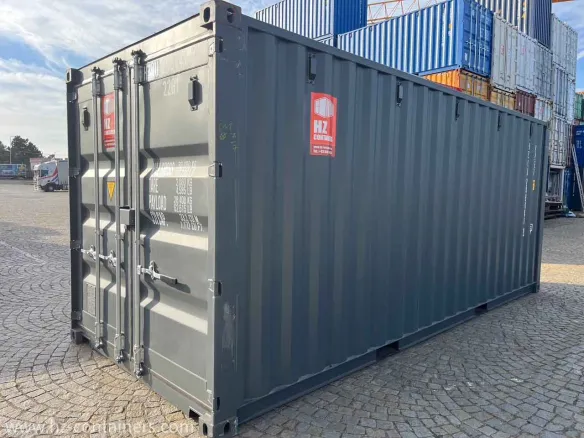
6m shipping container
Are you thinking about buying a 6-meter shipping container but aren’t sure what to look for? You are not alone—this 20-foot container is the best-selling size on the Czech market, and the differences between various types, conditions, and prices can be significant. In this guide, you will find everything you need to know: from exact dimensions and a comparison of categories (such as “one-way,” refurbished, and “Cargo Worthy”) to current prices and shipping advice.
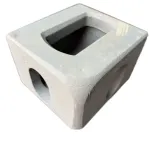
Corner casting steel vs aluminum
Every shipping container in the world — all 40 million of them — rests on eight critical components. Corner castings are the load-bearing blocks at each corner of an ISO shipping container, and they are the universal interface between the container and every crane, twistlock, spreader, and chassis on the planet. When you lift a container, stack it nine high on a ship, or lock it to a truck trailer, every ton of force flows through these fittings.

Construction cabin – selection, tips, dimensions and prices
Every construction project – whether a family house, a development project or a reconstruction – starts with the infrastructure. No construction manager, craftsman or investor who needs an on-site office, a changing room for workers or a safe storage for tools can do without a quality construction cell. But navigating the offer is not easy: residential containers, sanitary cells, storage modules, rental, purchase, refurbished pieces… This guide will give you answers to all the essential questions in one place.