
Used Shipping Containers in Trieste – Italy
If you are looking for used shipping containers in Trieste, Italy, you are in the right place. Trieste, Italy’s largest port for container transport, offers direct access to an extensive selection of used units with certified quality. This article will guide you through everything you need to know: from available types to quality standards, from prices to pickup procedures at our warehouse. You will learn how to choose the perfect container for your needs, what certifications to verify, and how to organize transport. Whether you are a logistics company, construction manager, or private individual looking for storage solutions, you will find practical information here for an informed decision.
Trieste in Italy is a Strategic Logistics Hub for Containers
Geographic Location and Port Importance
Trieste represents Italy’s main port for container transport and one of the most important centers of the Mediterranean. Located in the north of the Adriatic Sea, the city has a strategic geographic location that directly connects it to Central and Eastern Europe through an efficient network of roads, railways, and river corridors. The Port of Trieste handles tens of millions of tons of goods annually and processes containers from around the world.
Its relevance in international maritime trade means that the container warehouse in Trieste has constant access to quality units from global trade routes. This guarantees a variety of used containers in various conditions and price categories, making it ideal for those seeking the best value for money.
| Italian Port | Geographic Location | Annual Capacity (TEU) | Main Advantages |
|---|---|---|---|
| Trieste | North Adriatic Sea | Over 600,000 | Access to Central Europe, larger selection of used, competitive prices |
| Genoa | Liguria (Ligurian Sea) | Over 2,000,000 | Largest port, but higher prices |
| Venice | North Adriatic Sea | Over 200,000 | Close to Trieste, but smaller availability |
| Gioia Tauro | Calabria (Tyrrhenian Sea) | Over 3,000,000 | Largest in the south, far from Northern Italy |
Infrastructure and Services Available at the Warehouse
The container warehouse in Trieste is equipped with modern infrastructure and comprehensive services for management, inspection, and pickup of units. Facilities include extensive storage areas, handling equipment (cranes, forklifts), quality control areas, and administrative offices dedicated to customer support.
Types of Shipping Containers: Which One to Choose?
Standard Containers (20 and 40 feet)
Standard ISO 20 and 40 foot containers are the main players in world maritime transport and represent the most common choice for purchasing used containers. The 20 foot container (TEU – Twenty-foot Equivalent Unit) measures 6,058 mm in length, 2,438 mm in width, and 2,591 mm in height. It offers an internal volume of approximately 33 cubic meters and a maximum payload of 28,300 kg.
The 40 foot container is double the length (12,192 mm) with the same width and height, with an internal volume of approximately 67–68 cubic meters and a maximum payload of 26,740 kg. Both types are made of highly durable Corten steel and are equipped with rear hinged doors that open completely to facilitate loading and unloading.
High Cube Containers for Greater Capacity
High Cube containers (HC) represent an evolution of standard models, characterized by increased height of approximately 30 cm (from 2,591 mm to 2,896 mm). This seemingly small modification offers a significant increase in usable volume: the 20 foot HC container reaches 37.4 cubic meters, while the 40 foot HC reaches 76.4 cubic meters.
HC containers are ideal when you have high storage requirements or when transporting light goods that take up a lot of space. Although they have the same TAR weight as standard models, they offer greater flexibility for bulky cargo. They are widely used in the modern logistics industry and represent approximately 50% of newly manufactured containers.
Specialized Containers (Refrigerated – Reefer, Open Top, Flat Rack)
In addition to standard models, the used container market includes specializations for special needs. Refrigerated containers (reefer) maintain controlled temperatures and are ideal for transporting perishable goods, food, and pharmaceutical products. Open top containers have a removable roof, ideal for cargo that exceeds standard height. Flat racks have removable side walls, suitable for transporting heavy machinery and irregular cargo.
| Container Type | External Length | Internal Volume (m³) | Maximum Payload (kg) | Ideal Use |
|---|---|---|---|---|
| 20′ Standard Box | 6,058 mm | 33.2 | 28,300 | Dry goods, general storage |
| 20′ High Cube | 6,058 mm | 37.4 | 28,230 | Bulky light goods |
| 40′ Standard Box | 12,192 mm | 67.8 | 26,740 | International transport, warehouses |
| 40′ High Cube | 12,192 mm | 76.4 | 28,700 | Bulky cargo, large capacity |
| Refrigerated (Reefer) | 20′ or 40′ | 33–67 | Various | Food, perishable products, pharmaceuticals |
Quality of Used Containers: Standards and Certification
Cargo Worthy (CW) and As-Is Classification

The quality of a used container is classified according to recognized international standards. The Cargo Worthy (CW) classification represents the highest quality level for used containers intended for maritime transport. A CW container has undergone complete technical inspection performed by a certified inspector according to ISO 1496 standards and the CSC Convention (International Convention for Safe Containers).
A Cargo Worthy container is structurally intact, watertight, has functional doors, a floor without significant damage, and all safety components in good order. It can be used for transporting valuable goods, long-term storage, and even as a basis for residential or commercial conversions. It is the recommended choice for most buyers.
The As-Is classification represents the lowest level. An As-Is container is sold in its current condition without warranties of tightness, functionality, or structural integrity. These containers may have extensive corrosion, holes in walls, damaged floors, or non-functional doors. They are suitable only for specific uses, such as steel recycling, controlled demolition, or construction projects with extensive renovations.
CSC Label and International Certification
Every container intended for international transport must have a CSC label (Safety Approval Plate) attached to the outside of the door. This metal plate, usually made of stainless steel, contains essential information: the container’s serial number, year of manufacture, manufacturer’s name, maximum gross weight (MGW), and data on the last inspection.
The CSC label is mandatory for cross-border transport and guarantees that the container has been inspected and certified as complying with international safety standards. A valid and legible label is the first indicator that the container has been maintained in accordance with global regulations. If the label is missing, illegible, or expired, the container cannot be used for international transport.
The ACEP (Approved Continuous Examination Program) is a continuous inspection system recognized worldwide. Containers subject to ACEP are inspected regularly not only at scheduled intervals but also after any significant event (damage, repairs, change of ownership). A container with ACEP certification represents a unit managed with care and transparency, ideal if you are looking for higher quality.
How to Recognize a Good Quality Container
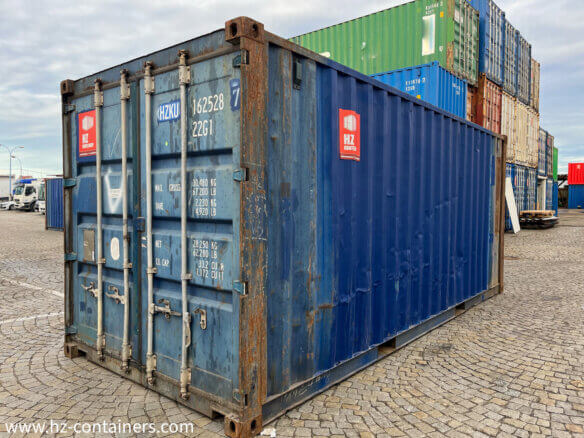
When inspecting a used container, verify these basic elements: examine the external and internal walls for corrosion, oxidation, or holes; check the wooden floor (or steel) for rot, cracks, or sagging; verify that the doors open and close smoothly; inspect the seals to ensure their integrity and lack of damage; check the twistlock locks and corner elements for damage or deformation; verify the presence and legibility of the CSC label.
A good quality container will have a solid structure without visible deformations, guaranteed watertightness (verifiable by light test), completely functional doors, and an external surface that, although it may have surface corrosion, has no holes or structural damage.
Pre-Purchase Inspection Checklist
- Exterior: Absence of holes, cracks, or serious deformations
- Floor: Structural integrity, no sagging or rot
- Doors: Smooth opening and closing, functional locks
- Seals: Intact and undamaged
- CSC Label: Present, legible, and valid
- Roof/Side Walls: No holes or visible water leaks
- Corner Elements: No deformation or breakage
- Certification: Available ACEP documentation or recent inspection
Prices and Purchase Options in Trieste – Italy
Factors Affecting Price
The price of a used container in Trieste is determined by several interrelated factors. Size is the first element: a 20 foot container costs significantly less than a 40 foot, while High Cube and specialized models have higher prices than standard variants. The age of the container affects pricing: newer units (5–10 years) cost more than older ones (15+ years), although a well-maintained container can have a useful life of 20+ years.
Condition is critical: a Cargo Worthy container costs 30–50% more than Fair Average Quality condition, and that costs much more than As-Is. Market demand and global container prices also influence local prices. Periods of high logistics demand tend to push prices up, while periods of low business activity offer more favorable purchasing opportunities.
Comparison: New vs. Used
A new container from the factory generally costs 60–80% more than an equivalent used one in good condition. For example, a new 40 foot container may cost €4,000–5,000, while the same model used in Cargo Worthy condition costs €1,500–2,900. This price difference makes used containers an economically advantageous choice for most applications.
The economic advantage of used containers is even more pronounced when you consider residual value. A used container retains a good portion of its value over time, while a new one begins to lose value immediately. If you buy a used container today and sell it in 5 years, you will lose less value than someone who bought a new one.
| Container Type | New Condition (€) | CW Condition (€) | Savings (%) | Remaining Useful Life |
|---|---|---|---|---|
| 20′ Standard | 2,500–4,500 | 1,500–3,500 | 45–55% | 15–20 years |
| 20′ High Cube | 2,800–4,800 | 1,800–3,800 | 45–55% | 15–20 years |
| 40′ Standard | 4,000–5,000 | 1,500–2,900 | 50–65% | 15–20 years |
| 40′ High Cube | 4,500–5,500 | 2,500–3,500 | 50–65% | 15–20 years |
Environmental Benefits and Sustainability
Circular Economy and Reuse
Buying a used container is a conscious choice toward a circular economy. Shipping containers are designed to last: the Corten steel used in their construction is extremely resistant to corrosion and structural fatigue. A container can undergo 10–15 years of intensive maritime transport and continue to function perfectly for another 10–20 years in storage, logistics, or conversion applications.
By choosing a used container, you extend the useful life of an already manufactured structure, thereby avoiding the need to manufacture a new unit. This significantly reduces the overall environmental impact of the container during its operational life.
Reduced Ecological Footprint
Manufacturing a new container requires significant energy resources and raw materials. Manufacturing a 40 foot container requires approximately 30–40 tons of steel and consumes approximately 5,000–7,000 kWh of energy. Additionally, transporting the new container from the manufacturer to the customer generates additional carbon emissions. By purchasing a used container, you completely avoid this initial environmental cost.
Over a 30-year operational life, a used container purchased today will have a significantly lower total carbon footprint compared to a new one. If the used container is then responsibly recycled at the end of its life, the steel will be reused in other applications, closing the circular economy cycle.
Common Uses of Used Containers Purchased in Trieste, Italy
Storage and Warehouses
The most common use of used containers is for storing goods, materials, and equipment. A 40 foot container can hold the contents of a small house or inventory of a small business. Containers are ideal for temporary or permanent warehouses with complete weather protection and security against theft. Many logistics companies, construction sites, and agricultural businesses use containers as a modular and economical storage solution.
Construction Sites and Work Spaces
On construction sites, containers serve as construction manager offices, storage spaces for tools and materials, or rest areas for workers. Their robustness makes them ideal for difficult work environments. A container can be equipped with windows, doors, electrical and heating systems to create a comfortable and functional work space in a matter of days.
Residential and Commercial Conversions
Increasingly, people and businesses are choosing to convert used containers into residential spaces, offices, shops, cafes, and temporary structures. A used container in good condition is a solid foundation for conversion. By adding insulation, interior cladding, windows, doors, and installations, the container becomes a unique and sustainable residential or commercial space. This approach is popular among architects and designers seeking innovative and environmentally conscious solutions.
Logistics and Transport
Many transport and logistics companies purchase used containers to expand their operational capacity. A used container certified as Cargo Worthy is completely suitable for international maritime transport and can be used for decades. This allows companies to increase their container fleet without the prohibitive costs of purchasing new units.
Frequently Asked Questions
How much does a used shipping container cost in Trieste?
The price varies depending on size, condition, and type, but used containers generally cost 40–60% less than new ones. For an exact quote, contact HZ-Containers with details of your specific needs. Prices are also influenced by market demand and global transport conditions.
How do I know if a used container is in good condition?
Verify the CSC label, visually inspect the structure for corrosion and scratches, inspect the floor and door mechanisms. A Cargo Worthy (CW) container has undergone certified inspections and is suitable for transporting goods.
Can I pick up a container directly from the warehouse in Trieste?
Yes, it is possible to arrange pickup at the warehouse. You will need to coordinate transport with an appropriate vehicle and complete the necessary documentation with the HZ-Containers team. The warehouse offers assistance with loading and logistics coordination.
Is Trieste the best place to buy used containers in Italy?
Yes, Trieste is Italy’s largest container port and offers the largest selection, better prices for available quantities, and better logistics infrastructure compared to other ports. Its geographic location also makes it ideal for access to Central Europe.
Can a used container be used for housing or as an office?
Absolutely. Used containers in good condition are ideal for residential conversions, offices, shops, and temporary structures. Before installation, you will need to verify local zoning regulations and obtain necessary permits from local authorities.
How long does a used shipping container last?
A well-maintained container can last 10–20 years or longer. Lifespan depends on use, maintenance, and environmental conditions. Corten steel containers are designed to last for decades, making an investment in a used one very advantageous in the long term.

 Italy, Trieste
  WITHOUT SHIPPING

Other container news...
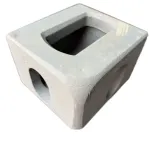
Corner casting steel vs aluminum
Every shipping container in the world — all 40 million of them — rests on eight critical components. Corner castings are the load-bearing blocks at each corner of an ISO shipping container, and they are the universal interface between the container and every crane, twistlock, spreader, and chassis on the planet. When you lift a container, stack it nine high on a ship, or lock it to a truck trailer, every ton of force flows through these fittings.

Construction cabin – selection, tips, dimensions and prices
Every construction project – whether a family house, a development project or a reconstruction – starts with the infrastructure. No construction manager, craftsman or investor who needs an on-site office, a changing room for workers or a safe storage for tools can do without a quality construction cell. But navigating the offer is not easy: residential containers, sanitary cells, storage modules, rental, purchase, refurbished pieces… This guide will give you answers to all the essential questions in one place.
Storage container
A storage container is a lockable steel box designed for the safe and dry storage of materials, tools, goods or equipment. Originally created as a shipping container for maritime transport, its durability and versatility have found their way onto construction sites, corporate premises and private land.
Shipping container 12m (40 ft)
A 12m shipping container is an investment that, if properly selected and cared for, will pay off in decades of trouble-free use. Whether you plan to use it as a warehouse, workshop, garage or the basis for a residential module — the key is careful selection of the condition, a thorough inspection before purchase and high-quality preparation of the base for placement. Take the time to compare offers, check the seller’s references and do not hesitate to personally inspect the container before buying. A properly selected 40-foot container will serve you reliably for many years.