
Shipping Container Price Map
Shipping Container Price Map is a sophisticated analytical tool that visualizes and tracks current costs for transporting standardized containers (most often 20’ TEU and 40’ FEU) between key ports and world regions. It is not merely a mapping of prices on a geographic map, but rather a comprehensive data platform that allows monitoring, analyzing, and predicting freight cost developments in real time as well as in historical context.
The price map is a key tool for:
- Manufacturers and exporters/importers: Enables cost planning, logistics optimization, and decisions on the most suitable routes and shipping times.
- Freight forwarders and shippers: Provides quick rate comparison, negotiation with carriers, and cost‑saving opportunities.
- Market analysts: Used for monitoring trends, analyzing fluctuations, and forecasting future rate developments.
- Insurers and investors: For assessing market risks and price volatility.
The price map answers questions such as: How much does it currently cost to ship a container from Shanghai to Hamburg? What are the main surcharges? Is this period suitable for export? Systems like the Drewry World Container Index (WCI) or Freightos Baltic Index (FBX) provide detailed, regularly updated global overviews with the ability to track individual routes, container types, and rate developments over time.
Key components of the price map
The price map consists of several basic layers, each providing detailed information on freight costs and transport conditions:
1. Base Freight Rates
Base rate represents the core price – the amount charged by the carrier for the actual movement of a container between ports. These rates:
- Are highly variable and depend on the current supply‑and‑demand balance, seasonality, fleet capacity, and infrastructure status.
- Differ by route – main “East‑West” lanes (e.g., Shanghai–Rotterdam, Shanghai–Los Angeles) are highly competitive, while “North‑South” and less frequented lanes tend to be more expensive.
- Distinguish between FCL (Full Container Load) and LCL (Less than Container Load). In FCL the customer pays for the whole container; in LCL the charge is based on volume or weight, suitable for smaller shipments but with longer transit times.
Practical example (2025)
| Route | Rate for 40’ container (WCI 10/2025) |
|---|---|
| Shanghai – Rotterdam | 1 577 USD |
| Shanghai – Los Angeles | 2 176 USD |
| Shanghai – New York | 3 189 USD |
| Shanghai – Genoa | 1 793 USD |
2. Surcharges and Fees
Almost always a set of surcharges is added to the base rate to reflect operational costs, risks, and market conditions:
| Surcharge name | Description |
|---|---|
| Bunker Adjustment Factor (BAF) | Fuel surcharge, reacts to oil and fuel prices. |
| Peak Season Surcharge (PSS) | Seasonal surcharge during high‑demand periods (e.g., before Christmas, Chinese New Year). |
| Currency Adjustment Factor (CAF) | Currency surcharge to eliminate exchange‑rate risk. |
| Emergency Risk Surcharge | Applied during extreme events (wars, piracy, blockades). |
| Port Congestion Surcharge | Charged when ports are overloaded, causing delays and higher costs. |
| EU ETS surcharge | New surcharge related to EU emission allowances (from 2024/2025). |
| Equipment Management Fee | Fees for managing and repositioning containers amid regional imbalances. |
| Suez/Panama Canal Surcharge | Fees for transiting strategic canals. |
Note: WCI includes most of these surcharges in the quoted total price, allowing better comparison of actual costs between routes.
3. Port and Customs Charges
These costs are not always part of the base rate but significantly affect the total price:
- Terminal Handling Charge (THC): Fee for handling at the port (unloading, loading, storage).
- Demurrage and Detention: Fees for exceeding the allowed container dwell time in the port or for late return of an empty container.
- Customs duties and VAT: Depend on the type, value, and country of origin of the goods.
4. Inland Haulage
Most shipments do not end at the port – “door‑to‑door” costs include:
- Road transport (truck)
- Rail transport
- Combined intermodal transport
These costs are influenced by the distance from the port to the final destination, infrastructure, carrier availability, and local fees.
5. Cargo Insurance
Insurance is not mandatory but is important for covering loss or damage risks. The premium typically ranges from 0.1 % to 0.5 % of the shipment value, depending on commodity risk and route.
How global freight price indexes work
Price maps often use global indexes that aggregate real‑time spot rates on major routes. The most respected are:
Drewry World Container Index (WCI)
- Methodology: Composed of 8 key routes (e.g., Shanghai–Rotterdam, Los Angeles–Shanghai), each weighted by cargo volume. The resulting composite index reflects the average global cost for a 40’ container.
- Data: Collected from carriers and freight forwarders with actual contracted rates (not just offers or estimates).
- Included fees: The price is “all‑in” – it includes most surcharges and THC, but excludes inland transport, documentation, or customs costs.
Current trends (October 2025)
- Composite WCI: 1 651 USD / 40’ container
- Rates on Asia‑Europe and Asia‑USA lanes hit lows in January 2024, followed by a decline caused by seasonal slowdown and weakened demand.
Freightos Baltic Index (FBX)
- Tracks more than 40 global routes, providing daily spot‑rate updates.
- Enables monitoring of volatility and rapid response to market changes.
Main factors influencing container shipping costs
1. Demand and supply of freight capacity
- High demand: Holidays, economic growth, or logistics shocks (e.g., pandemics) sharply raise rates.
- Limited supply: Shortage of vessels, containers, or congested ports lead to higher prices. Excess capacity drives rates down and often triggers price wars among carriers.
2. Fuel costs
- Fuel can represent up to 50 % of a vessel’s operating expenses. Oil price swings immediately affect the BAF surcharge.
- Development of emission regulations (e.g., EU ETS) raises costs in European waters.
3. Geopolitical situation and global events
- COVID‑19 pandemic: Triggered a record rate surge (four‑fold increase in 2021), followed by market cooling.
- War conflicts, canal blockades, piracy: Create extraordinary surcharges and delays.
4. Port infrastructure and logistics chains
- Congested ports (e.g., Los Angeles, Rotterdam in 2021‑22) cause delays, demurrage, and higher costs.
- Labor shortages in warehouses and on vessels prolong handling and increase fees.
5. Container type and size
| Container type | Use and price |
|---|---|
| 20’ Dry (TEU) | Standard, smallest, often for heavy goods |
| 40’ Dry (FEU) | Most common, better price/volume ratio |
| 40’ High Cube | Higher internal height, for bulky cargo |
| Reefer (refrigerated) | Temperature‑controlled goods, higher acquisition cost |
| Open Top, Flat Rack | Special, for oversize or heavy cargo, highest rates |
6. Trade lanes
- East‑West: Asia‑Europe, Asia‑North America – lowest rates due to high volume and competition.
- North‑South: Europe‑Africa, USA‑South America – higher rates because of lower volume and competition.
- Flow imbalance: For example, Asia‑Europe is far busier than the reverse, causing a shortage of empty containers in Asia and necessitating repositioning.
How to correctly interpret and use the price map
Practical uses for companies
| Goal | How to use the price map |
|---|---|
| Strategic planning | Optimize purchase timing based on rate forecasts |
| Margin calculation | Realistic estimate of total costs when pricing products |
| Negotiation | Current rate knowledge strengthens bargaining power with carriers |
| Route and mode selection | Identify the most advantageous sea‑rail‑road combinations |
| Risk management | Predict impact of global events on costs and arrange insurance |
Recommendations for effective use
- Monitor multiple sources and indexes (WCI, FBX, and regional indexes).
- Compare rates and offers from different carriers, preferably with a freight forwarder’s help.
- Plan shipments outside peak seasons when possible.
- Consider “slow steaming” – slower vessel speeds reduce fuel use, emissions, and costs (useful for long‑term contracts).
- Regularly update internal cost models with the latest market data.
Related terms and their explanations
| Term | Meaning |
|---|---|
| FCL | Full Container Load – the whole container is shipped; the customer pays for the entire container. |
| LCL | Less than Container Load – partial container shipment; payment is based on volume/weight. |
| Freight Forwarder | Shipper/forwarder – organizes transport between carrier and customer. |
| Incoterms | International commercial terms defining cost and risk allocation between seller and buyer. |
| Demurrage/Detention | Fees for container dwell time in the port or for late return of an empty container. |
| Spot rates | Current market prices for immediate shipment (as opposed to contract rates). |
| TEU/FEU | Twenty/Forty‑foot Equivalent Unit – standardized units for freight volume. |
| BAF/CAF/PSS | Typical surcharges for fuel, currency risk, and peak‑season demand. |
Practical example
Model scenario: Importing electronics from China to the Czech Republic
- Route: Shanghai – Hamburg (sea), Hamburg – Prague (inland)
- Cargo: Electronics, approx. 15 m³ (half of a 20’ container)
- Analysis (July 2025): 1 577 USD / 40’ (WCI), PSS before Christmas +200 USD, THC in Hamburg 150 EUR, customs clearance ~4 % of cargo value.
- Decision: Order the container in July instead of September (saves ~20 %), choose FCL for faster handling.
- Result: Total shipping cost ≈ 2 100 USD (including surcharges and insurance); cargo delivered on time.

 Czech Republic
  WITHOUT SHIPPING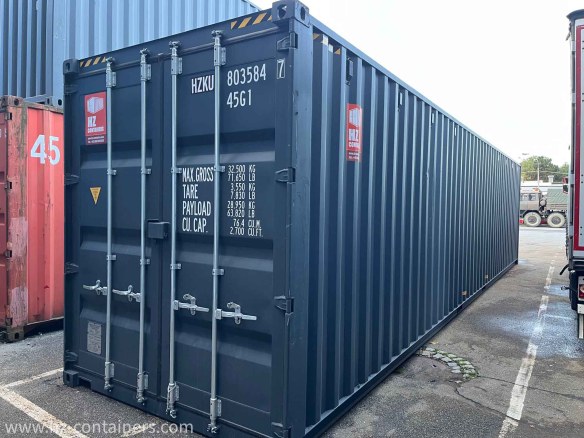
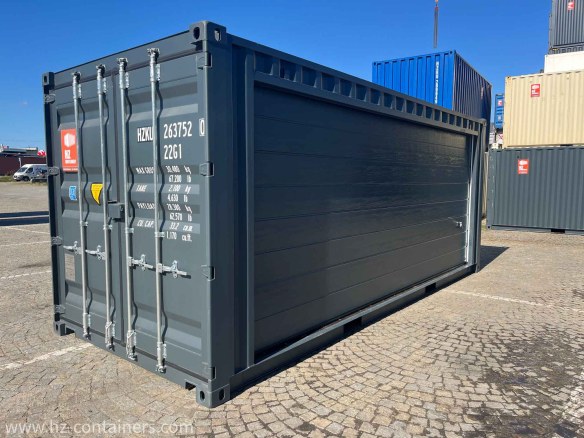
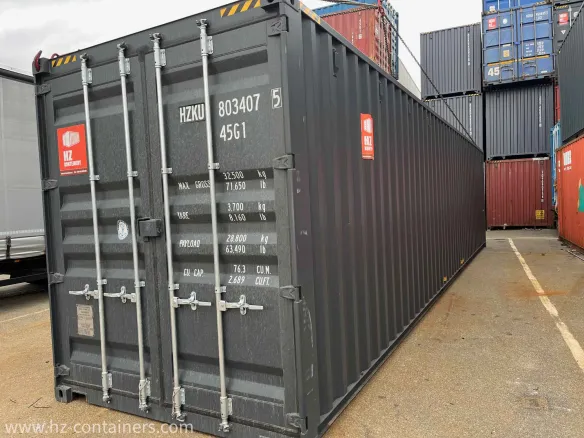
Other container news...

Obligation to Check Tightness When Selling a Reefer Container
Who is responsible for the refrigerant leak check when selling a refrigerated container? Find out what obligations the seller has at the time of handover and why they must provide a PTI report along with the technical data plate. Learn which regulatory requirements and F-gas record-keeping duties become the sole responsibility of the new owner.

New shipping containers
If you are currently considering purchasing a new shipping container, you are not alone. While just twenty years ago containers were used almost exclusively for maritime transport, today they have found their way into construction, storage, business, and even housing. This growing popularity brings with it a host of questions: Which type should you choose? How much does it cost? How do you recognize quality? How can you avoid falling victim to scammers?
New sea shipping containers
If you are currently considering purchasing a new shipping container, you are not alone. While just twenty years ago containers were used almost exclusively for maritime transport, today they have found their way into construction, storage, business, and even housing. This growing popularity brings with it a host of questions: Which type should you choose? How much does it cost? How do you recognize quality? How can you avoid falling victim to scammers?

6m shipping container
Are you thinking about buying a 6-meter shipping container but aren’t sure what to look for? You are not alone—this 20-foot container is the best-selling size on the Czech market, and the differences between various types, conditions, and prices can be significant. In this guide, you will find everything you need to know: from exact dimensions and a comparison of categories (such as “one-way,” refurbished, and “Cargo Worthy”) to current prices and shipping advice.