
Potential threats to shipping containers
Shipping containers, which form the backbone of global trade, face a number of threats that can significantly undermine their security and efficiency. Threats come not only from human activity, but also from natural conditions and other unpredictable events. In this article, we look at the main threats that can affect shipping containers and maritime transport.
Piracy and its impact on shipping containers
Piracy remains one of the biggest threats to maritime transport, especially in areas such as the Gulf of Aden and the Suez Canal. These attacks not only endanger crew and cargo, but can cause significant losses in global trade. Pirate attacks often lead to delays in shipments and increase the cost of insurance, which has a direct impact on the final price of goods for consumers. Shipping companies are investing in security measures such as hiring armed guards and using threat detection technology to reduce the risk of attacks.
Natural disasters and their impact
Natural disasters, including storms, hurricanes and tsunamis, pose another significant threat to shipping containers. Extreme weather can cause containers to be lost to the sea, as has been recorded in several cases around the world. According to World Shipping Council statistics, there is an average loss of approximately 779 containers per year. These losses can have disastrous consequences, not only in economic terms but also in environmental terms.
The threat of a strike and its economic consequences
Port worker strikes, such as the impending strike on the US East Coast, can seriously affect the flow of goods. These situations lead to the closure of key trade gateways, disrupting supply chains and increasing transport costs. Strikes also often lead to changes in routes, which can increase transport times and costs for producers and consumers.
Technical failure and risk of loss of containers
Technical failures, such as mooring system failures or loading errors, can lead to container losses. Modern ships are complex machines that require careful maintenance and inspection to minimise the risk of accidents. Shippers are therefore investing in new technology and crew training to raise safety standards and reduce the risk of losses.
Environmental and safety implications
The loss of containers at sea has not only economic but also environmental consequences. Floating containers pose a hazard to maritime navigation and can cause collisions with other vessels. In addition, if they contain hazardous materials, they can threaten the marine ecosystem. Shippers and maritime authorities are working to improve the tracking and recovery of lost containers to minimize these impacts.Shipping containers are an indispensable part of global trade, but face many threats that can undermine their safety and efficiency. Piracy, natural disasters, port worker strikes and technical failures are key factors that can cause losses and increase shipping costs. Container losses also have environmental consequences that need to be addressed through better security measures and technology.
Other container news...

20 Foot shipping container cost
If you are researching the cost of a 20 foot shipping container, you have likely already encountered wildly different prices — from $999 listings online to quotes exceeding $5,500. That range is not a sign of inconsistency. It reflects real differences in container condition, location, delivery logistics, and the seller you are dealing with.
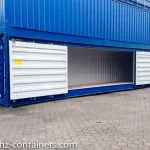
Side Opening container
A side opening container is an ISO-compliant intermodal shipping container engineered with full-length bi-fold doors along one of its long side walls, in addition to the standard cargo doors at one end. Unlike conventional containers that restrict access to a single set of rear doors, a side opening container — also widely called an open side container, open-sided shipping container, or side door container — provides unobstructed lateral access across the entire 20-foot or 40-foot length of the unit. This design transforms the container from a narrow tunnel into a wide-open space that forklifts can enter from the side, multiple workers can load simultaneously, and oversized cargo that would never fit through standard end doors can be placed without struggle.
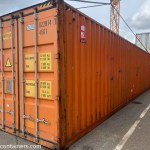
40 Foot High Cube container cost
A 40 foot high cube container — often abbreviated as 40ft HC, 40′ HC, or 40-foot high cube — is one of the most common shipping container sizes sold on the secondary market. But if you are researching what a 40 foot high cube container costs, you have almost certainly noticed that prices are all over the map. One seller quotes $1,500. Another quotes $7,000. Both could be legitimate.
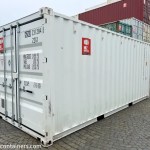
20 Foot container cost
If you have ever searched for a shipping container, you have almost certainly asked one question first: how much does a 20 foot container cost? The answer is not a single number. It is a range that spans from under $1,000 for a weathered, as-is unit to over $5,000 for a pristine, one-trip container — and that is before delivery, site preparation, or modifications enter the picture.