
One way shipping container
Are you planning to buy a shipping container and have you come across the designation one way? You are not alone. In recent years, this term has become one of the most searched in the container sales industry — and for good reason. A one-way shipping container represents an ideal compromise between price and quality: a container that has completed a single sea voyage and is then put up for sale. In this guide, you will learn everything essential — from the definition, through technical parameters and current prices, to the specific procedure for purchasing.
What is a one-way shipping container and how does it come into being
Definition — what does one way mean for a shipping container
The designation one-way shipping container (also known as one-trip container, one-directional container or single-trip container) describes a marine container that, since its manufacture, has been used for only a single shipment — typically from a manufacturing plant in Asia (most often China) to a destination port in Europe. After this one trip, the container is unloaded and, instead of being expensively returned empty to Asia, is sold on the local market.
It is important to distinguish two meanings that are hidden behind the term “one way”:
- One way as a condition at sale — this is the one that interests you most as a buyer. It means a practically new, almost unworn container that has undergone minimal load.
- One way as a logistical rental model — this is a one-way container rental for carriers, where the client rents a container at point A, loads it, transports it to point B and returns it there to the depot, without paying for the return transport of the empty box.
It is precisely thanks to this logistical model that containers arrive on the European market in virtually flawless condition at prices significantly lower than what you would pay for a completely new custom-made piece.
How does a one-way container reach the Czech market
The journey of a one-way container begins at the factory of one of the major manufacturers — most often in China (CIMC, Singamas, CXIC). There it is manufactured from anti-corrosion COR-TEN steel, fitted with a plywood floor, certified and provided with a CSC plate. It is then loaded with goods and sent on its first — and only — sea voyage.
After arriving at a European port (Hamburg, Rotterdam, Bremerhaven, Koper), the container is unloaded, undergoes a basic inspection and travels to a network of dealers. They then distribute it throughout Europe, including the Czech Republic. It is precisely this efficient logistics that allows one-way containers to be sold at prices significantly below the level of completely new pieces, even though their wear is minimal.
The difference between one-way sale and one-way rental
It is essential not to confuse these two concepts:
- One-way sale — you buy the container outright. It is a physical purchase of goods, which is the subject of this guide.
- One-way rental (one-way lease) — you rent a container for only one trip. This model is used by transport companies and exporters. After delivery of the cargo, you return the container to the agreed depot. This model is also known as SOC (Shipper’s Own Container) and allows you to negotiate your own conditions, including so-called pick-up fee, free days and per diem rates.
One way vs. used vs. new container — complete comparison
Before you decide which type of container to invest in, it is essential to understand the differences between the individual categories. Each has its place on the market — they differ in condition, price, lifespan and suitability for different purposes.
Comparison table
| Property | One way (one trip) | Used (AS IS / CW) | Completely new |
|---|---|---|---|
| Condition | Almost perfect, minor paint chips | Visible wear, dents, surface rust | Absolutely flawless |
| Appearance | Aesthetic, clean interior | Industrial, worn | Factory, without scratches |
| Floor | Clean, without cracks | May be damaged, stained | Completely new |
| Odour | No odour | May smell of previous cargo | No odour |
| Lifespan | 30+ years in dry conditions | 10–20 years depending on maintenance | 35+ years |
| Price (20′) | 60 000–85 000 CZK | 25 000–50 000 CZK | 100 000+ CZK |
| Price (40′ HC) | 80 000–120 000 CZK | 40 000–70 000 CZK | 140 000+ CZK |
| CSC plate | Valid (5 years) | May be expired | Valid (5 years) |
| Suitability for storage | ✅ Excellent | ✅ Good | ✅ Perfect |
| Suitability for conversion | ✅ Ideal | ⚠️ Necessary modifications | ✅ Ideal |
| Suitability for housing | ✅ Ideal | ❌ Unsuitable | ✅ Ideal |
When does a one-way container pay off and when does a used container
Choose a one-way container if:
- You plan to use the container for conversion into an office, workshop or living space
- You need a clean and presentable environment for storage
- You require a long lifespan without the need for extensive maintenance
- You intend to place the container in a visible location where aesthetics matter
- You need a valid CSC plate for possible further transport
Choose a used container if:
- You are looking for a purely utilitarian solution for construction or cheap storage
- You want to minimize the initial investment
- Appearance does not matter — the container will be placed out of sight
- You plan to use the container for a short time or in demanding conditions
Key price difference: A one-way container is typically 30–50% more expensive than a used one, but still 20–40% cheaper than a completely new one. It is the golden middle ground for most buyers.
Technical specifications of one-way shipping containers
Dimensions and load capacity
The most commonly available one-way containers on the Czech market fall into two basic sizes:
| Parameter | 20′ DV (6 m) | 40′ HC (12 m) |
|---|---|---|
| External length | 6 058 mm | 12 192 mm |
| External width | 2 438 mm | 2 438 mm |
| External height | 2 591 mm | 2 896 mm |
| Internal length | 5 898 mm | 12 032 mm |
| Internal width | 2 352 mm | 2 352 mm |
| Internal height | 2 393 mm | 2 698 mm |
| Volume | ~33,2 m³ | ~76,3 m³ |
| Max. load capacity | ~28 000 kg | ~30 000 kg |
| Tare weight | ~2 200 kg | ~3 800 kg |
| Door width | 2 340 mm | 2 340 mm |
HC (High Cube) containers offer 30 cm more internal height, which is a significant advantage for storing taller items or for conversions where you want to maintain airy space even after installing underfloor heating, insulation and suspended ceilings.
COR-TEN material and IICL 6 — what does it mean
COR-TEN steel (CORTEN, CORrosion TENsile) is a patented steel with an admixture of copper, chromium and nickel, which, upon contact with air, forms a stable protective layer of rust that prevents further corrosion. Thanks to this, containers withstand extreme weather conditions even without additional surface treatment. In a dry inland environment, they last for decades.
IICL 6 is a quality standard designation according to the Institute of International Container Lessors. A container with this designation meets strict standards for:
- Integrity of structure and welds
- Functionality of doors and sealing
- Floor condition without cracks and deflections
- Watertightness of the entire shell
- Cleanliness of the interior without cargo residues and odours
In practice, this means that an IICL 6 container is ready for immediate use without the need for repairs — and that is exactly what you expect from a one-way container.
CSC plate and its validity
The CSC plate (Convention for Safe Containers) is an international safety certificate that confirms that the container meets the technical requirements for transport. Every one-way container is delivered with a valid CSC plate, typically with a five-year validity. This is important especially if:
- You plan to ship the container by sea again in the future
- You want to be sure that the structure meets strict international standards
- You need to document the technical condition for insurance or authorities
After the validity of the CSC plate expires, the container can be re-certified by an authorized inspection company.
Price of a one-way shipping container in 2025/2026
Current price range by size
Prices of one-way containers on the Czech market in 2025/2026 move within the following ranges (excluding VAT):
- 20′ one-way: 60 000–85 000 CZK
- 40′ HC one-way: 80 000–120 000 CZK
- 20′ one-way with special RAL colour: 65 000–90 000 CZK
- 40′ HC one-way with side doors: 110 000–140 000 CZK
Prices vary by region, current market supply and specific dealer. In general, prices in Moravian regions (Ostrava, Olomouc) tend to be slightly lower than in Prague and central Bohemia, where demand is higher.
What affects the price — transport, colour, modifications
Transport: Most dealers offer transport throughout the Czech Republic as a separate service. The transport price ranges from 3 000 to 15 000 CZK depending on distance and accessibility of the location. Some dealers (e.g. HZ Containers) offer free transport in promotional offers.
Colour: Standard one-way containers are supplied in basic shades (grey, blue, green). Containers in specific RAL shades (e.g. RAL 7016 anthracite, RAL 5010 blue, RAL 7035 light grey) are generally 3 000–8 000 CZK more expensive.
Modifications: Additional modifications such as installation of windows, doors, ventilation grilles, insulation or electrical installation increase the price — expect 10 000–50 000 CZK extra depending on the scope.
Where to look for the cheapest one-way container
The most favourable offers for one-way containers can be found in the following places:
- Specialized e-shops — hz-containers.com
- Advertising portals — Bazoš.cz, Sbazar.cz (beware of verifying the seller)
- Direct contact with the dealer — it is often possible to negotiate a discount when buying multiple pieces or when paying in cash
Tip: Watch promotional offers and clearance sections. Dealers sometimes offer containers with minor cosmetic defects at significantly lower prices.
How to buy a one-way shipping container — practical step-by-step guide
Step 1: Define the purpose and choose the size
Before you start browsing advertisements, answer these questions:
- What will I use the container for? Storage, workshop, conversion into an office, or housing? The purpose determines the requirements for condition, appearance and equipment.
- What size do I need? A 20′ container (~6 m) offers approximately 33 m³ of space and 14 m² of floor area. A 40′ HC (~12 m) offers 76 m³ and 28 m². For most storage purposes, 20′ is sufficient. For conversion into a living space, 40′ HC is more suitable.
- Do I need special features? Side doors, additional ventilation, double doors on both sides?
Step 2: Condition inspection — what to look out for
When physically inspecting a one-way container (or when checking the photos sent), focus on:
- Floor — the plywood floor should be without cracks, deflections and chemical stains. Check it also from below, if accessible.
- Doors — they must open and close smoothly, without sticking. The sealing must be intact and flexible.
- Roof — without dents and holes. Leaking is the most common problem even with one-way containers.
- Walls — they may have minor paint chips or shallow scratches. Deep dents or punctures should not be present on a one-way.
- Corners and welds — check that they are not cracked or deformed. The corner posts support the entire structure.
- Watertightness — ideally, have a watertightness test performed or at least inspect the interior in daylight to see if there are any visible light penetrations through the walls or roof.
Step 3: Verification of the seller and documentation
Before you sign the purchase contract, verify:
- The existence and history of the seller — check the business ID in the commercial register, read reviews on Google and independent portals.
- Photodocumentation — a reputable seller will provide detailed photographs of the specific piece, not just illustrative images.
- CSC plate — request a photo of the valid CSC plate with a legible date of validity.
- Purchase contract — it should contain the identification of the container (serial number), condition, price, delivery terms and warranty.
- Warranty — some sellers offer a warranty against hidden defects for up to 24 months.
Step 4: Transport and placement — what to arrange
Transport of the container requires specific logistics:
- Access road — the container carrier (hydraulic arm) needs a firm, level surface and sufficient space for manoeuvring. The minimum width of the access road is 3 metres.
- Base — the container must not stand directly on the ground. Ideally, a hardened surface (concrete, panels, compacted gravel). At a minimum, use concrete footings or railway sleepers.
- Load-bearing capacity of the base — a fully loaded 20′ container can weigh over 30 tonnes. Make sure the base can support this load.
- Consent of neighbours and municipality — when placing on the property boundary or in a visible location, it is worth informing neighbours in advance and checking whether you need the consent of the municipality.
Uses of a one-way shipping container
One-way containers are exceptionally versatile due to their excellent condition. Here are the most common scenarios:
Storage of materials and equipment
Thanks to the clean and dry interior, a one-way container is ideal for storing tools, building materials, seasonal equipment, tyres, garden machinery or company supplies. Compared to a used container, there is no risk of contamination of stored items with rust or residues from previous cargo.
Workshop, garage, garden house
With minimal modifications (lighting, workbench, shelves), a one-way container turns into a full-fledged workshop or garage. Unlike a brick building, it can be easily moved and you do not need a building permit (see legal aspects below).
Conversion into an office or housing
This is the segment where one-way containers truly excel. A clean interior, without odour and corrosion, is the ideal starting point for:
- A container office on a construction site or in the company premises
- A mobile sales stand or showroom
- A residential container — after insulation, installation of windows and doors, comfortable housing is created
- A garden atelier or studio
Construction site cabin and facilities
At construction sites, one-way containers serve as facilities for workers, tool storage or as a mobile office for the site manager. The advantages are quick installation, resistance to vandalism and the possibility of moving the container at any time.
Legal aspects — what to watch out for
Building permit and land register
This is one of the most common concerns of buyers. Here is the key difference:
- Container as a separate item — if it is not permanently connected to the ground (stands on concrete footings, panels or gravel), it is a movable item and you do not need a building permit. It is also not registered in the land register.
- Container as a building — if it is permanently connected to the ground by foundations, connected to utility networks (water, sewerage, electricity) and serves for permanent housing, it may be classified as a building requiring a building permit.
Practical recommendation: For most users (storage, workshop, garage), it is sufficient to place the container on a hardened base without permanent connection to the ground. This will avoid building proceedings. In case of doubt, contact the local building authority — conditions may vary depending on the municipality.
Container insurance
A one-way container represents an investment in the order of tens to hundreds of thousands of crowns, so it is worth considering insurance:
- Property insurance — the container can be insured as a separate movable item within household or property insurance (consult with the insurance company).
- Contents insurance — if you store valuable equipment in the container, contents insurance is a matter of course.
- Insurance against vandalism and theft — important especially if the container is placed in a remote location.
Conclusion
A one-way shipping container represents the optimal choice for anyone looking for a quality, durable and aesthetically pleasing container at a reasonable price. It offers almost factory condition, valid certification and a long lifespan — all for a price significantly lower than a completely new piece.
The key points to take away from this guide:
- One way = after one trip. A container that has completed a single sea voyage and is in excellent condition.
- In terms of price, it is the golden middle ground between a used (AS IS) and a completely new container.
- Always before purchasing define the purpose, check the condition (especially the floor, doors and watertightness) and verify the seller.
- For most uses you do not need a building permit — it is sufficient to place the container on a hardened base without permanent connection to the ground.
If you are looking for a container that will serve for years without worries, and at the same time you do not want to pay a premium price for a completely new piece, one-way is the right choice.
FAQ
What does the designation one way mean for a shipping container?
The designation one way (also known as “one-trip” or “after one trip”) means that the container has been used since its manufacture for only one sea shipment — typically from a factory in Asia to a destination port in Europe. After this one trip, it is sold. It is thus practically new, with minimal signs of wear.
What is the difference between a one-way and a used container?
A one-way container has made only one trip and is in excellent condition — clean interior, no rust, intact floor. A used container (AS IS, Cargo Worthy) has many years of service behind it, visible wear, rust, dents and may smell of previous cargo. The price difference is typically 30–50%.
How much does a one-way shipping container cost?
In 2025/2026, prices range from 60 000 to 85 000 CZK for a 20′ container and from 80 000 to 120 000 CZK for a 40′ HC container (excluding VAT). The price depends on size, colour, location and specific dealer.
Where to buy a one-way shipping container in the Czech Republic?
Among the main sellers is HZ-containers.com. Offers can also be found on advertising portals such as Bazoš.cz — however, there we recommend increased caution and thorough verification of the seller.
What is the load capacity of a one-way shipping container?
A 20′ one-way container has a maximum load capacity of approximately 28 000 kg, a 40′ HC container around 30 000 kg. These values apply to evenly distributed cargo and standard containers made of COR-TEN steel.
How does the transport of a one-way container proceed?
Transport is provided by the seller using a truck with a hydraulic arm. The container is placed at the location within a few minutes. The condition is a hardened, level base and sufficient access (min. width 3 m). The transport price depends on distance and ranges from 3 000 to 15 000 CZK.
Can a one-way container be used as a storage facility?
Yes, a one-way container is ideal for storage. Thanks to the clean and dry interior, watertightness and absence of odour, it is suitable for storing tools, materials, equipment and more sensitive items that could suffer from moisture or contamination in a used container.
Is a one-way container worth it for conversion into housing?
Definitely yes. For conversion into a living space, office or studio, a one-way container is the best choice. A clean interior without rust, an intact floor and excellent overall condition minimize the costs of preparation before the actual conversion.
How to check the condition of a one-way container before purchase?
Focus on these 6 points: (1) floor — without cracks and deflections, (2) doors — smooth operation and intact sealing, (3) roof — without dents, (4) walls — only minor chips, (5) corners and welds — intact, (6) watertightness — ideally by test or by checking for light penetrations.
Do I need a building permit to place a shipping container?
If the container is not permanently connected to the ground (stands on footings, panels or gravel), it is a movable item and you do not need a building permit. However, if it is permanently connected to the ground by foundations or connected to utility networks, it may be required. In case of doubt, consult the local building authority.

 Slovakia, Žilina
  WITHOUT SHIPPING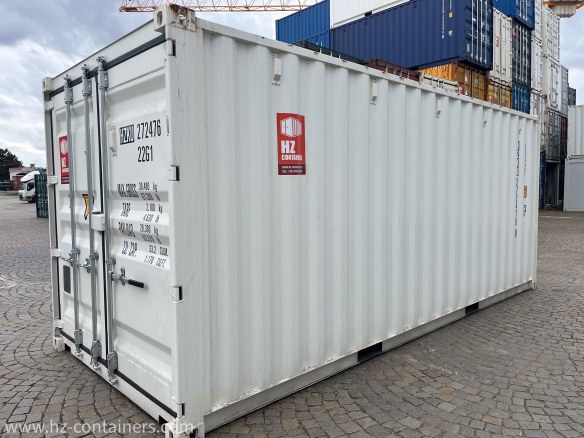


Other container news...

New shipping containers
If you are currently considering purchasing a new shipping container, you are not alone. While just twenty years ago containers were used almost exclusively for maritime transport, today they have found their way into construction, storage, business, and even housing. This growing popularity brings with it a host of questions: Which type should you choose? How much does it cost? How do you recognize quality? How can you avoid falling victim to scammers?

6m shipping container
Are you thinking about buying a 6-meter shipping container but aren’t sure what to look for? You are not alone—this 20-foot container is the best-selling size on the Czech market, and the differences between various types, conditions, and prices can be significant. In this guide, you will find everything you need to know: from exact dimensions and a comparison of categories (such as “one-way,” refurbished, and “Cargo Worthy”) to current prices and shipping advice.
Corner casting steel vs aluminum
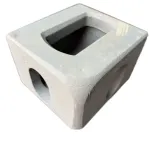
Every shipping container in the world — all 40 million of them — rests on eight critical components. Corner castings are the load-bearing blocks at each corner of an ISO shipping container, and they are the universal interface between the container and every crane, twistlock, spreader, and chassis on the planet. When you lift a container, stack it nine high on a ship, or lock it to a truck trailer, every ton of force flows through these fittings.

Construction cabin – selection, tips, dimensions and prices
Every construction project – whether a family house, a development project or a reconstruction – starts with the infrastructure. No construction manager, craftsman or investor who needs an on-site office, a changing room for workers or a safe storage for tools can do without a quality construction cell. But navigating the offer is not easy: residential containers, sanitary cells, storage modules, rental, purchase, refurbished pieces… This guide will give you answers to all the essential questions in one place.