
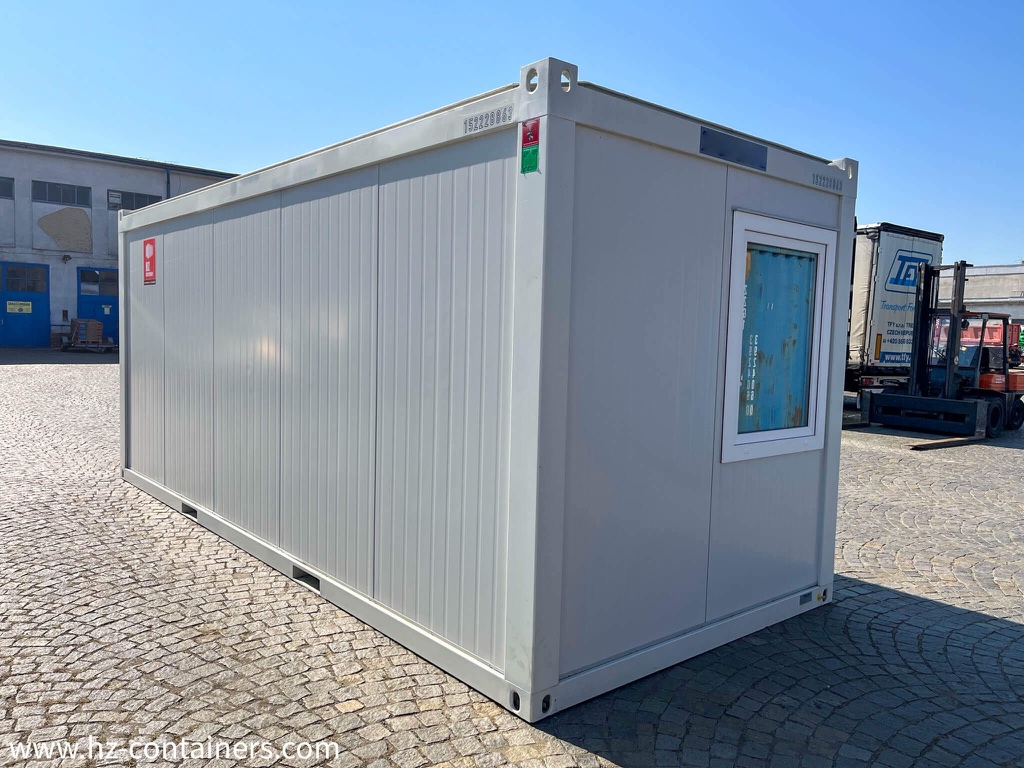
Office made from a shipping container
The construction module, which is a type of shipping container, represents a multifunctional and portable construction element that finds wide application in construction, industry, transportation, and many other sectors. This construction module is based on the concept of standard cargo containers but has been modified and adapted for various construction purposes.
The construction module features a solid steel structure that ensures stability, durability, and a long lifespan. It is designed to be easily maneuverable using common construction techniques, such as cranes or loaders. Due to standard dimensions and connection points, construction modules can easily be linked together to form larger structures or container cities.
CONSTRUCTION MODULE
Construction modules offer flexibility in use – they can be utilized as storage spaces, construction site offices, shops, accommodation for workers, or mobile health stations. Due to their mobility, construction modules are an ideal solution for temporary or portable construction projects, during natural disasters, or for the needs of quick and efficient spatial solutions.
Construction modules are thus a practical, economical, and sustainable solution for many sectors across various fields. Their easy portability and the possibility of rapid deployment make them a popular choice for companies that need quickly available and flexible spaces for their activities.
Thanks to their modular nature, construction modules can be combined and linked into different configurations as needed. This allows for the creation of complex and variable construction units that can meet a wide range of spatial requirements. Therefore, construction modules are not only practical but also aesthetically appealing solutions for temporary or permanent needs around the world.
More container news...

What Are the Internal Dimensions of a 40 Foot Container?
A standard 40-foot dry shipping container has internal dimensions of 12,032 mm in length, 2,352 mm in width, and 2,395 mm in height — or approximately 39 feet 5⅝ inches × 7 feet 8⅝ inches × 7 feet 10¼ inches. These figures come from the published specifications of major shipping lines and align with the ISO 668 international standard for Series 1 freight containers. The internal capacity is roughly 67.7 cubic meters (2,390 cubic feet).

what is the internal dimensions of a 40 foot container
A standard 40-foot shipping container has internal dimensions of approximately 12.032 meters (39 feet 5⅝ inches) in length, 2.352 meters (7 feet 8⅝ inches) in width, and 2.395 meters (7 feet 10¼ inches) in height. These internal dimensions are significantly smaller than the external dimensions because the corrugated steel walls, structural frame, corner posts, and the floor system—composed of plywood and steel—occupy valuable space intended for cargo.

What Is the Shipping Cost for a 40ft High Cube Container?
The shipping cost for a 40ft high cube container is not a single number — it is a layered calculation spanning purchase price, international ocean freight, and local ground delivery. A used 40ft high cube container typically costs $1,550 to $5,500 to purchase, while a new one-trip unit runs $2,800 to $9,000 depending on condition, location, and whether delivery is included.

Shipping container types
Roughly 80% of everything you own traveled to you inside a steel box. Shipping containers—also called cargo containers, ISO containers, or “conex” boxes—are the backbone of global trade, carrying about 90% of the world’s non-bulk cargo across oceans, rails, and highways. Yet a “shipping container” is not one single object. It is a family of specialized steel boxes, each engineered for a specific kind of cargo: some vent, some freeze, some open from the top, and some have no walls at all.