
How to get rid of moisture in a shipping container
Moisture in a shipping container can cause significant problems such as condensation, corrosion and damage to the cargo. It is important to control humidity properly to avoid these complications. Here are some tips and tricks to effectively get rid of moisture in a shipping container.
Why does condensation occur in the container?
Condensation in the container is mainly caused by temperature fluctuations. During transport and storage, temperatures inside the container can change significantly, leading to condensation. Warm air can absorb more moisture than cold air, and when the temperature drops, the moisture precipitates as water droplets. This phenomenon is known as “container rain” or “container sweat”.
What are the options to control humidity in the container?
1. Using a dehumidifier
Dehumidifiers are specially designed devices that absorb moisture from the environment inside the container. There are different types of dehumidifiers that can be used:
- Absorption dehumidifiers: These dehumidifiers work on the principle of moisture absorption using a specific medium that draws moisture from the surrounding air.
- Electric dehumidifiers: they require an external power source but are very effective in reducing humidity.
2. Ventilation
Proper ventilation can significantly reduce humidity inside the container. Ensure that air can circulate freely to help remove excess moisture.
3. Use of moisture barriers
Moisture barriers, such as plastic sheeting or special coatings, can help prevent moisture from entering the container.
4. Regular inspection
Check the condition of the container and cargo regularly. Look for signs of moisture or condensation and intervene early to prevent damage.
How to use a dehumidifier correctly?
Using a dehumidifier is a simple but effective solution. Here’s how to use it properly:
- Remove the plastic wrap: Before using the dehumidifier, remove its plastic packaging.
- Attach the hook: Attach the hook to the top of the container’s protective cover.
- Hang the dehumidifier: hang it by the fastening ring inside the container.
The dehumidifier immediately starts working on the principle of moisture absorption, thereby reducing the relative humidity inside the container.
Other recommendations
- Proper packing of cargo: Use moisture barriers and packaging that protects cargo from moisture.
- Container location: if possible, place the container in a dry and well-ventilated place.
- Monitoring conditions: Use hygrometers and thermometers to monitor conditions inside the container.
Other container news...

20 Foot shipping container cost
If you are researching the cost of a 20 foot shipping container, you have likely already encountered wildly different prices — from $999 listings online to quotes exceeding $5,500. That range is not a sign of inconsistency. It reflects real differences in container condition, location, delivery logistics, and the seller you are dealing with.
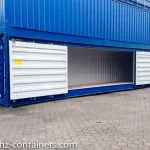
Side Opening container
A side opening container is an ISO-compliant intermodal shipping container engineered with full-length bi-fold doors along one of its long side walls, in addition to the standard cargo doors at one end. Unlike conventional containers that restrict access to a single set of rear doors, a side opening container — also widely called an open side container, open-sided shipping container, or side door container — provides unobstructed lateral access across the entire 20-foot or 40-foot length of the unit. This design transforms the container from a narrow tunnel into a wide-open space that forklifts can enter from the side, multiple workers can load simultaneously, and oversized cargo that would never fit through standard end doors can be placed without struggle.
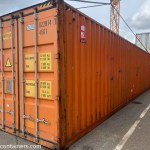
40 Foot High Cube container cost
A 40 foot high cube container — often abbreviated as 40ft HC, 40′ HC, or 40-foot high cube — is one of the most common shipping container sizes sold on the secondary market. But if you are researching what a 40 foot high cube container costs, you have almost certainly noticed that prices are all over the map. One seller quotes $1,500. Another quotes $7,000. Both could be legitimate.
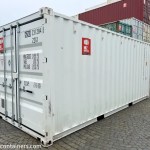
20 Foot container cost
If you have ever searched for a shipping container, you have almost certainly asked one question first: how much does a 20 foot container cost? The answer is not a single number. It is a range that spans from under $1,000 for a weathered, as-is unit to over $5,000 for a pristine, one-trip container — and that is before delivery, site preparation, or modifications enter the picture.