
How Important is HDG Surface Treatment of Spare Parts for Shipping Containers?
Shipping containers and their individual components are exposed to one of the most aggressive corrosive environments in the world. Constant contact with salt water, sea spray, extreme temperature fluctuations, UV radiation, and mechanical damage during handling means increased demands on durability and reliability of every component. Failure of even a small part, such as a closing mechanism, hinge, corner element, or fastener, can endanger cargo safety and personnel and lead to costly repairs and downtime.
Therefore, surface treatment is a key factor. One of the most effective and durable methods of protecting steel is hot-dip galvanizing (HDG). This article explains in detail what HDG is, how it works, why its role in protecting spare parts for containers is crucial, and what are the technical and economic aspects of this technology. Information is drawn from professional publications, industry standards, and practical experience of manufacturers and users of steel structures.
What is Hot-Dip Galvanizing (HDG)?
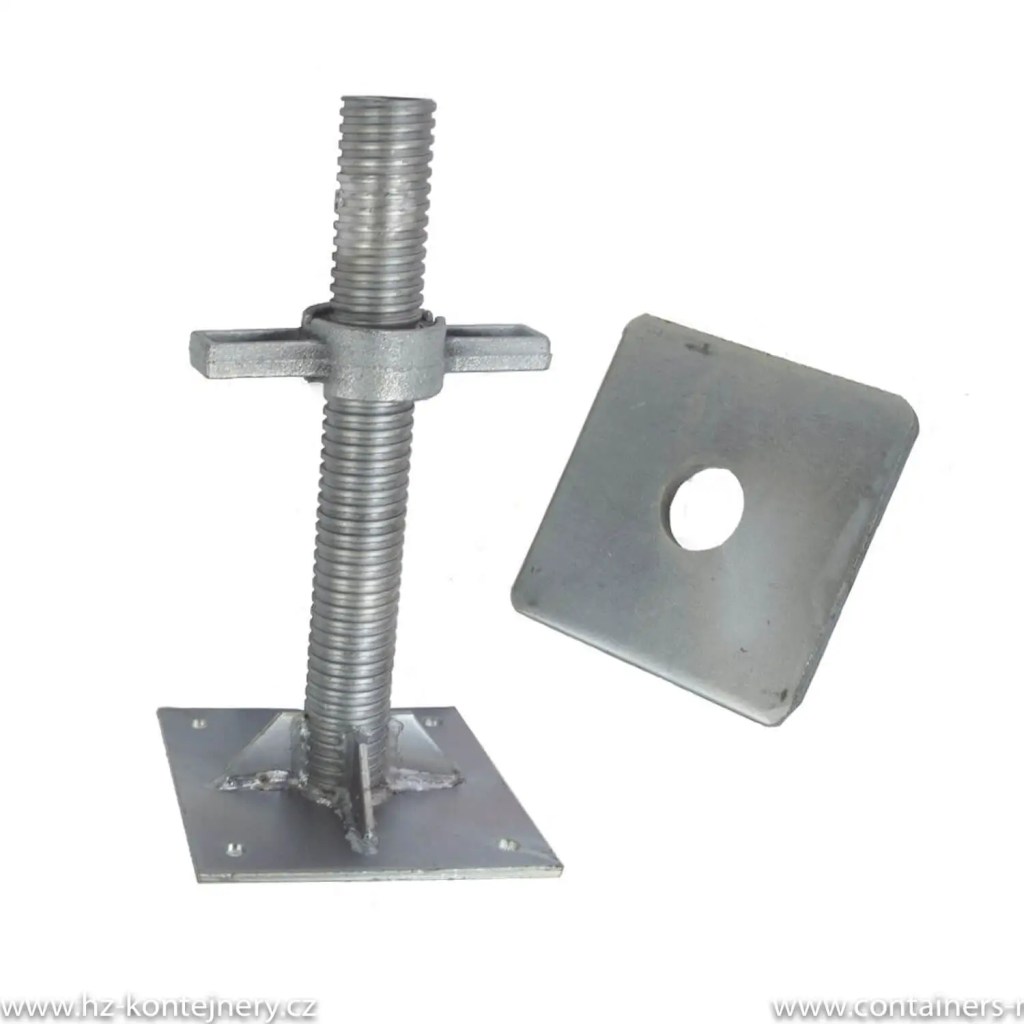
Definition, Principle, and Standards
Hot-dip galvanizing (HDG) is a surface treatment process for steel or cast iron in which the product, after thorough chemical preparation, is completely immersed in a bath of molten zinc at a temperature of approximately 450 °C. A metallurgical reaction occurs at the steel-zinc interface, creating intermetallic alloy layers firmly bonded to the base material. On the surface of these layers is a final layer of pure zinc.
The HDG coating is much more than a common paint – it is an integral part of the steel part. The coating provides not only a physical barrier but also electrochemical protection and self-healing capability for minor damage. Standard ČSN EN ISO 1461 establishes requirements for zinc coatings on iron and steel products, including coating thickness measurement methods, visual criteria, permissible defects, and minimum service life values.
The Hot-Dip Galvanizing Process
The HDG process is factory-controlled and consists of the following phases, which must be carefully monitored:
Surface Preparation
- Degreasing and cleaning: Removal of oils, fats, paints, marks, and other organic impurities using hot alkaline or acidic solution.
- Pickling: Removal of rust, scale, and inorganic impurities in an acid bath (most commonly hydrochloric acid).
- Rinsing: Each step is followed by thorough rinsing to prevent chemical transfer and unwanted reactions.
- Fluxing: Immersion in a flux solution (most commonly zinc ammonium chloride), which removes final oxides and protects the surface from oxidation before immersion in zinc.
Galvanizing
The prepared product is immersed in molten zinc. The immersion time depends on the thickness and type of material (light and thin-walled structures 1.5–5 minutes, heavier up to 10 minutes). Diffusion of iron and zinc atoms occurs, creating strong alloy layers.
Finishing and Inspection
- Removal of excess zinc: By vibration, dripping, or centrifugation (small parts).
- Cooling: Cooling in air or in a passivation bath, which prevents white rust formation.
- Visual inspection: Thorough coating inspection, thickness measurement (most commonly by magnetic method).
- Standard compliance: The resulting coating must comply with ISO 1461, which establishes minimum thicknesses for various product types.
Table: Minimum Coating Thicknesses According to EN ISO 1461
| Base Material Thickness (mm) | Min. Coating Thickness (μm) |
|---|---|
| < 1.5 | 45 |
| 1.5–3 | 55 |
| > 3 | 70 |
Structure and Properties of HDG Coating
The uniqueness of HDG lies in its multi-layer structure:
- Gamma (Γ) layer: Innermost, with high iron content (approx. 25%25), very hard.
- Delta (Δ) layer: Transitional, approx. 10%25 Fe, highly resistant.
- Zeta (ζ) layer: Thickest alloy layer (approx. 6%25 Fe), very hard, often harder than the base steel.
- Eta (η) layer: Final outer layer, pure zinc (100%25 Zn), ductile, capable of dampening minor impacts.
Mechanical Properties
- Tensile strength of alloy layers up to 3600 psi (25 MPa).
- Exceptional resistance to abrasion and mechanical damage.
- Coating is inseparably bonded to the steel surface.
- Uniform coverage of internal cavities, threads, edges, and corners.
- Design requirements: The product must be designed with consideration for air and zinc escape from cavities (ventilation and drainage holes).
Three Levels of Corrosion Protection
1. Barrier Protection
The HDG coating forms a physical barrier and isolates steel from moisture and oxygen. Complete immersion ensures protection of hard-to-reach areas, unlike common paints where the layer is often thinner at edges and corners.
2. Cathodic Protection
Zinc is less noble than iron, and therefore acts as a sacrificial anode – protecting steel even in case of minor coating damage. This effect is active to a damage width of several millimeters.
3. Zinc Patina
On the zinc surface, a thin, strong, and insoluble layer of zinc carbonate forms in air and moisture, which further slows corrosion.
Key Advantages of HDG for Shipping Container Spare Parts
- Extreme corrosion resistance: In marine environments, HDG protects for decades even at high salt concentrations.
- Long service life and maintenance-free: Under normal conditions, the protective period is more than 40 years; in industrial and marine conditions over 25 years.
- Low lifecycle costs: No costs for repeated repairs and maintenance.
- Excellent mechanical durability: Alloy layers protect critical parts from wear and impacts.
- Uniform coverage of complex shapes: Complete protection even in cavities and on threads.
- Safety and reliability: Ensuring functionality of closing mechanisms, hinges, fasteners, and corner elements even after years of operation.
Comparison with Other Surface Treatments
| Surface Treatment Type | Coating Thickness (μm) | Protection in Aggressive Environment | Mechanical Durability | Service Life | Suitable for Containers |
|---|---|---|---|---|---|
| HDG (hot-dip galvanizing) | 45–85+ | Excellent | High | 25–50+ years | Yes |
| Electroplating | 5–25 | Low | Low | 1–5 years | No |
| Thermal zinc spray | 50–200 | Depending on thickness | Medium | 10–30 years | Limited |
| Zinc paints | 40–100 | Medium | Low–medium | 5–15 years | Repairs only |
Sustainability and Environmental Aspects
- Recyclability: Steel and zinc are 100%25 recyclable and do not lose their properties with repeated use.
- Long service life: Eliminates the need for frequent replacements and reduces resource consumption and waste production.
- Maintenance-free: Reduces demands for regular maintenance, thereby reducing emissions, energy consumption, and pollution risk.
- Natural materials: Zinc is an essential trace element for the environment.
Duplex Systems: HDG + Paint
Principle and Advantages
A duplex system combines hot-dip zinc with an organic coating (paint, powder lacquer). The service life of a duplex system is not merely the sum of the service lives of individual layers; due to synergy, it is 1.5–2.3× higher. The paint protects the zinc from weathering; the zinc prevents undercoating corrosion.
Industrial Use
The duplex system is the preferred choice for extremely aggressive environments (e.g., ports, refineries, chemical plants), where not only maximum protection is required but also color differentiation or aesthetics.
Conditions for Quality Duplex Coating
- Careful cleaning and surface preparation before painting.
- Compliance with technological procedures and recommendations of paint manufacturers.
- Control of climatic conditions during application.
Conclusion
HDG surface treatment is absolutely crucial for spare parts of shipping containers. It offers multi-level protection that is ideal for extreme conditions in maritime transport. Its service life in aggressive environments exceeds 25 years; under normal conditions, protection can be expected for over 40 years. Compared to other technologies, HDG is an economically advantageous and environmentally friendly investment in long-term safety and functionality of container systems.
 Czech Republic
  WITHOUT SHIPPING

Other container news...

Obligation to Check Tightness When Selling a Reefer Container
Who is responsible for the refrigerant leak check when selling a refrigerated container? Find out what obligations the seller has at the time of handover and why they must provide a PTI report along with the technical data plate. Learn which regulatory requirements and F-gas record-keeping duties become the sole responsibility of the new owner.

New sea shipping containers
If you are currently considering purchasing a new shipping container, you are not alone. While just twenty years ago containers were used almost exclusively for maritime transport, today they have found their way into construction, storage, business, and even housing. This growing popularity brings with it a host of questions: Which type should you choose? How much does it cost? How do you recognize quality? How can you avoid falling victim to scammers?
New shipping containers
If you are currently considering purchasing a new shipping container, you are not alone. While just twenty years ago containers were used almost exclusively for maritime transport, today they have found their way into construction, storage, business, and even housing. This growing popularity brings with it a host of questions: Which type should you choose? How much does it cost? How do you recognize quality? How can you avoid falling victim to scammers?

6m shipping container
Are you thinking about buying a 6-meter shipping container but aren’t sure what to look for? You are not alone—this 20-foot container is the best-selling size on the Czech market, and the differences between various types, conditions, and prices can be significant. In this guide, you will find everything you need to know: from exact dimensions and a comparison of categories (such as “one-way,” refurbished, and “Cargo Worthy”) to current prices and shipping advice.