
How Environmental Regulations Are Changing the Shipping Market
Environmental regulations are fundamentally reshaping the maritime industry, driving innovations in shipbuilding, fuel utilization, operational procedures, and overall market dynamics. This glossary provides a detailed overview of how these regulations impact shipping, what they encompass, and their implications for global maritime operations.
What Are Environmental Regulations in Shipping?
Environmental regulations in the maritime industry include laws, policies, and directives aimed at mitigating the environmental impacts of maritime activities. These regulations focus on reducing pollution, greenhouse gas emissions, and other negative environmental impacts associated with shipping. They are enforced at international, regional, and national levels, with the International Maritime Organization (IMO) playing a key role in setting global standards.
Main Objectives of Environmental Regulations
- Reduction of Greenhouse Gas (GHG) Emissions: As of 2023, shipping contributes approximately 3% of global GHG emissions. With the goal of achieving carbon neutrality by 2050, intensive efforts are underway to reduce emissions through alternative fuels and energy-efficient procedures.
- Minimization of Air Pollution: Regulations limit emissions of sulfur oxides (SOx), nitrogen oxides (NOx), and particulate matter to improve air quality and protect human health.
- Protection of Marine Ecosystems: Policies, such as the Ballast Water Management Convention, aim to prevent the spread of invasive species and limit ocean pollution from waste and spills.
- Promotion of Sustainable Practices: Adoption of alternative fuels, energy-efficient technologies, and environmentally friendly operational measures is key to achieving sustainability goals.
Key Environmental Regulations Affecting the Industry
1. International Maritime Organization (IMO) Regulations
The IMO, a specialized UN agency, oversees global shipping regulations. Its policies are binding for all member states and emphasize reducing emissions and marine pollution.
- MARPOL Convention: The International Convention for the Prevention of Pollution from Ships addresses oil spills, harmful liquids, wastewater, and waste management.
- Sulphur Cap Limits: Introduced in January 2020, this regulation limits sulfur content in marine fuels to 0.50%, significantly reducing SOx emissions.
- Energy Efficiency Design Index (EEDI): Established in 2014, the EEDI sets energy efficiency standards for new ships, promoting the adoption of innovative designs and technologies.
- Energy Efficiency Existing Ship Index (EEXI): Effective from 2023, EEXI applies efficiency standards to existing vessels to ensure compliance with updated sustainability norms.
2. Ballast Water Management (BWM) Convention
The BWM Convention requires ships to manage ballast water to prevent the spread of invasive aquatic species. Ships must have systems installed to ensure that discharged water does not contain harmful organisms.

3. Emission Control Areas (ECA)
Emission Control Areas establish stricter limits for SOx, NOx, and particulate matter emissions in designated zones, such as the North American coast, the Baltic Sea, and the North Sea. Ships operating in these areas must meet higher emission standards.
4. Regional and National Regulations
Some countries and regions have introduced supplementary regulations:
- EU Emissions Trading System (ETS): Includes CO2 emissions from ships over 5,000 gross tonnage. Emission allowances are being phased in, with full compliance required by 2026.
- U.S. Maritime Decarbonization Strategy: Focuses on research and development of zero-emission technologies and infrastructure modernization, such as cold-ironing facilities.
- Green Shipping Initiatives in China: China has implemented policies to reduce emissions and promote cleaner fuel technologies.
How Regulations Are Changing the Shipping Market?
1. Transition to Alternative Fuels
The maritime industry is transitioning to sustainable fuels, but faces challenges:
- Liquefied Natural Gas (LNG): Cleaner than traditional fuels, but still produces GHG emissions.
- Methanol and Hydrogen: Zero-emission options that require significant infrastructure investments.
- Battery Power: Suitable for short distances, but limited by energy density for long voyages.
2. Innovations in Ship Design
New regulations support advances in shipbuilding:
- Aerodynamic Hulls: Design improvements to reduce drag and fuel consumption.
- Wind Assistance: Use of sails or rotor systems to harness wind energy.
- Digital Twins: Virtual replicas of ships enable performance optimization and predictive maintenance.
3. Increased Operating Costs
Compliance with environmental regulations often requires significant investments in technology, alternative fuels, and modernization of existing ships. These costs can lead to higher shipping rates and affect global trade dynamics.
4. Challenges for Small and Medium Enterprises
Small and medium enterprises face financial and technical barriers to meeting regulatory requirements, which may lead to greater market consolidation, with larger companies absorbing smaller competitors.
5. Adoption of Green Practices in Shipping
Environmentally friendly logistics practices, such as route optimization and carbon offset programs, are becoming standard in the industry. Companies prioritizing sustainability gain a competitive advantage.
Challenges and Uncertainties
1. Fuel of the Future
The maritime industry has yet to identify an ideal alternative to traditional marine fuels. LNG, hydrogen, and biofuels are being considered, but each has trade-offs in terms of cost and availability.
2. Regulatory Complexity
Navigating the diverse spectrum of international, regional, and national regulations presents administrative complexity for global shipping companies.
3. Financial and Technological Barriers
Adoption of new technologies and building infrastructure for alternative fuels requires significant investments. This represents a major challenge, particularly for developing countries.
Benefits of Environmental Regulations
Despite the challenges, these regulations bring long-term benefits:
- Reduction of Environmental Impact: Lower emissions improve air and water quality.
- Innovation and Investment: They promote the development of cleaner technologies and fuels.
- Market Differentiation: Companies adopting green practices gain a competitive advantage.
- Sustainability: They ensure the viability of the maritime industry in the future with carbon neutrality.

 Czech Republic
  WITHOUT SHIPPING


Other container news...

Corner casting steel vs aluminum
Every shipping container in the world — all 40 million of them — rests on eight critical components. Corner castings are the load-bearing blocks at each corner of an ISO shipping container, and they are the universal interface between the container and every crane, twistlock, spreader, and chassis on the planet. When you lift a container, stack it nine high on a ship, or lock it to a truck trailer, every ton of force flows through these fittings.

Construction cabin – selection, tips, dimensions and prices
Every construction project – whether a family house, a development project or a reconstruction – starts with the infrastructure. No construction manager, craftsman or investor who needs an on-site office, a changing room for workers or a safe storage for tools can do without a quality construction cell. But navigating the offer is not easy: residential containers, sanitary cells, storage modules, rental, purchase, refurbished pieces… This guide will give you answers to all the essential questions in one place.

Storage container
A storage container is a lockable steel box designed for the safe and dry storage of materials, tools, goods or equipment. Originally created as a shipping container for maritime transport, its durability and versatility have found their way onto construction sites, corporate premises and private land.
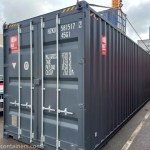
Shipping container 12m (40 ft)
A 12m shipping container is an investment that, if properly selected and cared for, will pay off in decades of trouble-free use. Whether you plan to use it as a warehouse, workshop, garage or the basis for a residential module — the key is careful selection of the condition, a thorough inspection before purchase and high-quality preparation of the base for placement. Take the time to compare offers, check the seller’s references and do not hesitate to personally inspect the container before buying. A properly selected 40-foot container will serve you reliably for many years.